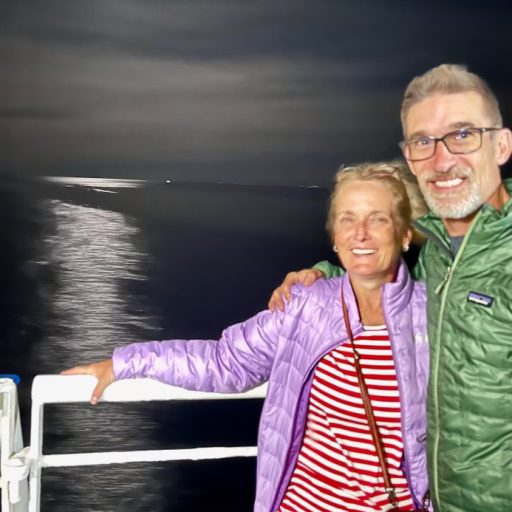

What is a Self-Supported Bike Trip?
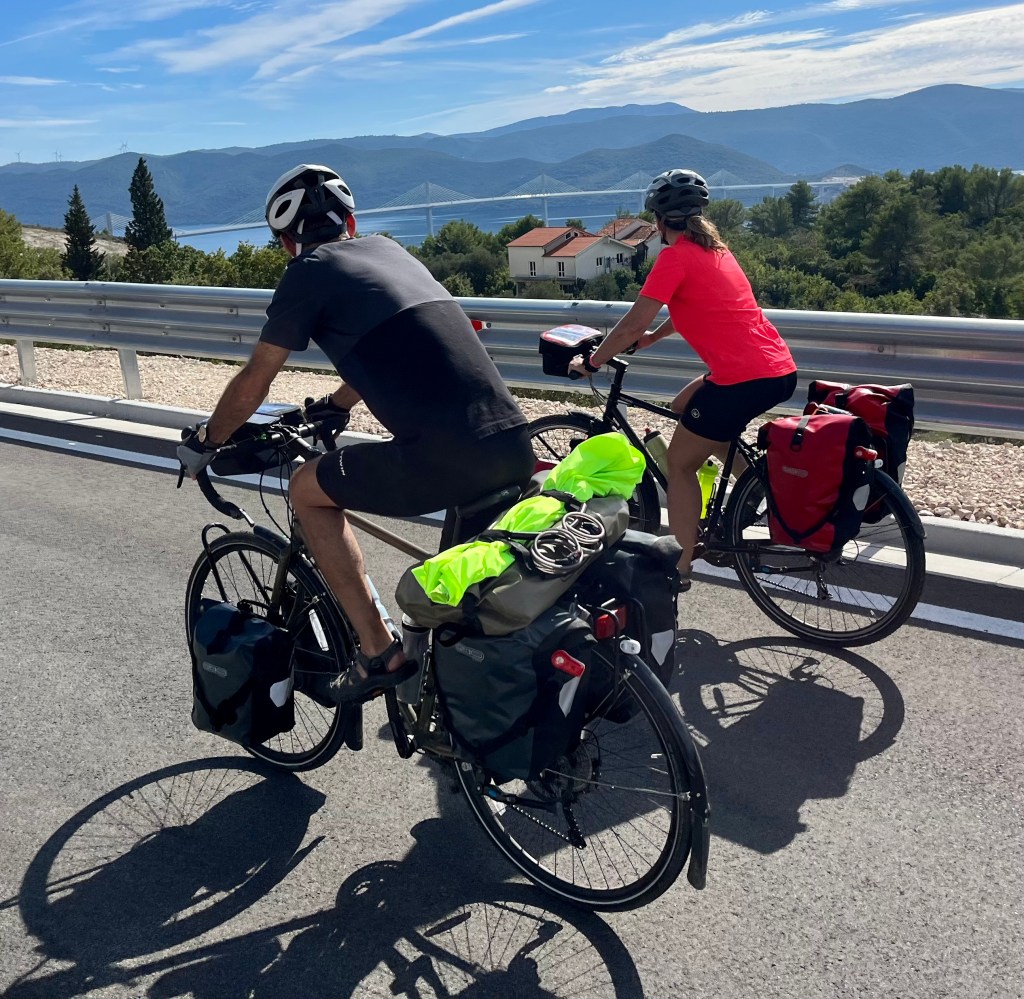
It’s just you, your bike, and your gear on the road, traveling from point A to point B without any support personnel, vehicles, or gear stops. You’re responsible for carrying your clothes and food. You act as both navigator and guide and are completely self-reliant.
We’ve now logged over 3000 miles and have cycle toured through 10 different countries in Europe.
This week, we are featuring some of our most frequently asked questions. Take a look and get all the answers you need before embarking on your adventure.
Where We’ve Rolled
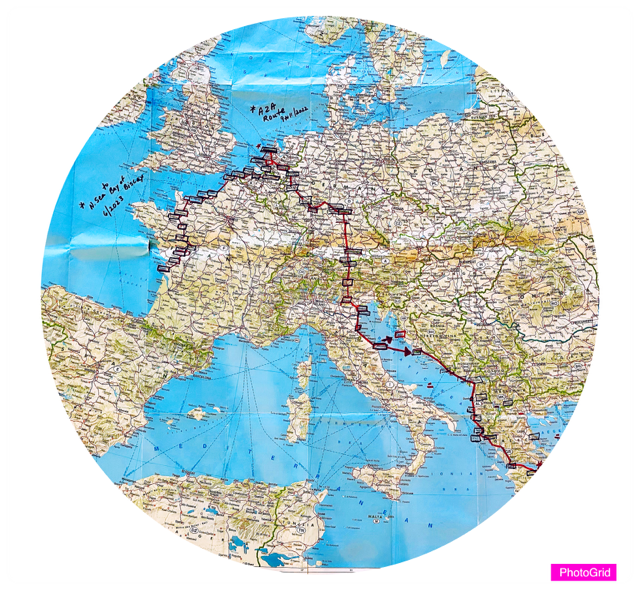
Amsterdam to Athens
From the Netherlands to Germany, through Austria and Italy, into Croatia, Montenegro, Albania, and Greece.
In 2022, we tackled the challenge of riding our bikes from Amsterdam to Athens with two close friends. Our group of four coined this trip A2A and for two months, we learned how to cycle tour and fell in love with life on the road. You can learn more about our 52-day, 2100-mile journey below or by visiting our homepage suzlearnsfrench.blog
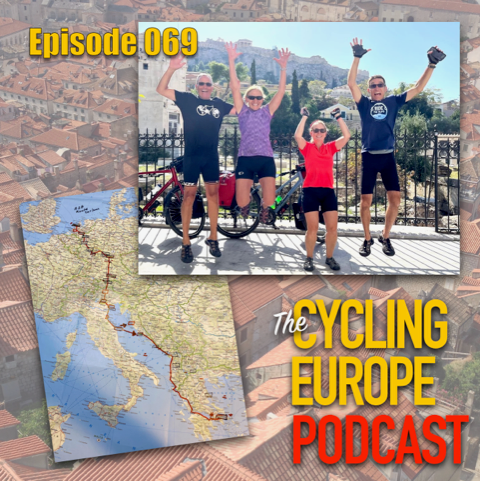
North Sea to the Bay of Biscay
Picking back up in the Netherlands, and continuing through Belgium and France.
In 2023, for 22 days, two of us ventured back onto the open road. Our journey again began in the Netherlands where we cycled all the way to the Bay of Biscay near Rochefort, France. Averaging 50 miles a day, completing just over 1100 miles.
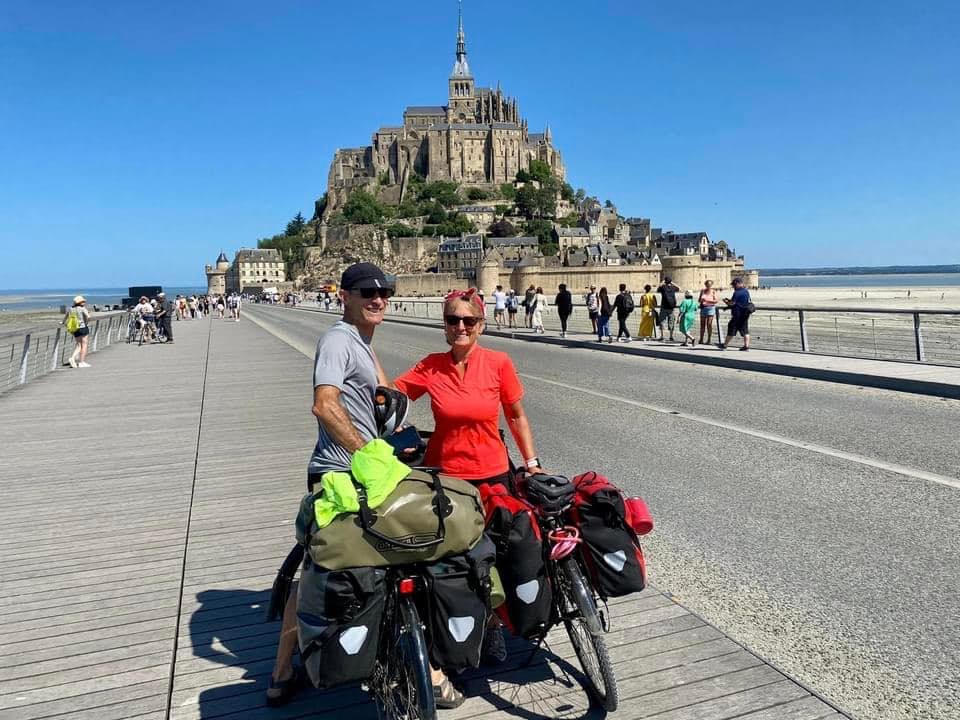
Frequently Asked Questions
Where did you sleep?
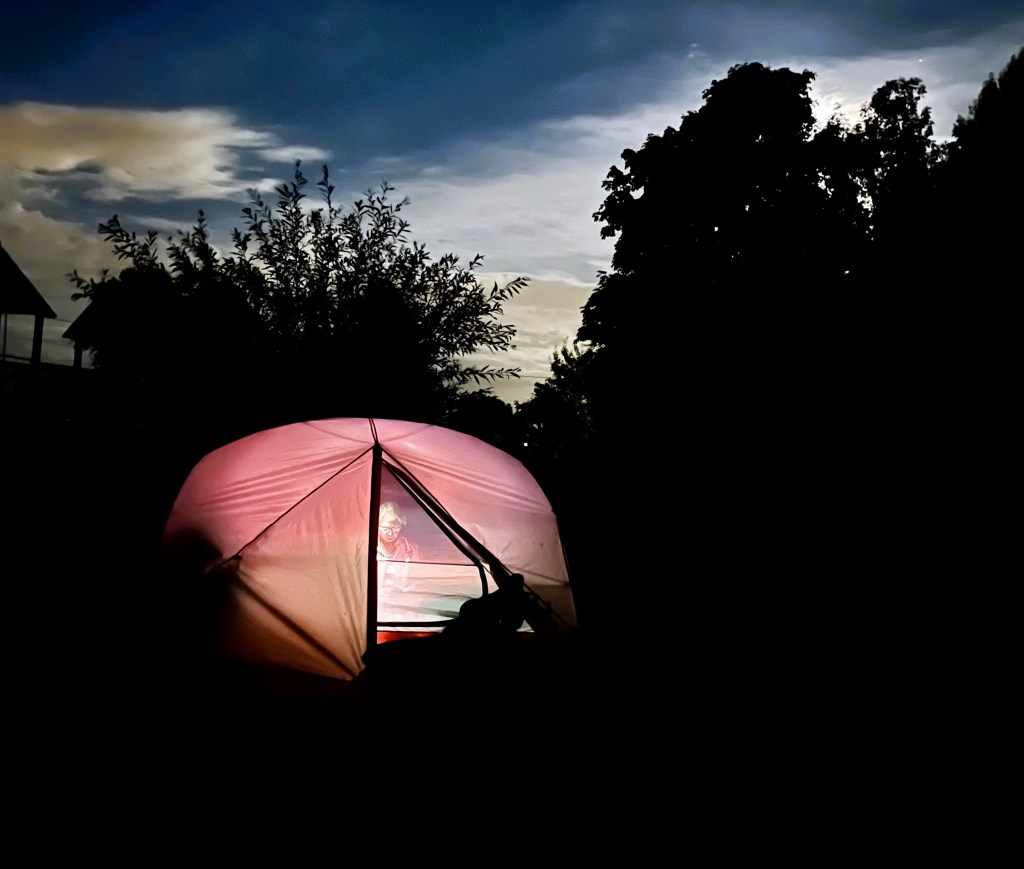
Our most frequently asked question is where do we sleep? There are so many choices, with camping being the easiest and most cost-effective, however, cold and wet weather will drive us indoors.
Other options include hotels and or Airbnb’s. Additionally, staying with another cyclist or traveler in their home is not unheard of within the cycling community. Several programs help coordinate this on a reciprocal basis. Check out the Warmshowers.org website for more information. We have hosted cyclists from around the world and stayed in homes in Albania and Belgium, making new friends and sharing stories and laughter while cooking together.
What kind of bike do I need?
According to a few videos on YouTube, you can use any bike. Realistically, you want one designed for long-distance touring. These bikes are known as touring bikes, and are often made of steel; however, the Koga World Traveler has an aluminum frame and fork.
The important factor is strength. The bike you choose needs to be strong. You’ll most likely be carrying a heavy load over varying terrain for multiple days. You’ll also want to ensure your bike is equipped with mounting points (braze-ons), small knobs attached to the frame and forks used to hold pannier racks and water bottle cages.
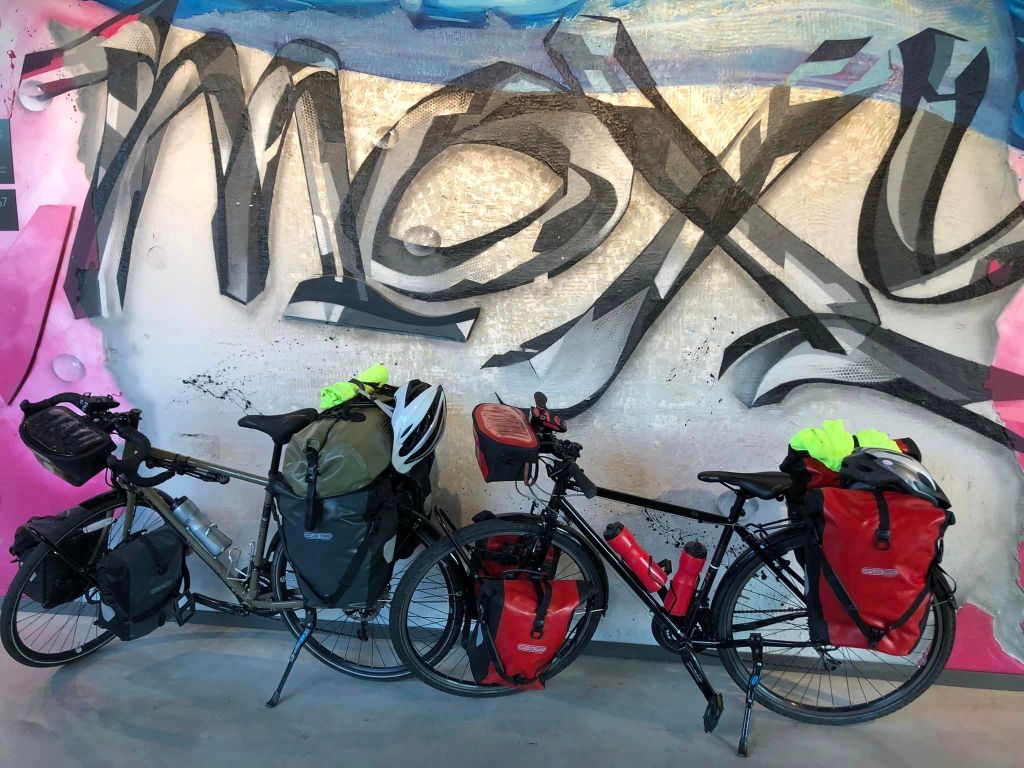
A typical touring bike comes equipped with fenders and rear racks. We currently ride Fuji Touring bikes. Bought in 2021, these bikes are strong and for an entry-level price offer Shimano Deore and Alivio components, which are normally found in more expensive bikes.
Our upgrades included adding Tubas Tara front racks, Schwalbe Marathon Plus Tour 700c Tires, and kickstands. For safety purposes, we added flashing lights to the front and rear of the bikes. Otherwise, out of the box, they were tour-ready.
Despite our desire to own a Koga World Traveler, we cherish our Fuji bikes for their sentimental value and dependability.
Did you fly with your bikes?
Yes, rather than renting bikes, we chose to bring our bikes. For shorter trips or while cycle touring in a specific area, renting a bike would suffice, however for a point-to-point trip, it’s better to have your own bike and be familiar with your equipment.

How much does it cost to fly with them?
We recently flew from the United States to Amsterdam and paid $100 per bike based on our cabin-level ticket price (cost was per flight).
Each airline has different requirements, so it’s important to do your due diligence and check with them for the most accurate and up-to-date information as policies and fees vary.
However, in our experience, bicycles are allowed as checked baggage on most flights with standard baggage allowance and fees based on the cabin and travel region and must be within the airline’s given weight and size limit.
How do you pack them?
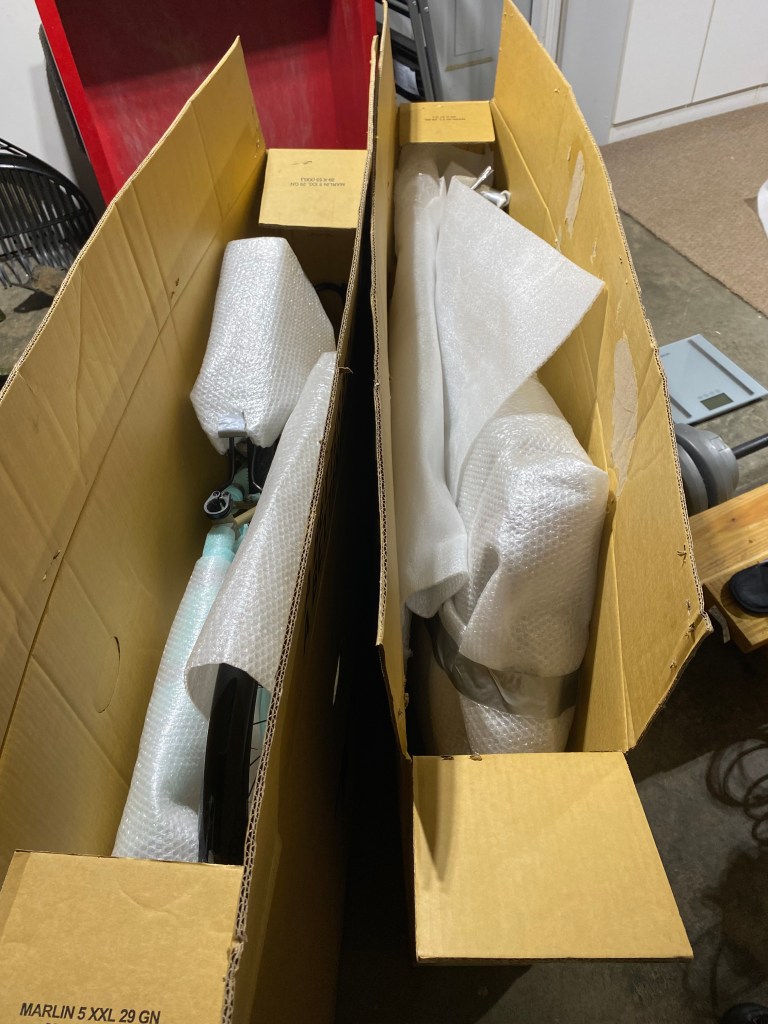
You know that cardboard box most new bikes come in? We simply stop in at the local bike shop and ask for one, and unlike heavy-duty bike cases or bags, cardboard boxes are usually free and can be easily disposed of at the airport or hotel.
Depending on the size of the bike and box, you may need to remove one or more tires. Additionally, you will need to take off the pedals and loosen or remove the handlebars so they can fit into the box. We also wrap the bike and the components in bubble wrap.
Depending on the weight of your bike and your given weight limit, you may be able to add additional items to the box, such as your helmet, water bottle, and or sleeping bag.
How do you navigate? Paper maps or apps?
We like both and each has its place when planning and riding. With the paper map, we can see the overall big picture. Using either the Kamoot route planning app or Google Maps (in bike mode), we can calculate distances, and zoom in to visualize the route and road surfaces. We can also search for supermarkets, campgrounds, hotels, and restaurants.
Before we depart, we map out our route at a high level by selecting point A and point B. We take the total distance between these points (measured in miles) divided by the length of the trip (in days) to come up with the number of miles we need to ride each day to reach our goal. We also account for the number of days we plan to rest and or relax.
Once on the road, we check the weather forecast each evening and review our planned route using Kamoot and Google Maps. Depending on the weather and the terrain, we may add extra miles to our next day’s journey if the conditions are favorable. Conversely, if the forecast calls for bad weather or the route is challenging, we may decrease our daily mileage. We can then make campground or hotel reservations and plan our stops accordingly.
Each morning after coffee, we enter our decided-upon destination into Google Maps or Kamoot and follow the blue ball or arrow. More than once, we’ve had to change plans and reservations at the last minute due to detours or unpassable roads. It’s important to be flexible.
Often, larger more traveled routes such as the Euro-velo routes are sign-posted. In Belgium, we used the Fietsknoop app, a clever navigation system based on a network of numbered junctions.
Additionally, we use our Garmin watches to record our rides and keep track of distance and speed. Garmin also records elevation and pace, which is always interesting to review during dinner.
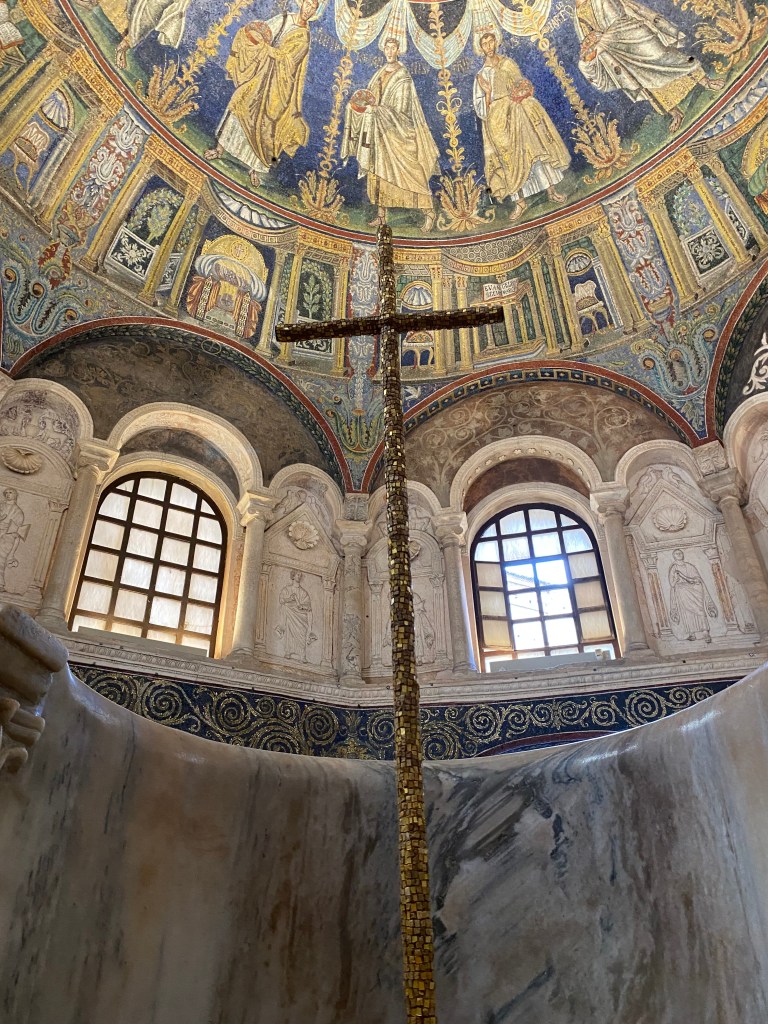
Don’t be discouraged if you find yourself getting lost or needing to reroute as you learn to navigate. Experience comes with practice. Often, a wrong turn is a right turn — you might just end up in Ravenna, Italy, the capital city of the Western Roman Empire during the 5th century and home to stunning early Christian mosaics!
Are you planning a self-supported bike trip?
Let us know in the comments or by hitting LIKE! We’d love to hear about your plans.


 Suz Learns @ Behind the Postcard