Everyone’s tour is unique and will unfold differently. What works for me may not work for you, so a list of downsides is neither realistic nor practical.
However, our experiences may help you along the way.
In the coming weeks, we’ll dive into some challenges of cycle touring, but don’t worry—we’ll wrap it all up with a bright perspective!
Join us on this exciting journey as we explore the ups and downs of this amazing adventure.
In 2022, we embarked on an incredible cycling adventure spanning over 2,000 miles, starting in Amsterdam and concluding in Athens.
With excitement, we returned to Amsterdam in 2023, a city known for its scenic flat bike paths, and rode 1,000 miles to La Rochelle, France.
Our journey continued in 2024 as we explored the beautiful route from La Rochelle to Sete, known as the Canal des Deux Mers, before finishing in Lyon and logging 900 more miles via the ViaRhona.
Although we truly thrive while flying by the seat of our pants, some details need to be thought out and planned, flexibility is a requirement, and accepting the challenges you encounter is a must.
As we plan for 2026 and organize our next adventure, my brain feels it necessary to revisit some of the more realistic issues of bike touring.
Beyond the postcard lies the reality, the day-in-and-day-out. The good days and the not-so-good days. How you choose to pedal through each of them is up to you.
The goal, and if nothing else, is to remind myself and shine a light on the thought that, as humans, sometimes we don’t know where we want to go until we end up there.
Is there a downside to cycle touring?
Subjectively, absolutely not; I genuinely value it.
Each day brings not only challenge but reward.
However, in reality, there are numerous downsides.
How about we kick off this series with something simple like, maybe, the weather?
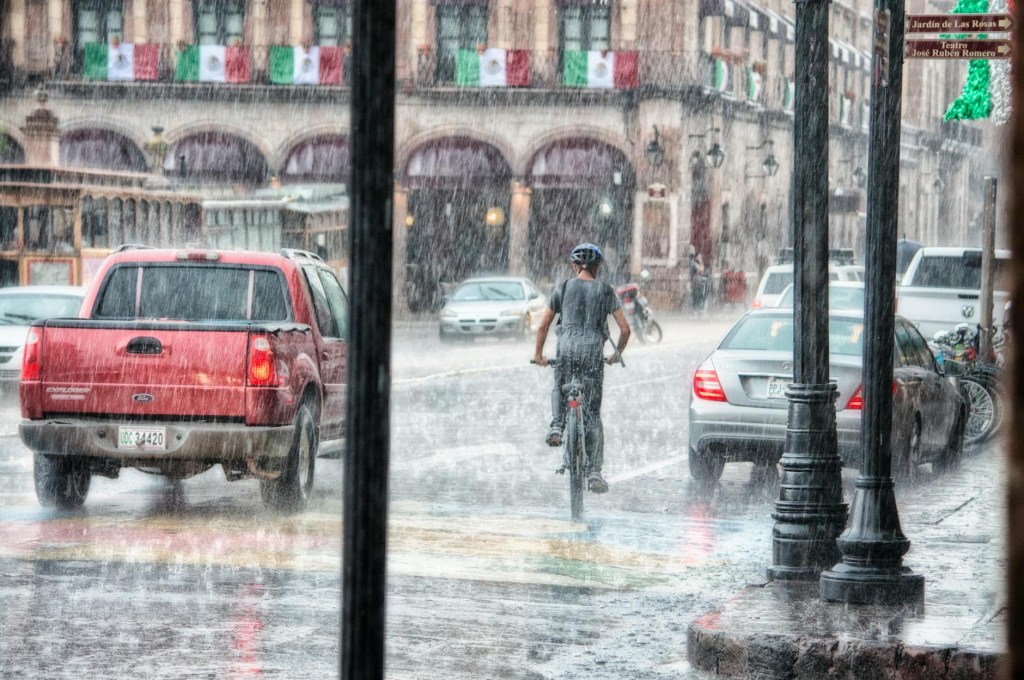
Factors like extreme heat or cold, freezing rain, and strong winds can really influence your experience, making it more unpredictable and challenging.
Weather plays a big role in every part of a tour, from the initial planning to the actual adventures. For instance, if you’re thinking about crossing the Alps, it’s a good idea to avoid December when the conditions can be harsher. On the other hand, if Greece is on your list, aiming for September or early October is usually much more pleasant than July.
I’ve personally found myself questioning my choices more than once while pedaling uphill in 100-degree Fahrenheit heat, feeling my heart pounding in my chest, but those moments make the journey all the more memorable.
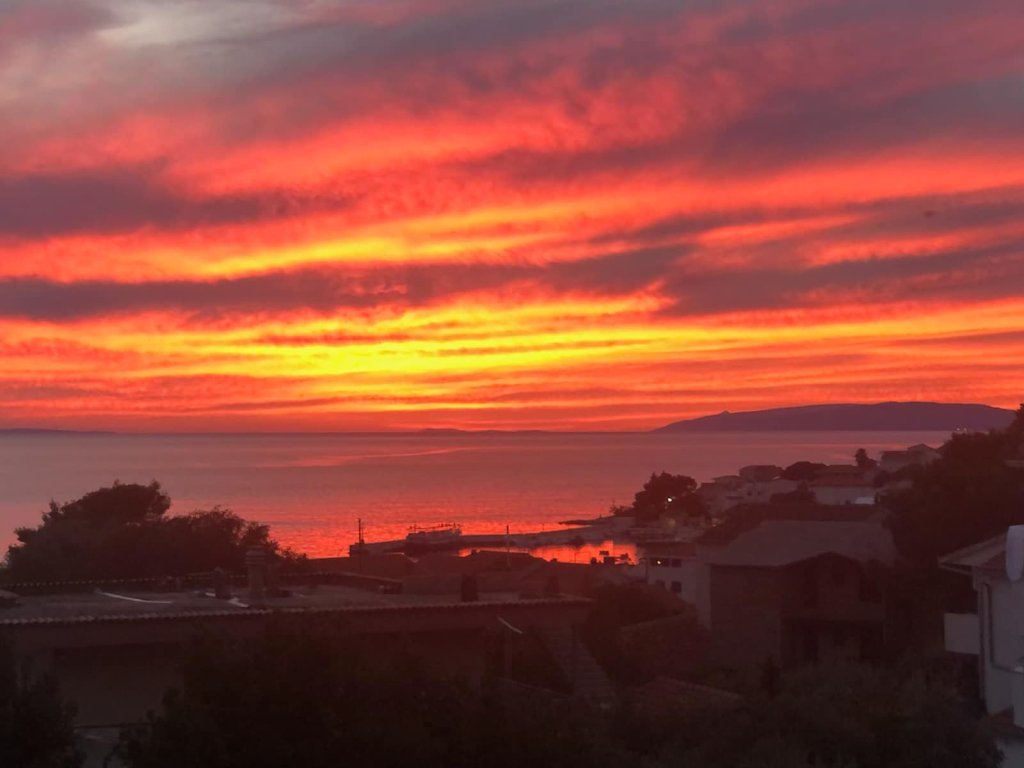
Mother Nature is a powerful and majestic force! Embracing her with respect and honesty is essential. She’s not out to hinder your journey; in fact, she’s only focused on her own rhythm.
But what do you do if you’ve caught her in a grumpy mood and it’s your turn to ride? You’ve put in the effort, planned, and saved, and now it might feel like it’s all for nothing.
Let go and go with the flow. Easier said than done, right?
But seriously, try to stay flexible without being careless.
Your safety is a priority, and a delay is just a delay; there are more important things in life than cycle touring. It’s a luxury; treat it as such and pause your ride when needed.
So, you’ve stayed calm and open-minded. Now what?
It may mean you need to change your route on a whim! Which, most likely, means rethinking your choices on where to sleep, shop, and eat.
But what does that look like?
In all honesty, it looks and feels horrible, but resistance and complaining will get you nowhere.
It’s vital to immediately embrace change.
This, too (the weather, in this case), shall pass. And when it does, oh what a reward.
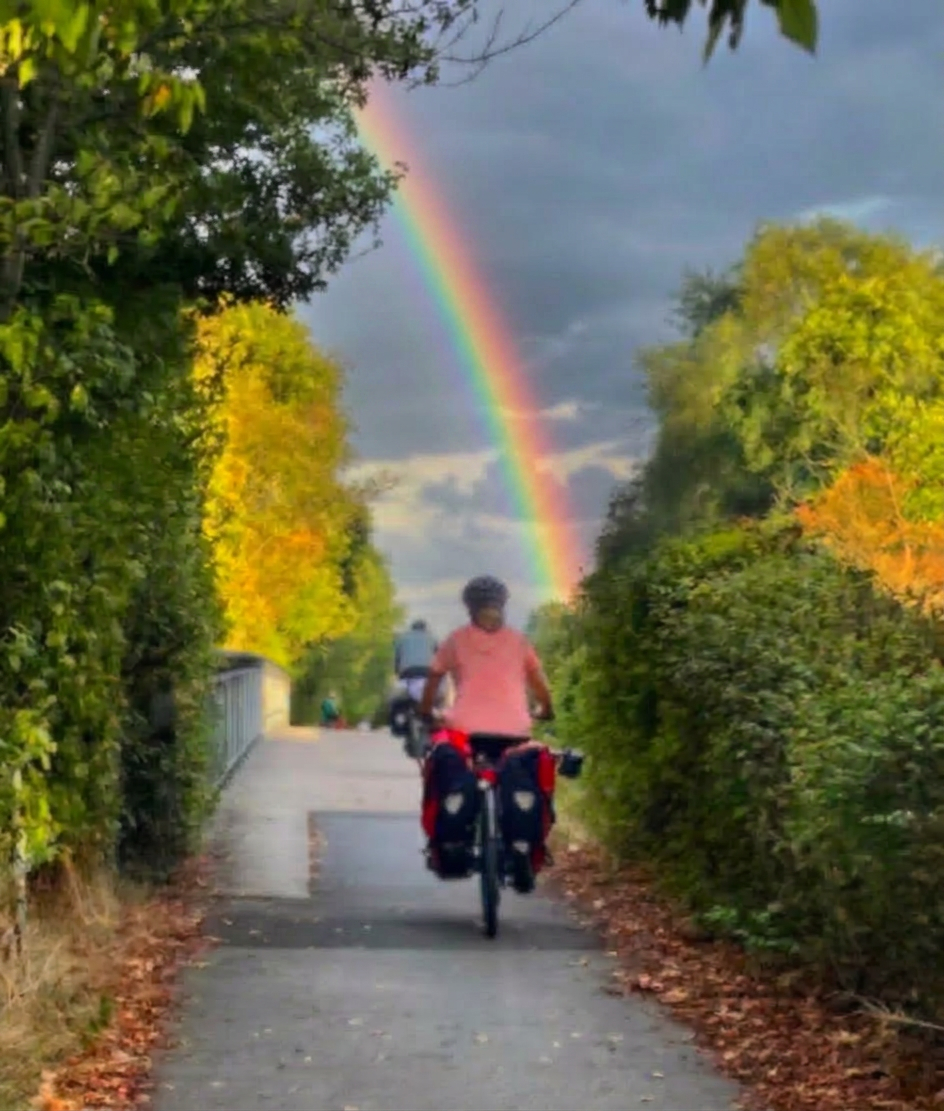
Dealing with the logistics of any change can be a challenge.
With all seriousness, stay flexible, and don’t be careless. This is bike touring; there are far more important things going on in our world.
Don’t sweat the small stuff, go with the flow, have a backup plan, and chill.
Often, one adjustment sets off a chain reaction of events.
To keep track of all the reactions and reservations, I often jot them down as a simple bulleted list in the Notes app on my iPhone, or sometimes just on a notepad. We have also used the following apps:
For navigation, we rely on route planners such as Komoot: Komoot | Find, plan and share your adventures and of course, Google Maps.
And have recently started to explore options on a new to us app known as VeloPlanner, which, as described on their website, is an interactive map showcasing sign-posted cycling routes.
Paper maps really help you visualize the overall tour and desired outcome and are often helpful for rerouting, adjusting, and going with the flow.
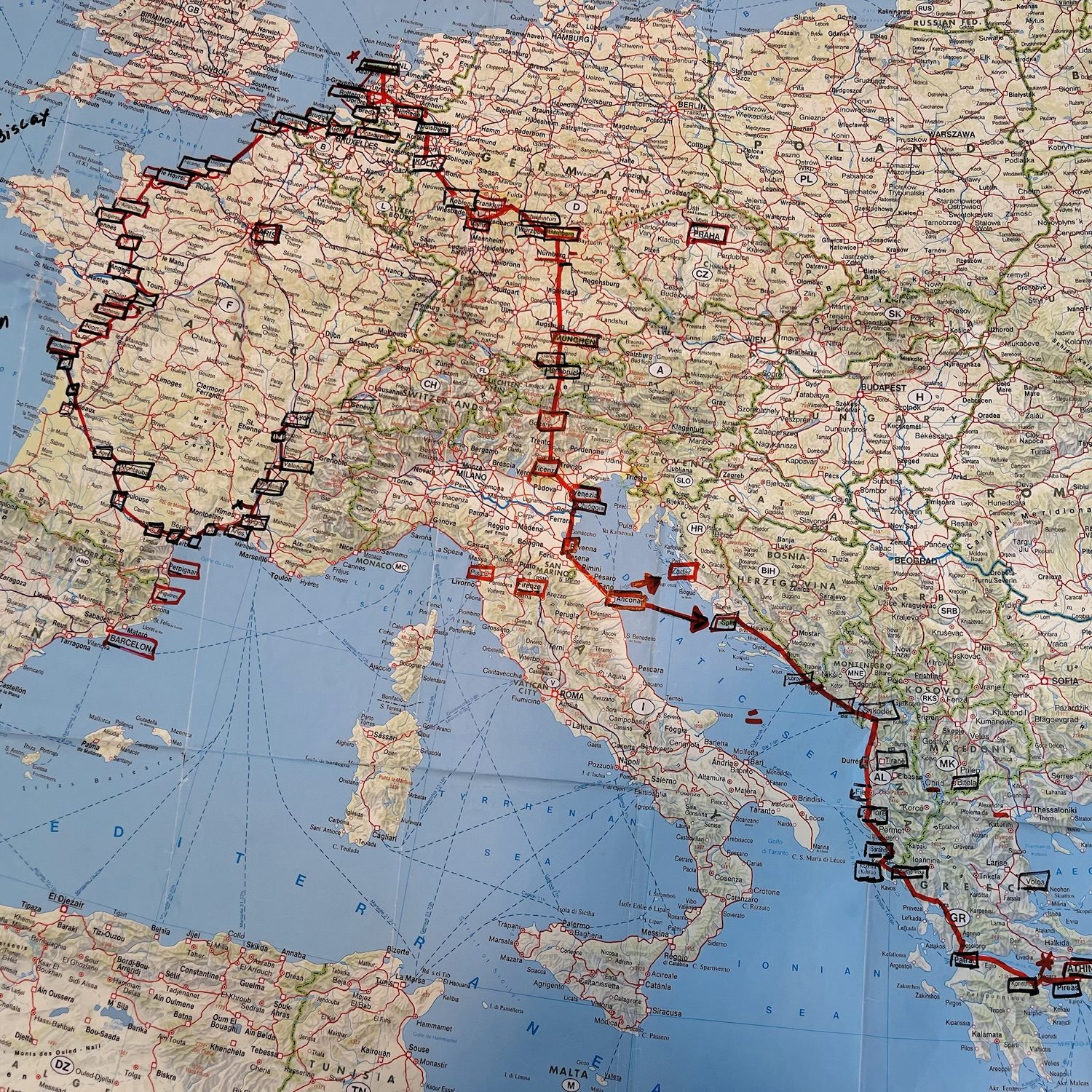
Even if you love spontaneous adventures, taking time to plan your trip can make your experience even better. Getting to know the area you’re visiting is always helpful. Remember, having a backup plan and staying flexible can make your journey smoother and more enjoyable.
NOTE: Cycle trips are dynamic and subject to change. It’s essential to understand your timing and location. In my opinion, flexibility really is the key.
There may be moments when you need to shift course and regroup. While it’s sometimes possible to catch up and realign, remember you can’t do everything. Prioritizing and selecting your battles carefully is crucial.
Our suggestions are to remember that less is best, but awareness is key, keep an eye on the forecast, plan accordingly, and adjust as needed. Shorten or lengthen your daily mileage as needed (to beat, wait out, or avoid undesirable weather). And always build in rest or weather days (these can be used to catch up as well).
Weather and gear takeaways:
We’ve used shower caps to protect our seats from rain and early-morning dew and have more than once used sandwich bags to protect our phones from downpours.
Waterproof pants, jackets, and gloves might seem unnecessary at first, but you’ll truly appreciate having them when you need them.
Cold weather gear should include warm coats, face and neck buffs, and gloves, and a good pair of fleece-lined riding pants is a wise addition.
And no matter the weather, warm or cold, it’s always a good idea to wear sunscreen, sunscreen, and more sunscreen. Adding in sun sleeves and sun shirts are ideal.
No matter the weather:
A good helmet, along with lights, reflective vests, and jackets, are among the most essential pieces of gear you’ll want to bring. While you might never use some of the other items you’ve packed, you’ll rely on your safety gear every day, and it will become a trusted part of your routine.
On a personal note, I’ve found change often places you exactly where you need to be.
Let us know how you deal with the weather. It’s such an important aspect of your trip.
It’s not something you can avoid, and it can be life-impacting. Be safe and ride with JOY!
In summary, please note, none of the suggestions above are presented as absolutes. A great deal more gear and equipment are required in order to complete a bike tour. Key takeaways are provided as prompts. Written solely to entertain. And help the writer prepare mentally for an upcoming self-supported bike tour of her own.
Set a reminder to check back with us as we explore more cycle touring challenges.


