We too often hear, “It’s not about the destination; it’s about the journey.”
But what does that actually mean? For me, it means real life behind the postcard: the feelings, the emotions, the lessons, the reality of moving slowly under the radar, observing while seeking to understand.
In 2022, we cycled 2,000 miles self-supported, starting in Amsterdam, the Netherlands, and ending in Athens, Greece. We rode through eight different countries (The Netherlands, Germany, Austria, Italy, Croatia, Montenegro, Albania, and Greece).
In 2023, we returned to Amsterdam and cycled to the West Coast of France, just south of La Rochelle, landing in Rochefort-sur-Mer. On this trip, we covered just over 1,100 miles unsupported and added two countries (Belgium and France) to our CV (course of life).
In 2024, we picked up where we left off in 2023 and continued our French tour. This time, we cycled from Rochefort-sur-Mer on the Atlantic coast to Lyon via the Canal des Deux-Mers and the ViaRhôna. We joyfully rode approximately 900 miles through France. Still self-supported and loving it.
This year, 2026, we had planned to ride the EuroVelo 6 (EV6) from Germany to the Black Sea. However, 550 miles in, we found ourselves at a crucial crossroads.
As we arrived in Budapest, an intense heatwave engulfed Europe, with temperatures soaring above 100 degrees Fahrenheit. The Danube River receded to alarming lows, even exposing long-submerged German warships and unexploded munitions, a stark reminder of the region’s turbulent history.
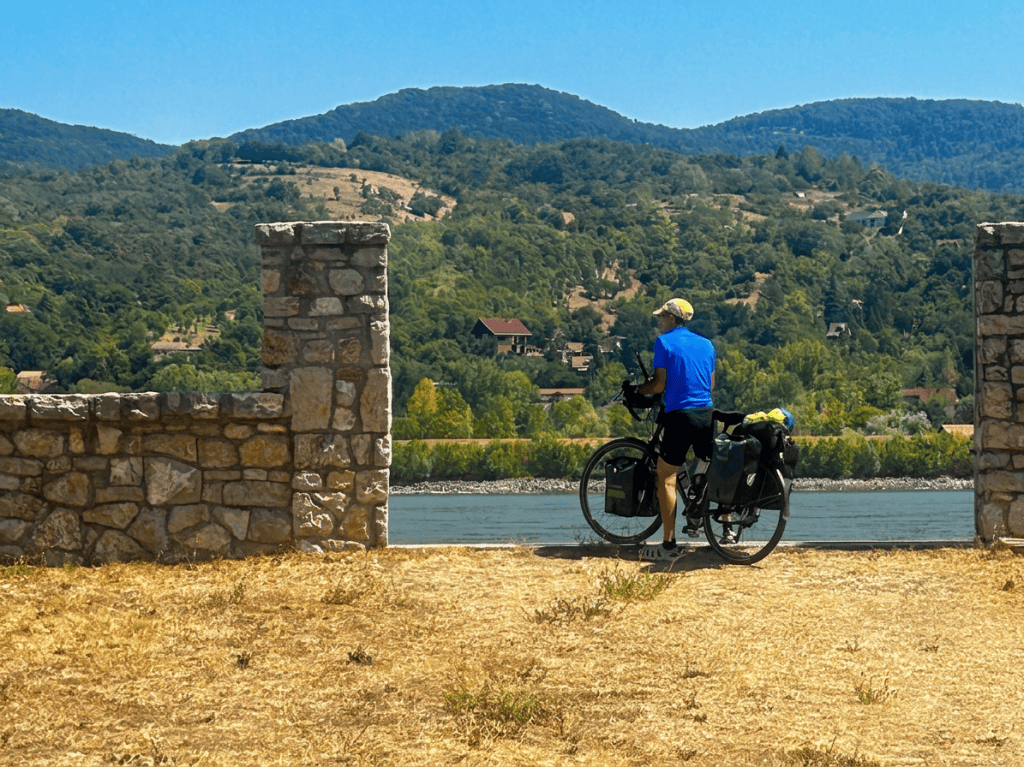
Note: According to news reports, low water levels forced several European nuclear power plants to shut down or reduce output because they rely on water from the Danube River for cooling.
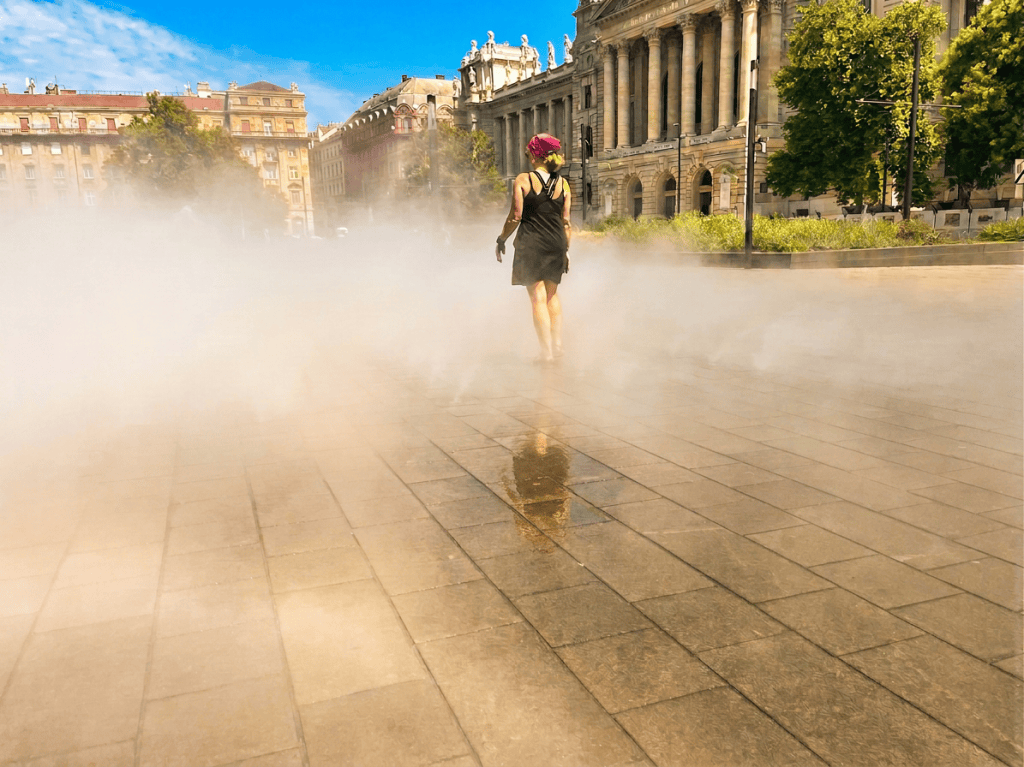
Confronted with extreme heat and worsening conditions, we faced a difficult decision: change course completely or risk serious injury by continuing forward.
Just managing our hydration and electrolyte levels became a full-time gig. And honestly, my number one worry after heat stroke was a UTI (urinary tract infection).
Although the conditions left us no choice, it was clear Mother Nature was in charge, and we had no say in the matter.
Do we stay the course or do we pivot north?
When news came that the lights on the stunning historic buildings in Budapest were to be turned off, we knew it was time to PIVOT.
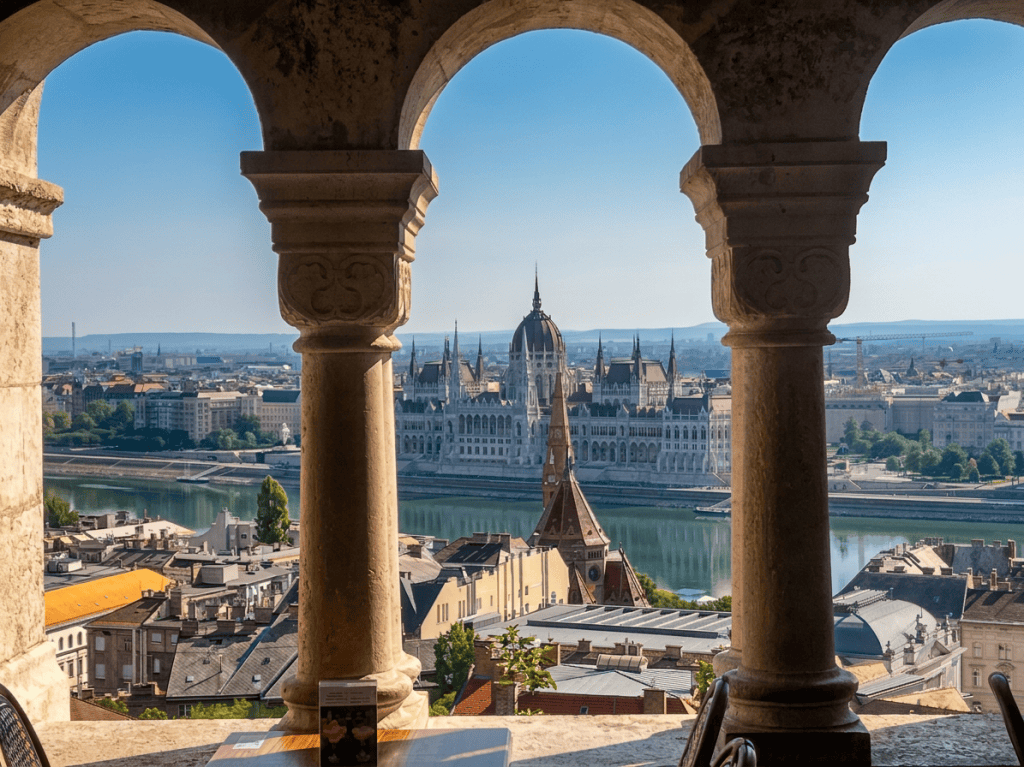
It was a no-brainer. Even after all the planning, there was no reason to keep beating ourselves up and risking our health, and we agreed there was no need to stress an already stressed region with our resource consumption as communities turned to water rationing.
So, after cycling 550 miles from Munich to Budapest, we made the decision to fly to Copenhagen, Denmark, in search of cooler weather.
The rest of the EV6 would have to wait.
PIVOT
This is where our totally unplanned journey began.
Throwing all caution to the wind and without paper maps, research, or a clue as to what cycle touring in Denmark would look like, we set off on what we soon came to call The Pivot Tour (Copenhagen to Amsterdam via Northern Germany).
Pivot tour: Denmark ⏹️, Germany ⏹️, the Netherlands ⏹️
We quickly found a great bike shop K2 Shop in Budapest to pack our bikes.
Next was finding transportation from Budapest to the airport – once this was complete, we set to work on the route, and accommodations.
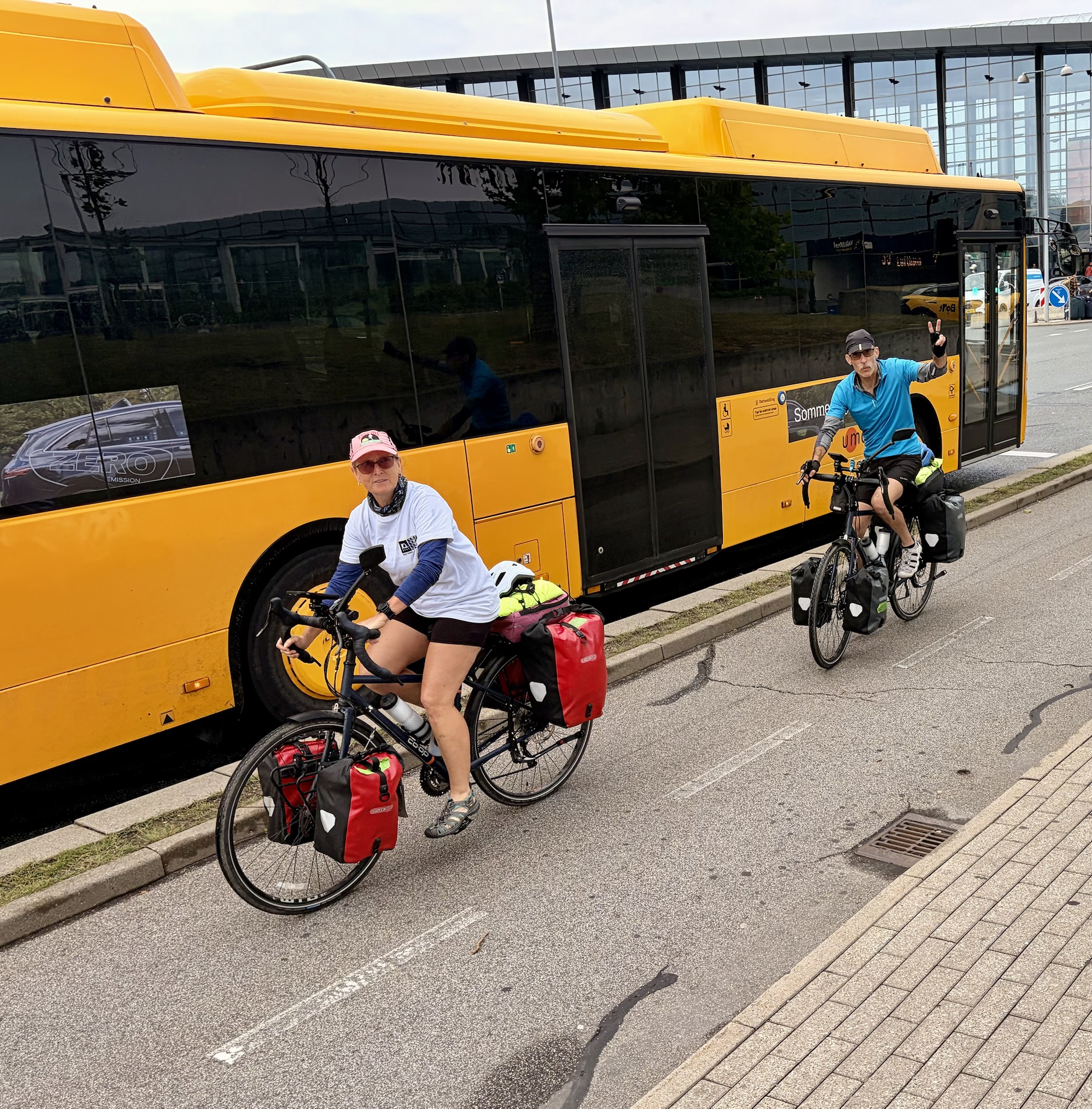
Denmark
We’ve pivoted north; now what?
Copenhagen and Denmark in general are bustling with bikes; however, a point-to-point trek across a country still requires some planning to ensure a smooth experience.
And although Denmark is known as one of the flattest countries in the world, it’s not completely flat.
And unbeknownst to us, the route we eventually settled on turned out to be the hilliest route through Denmark.
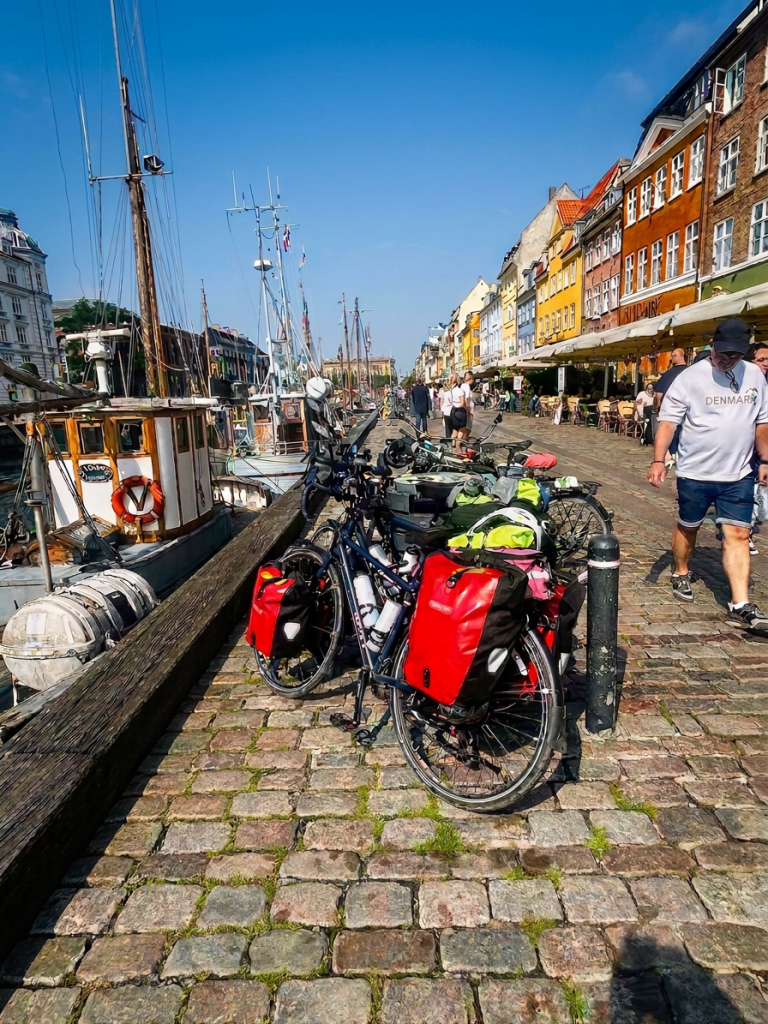
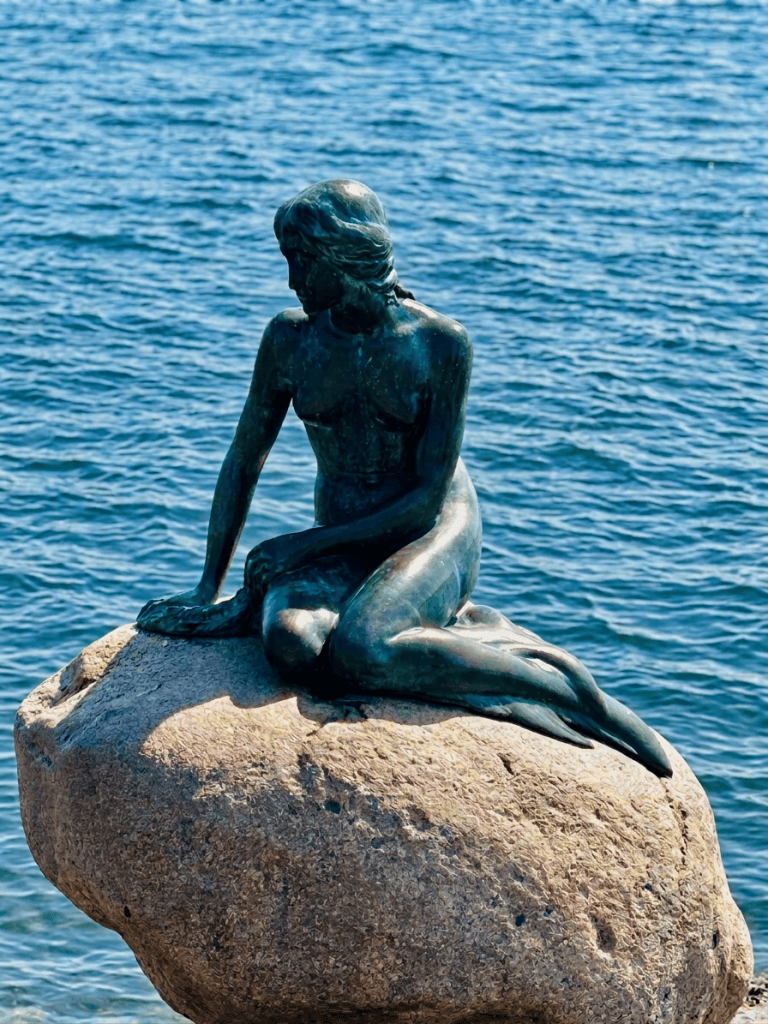
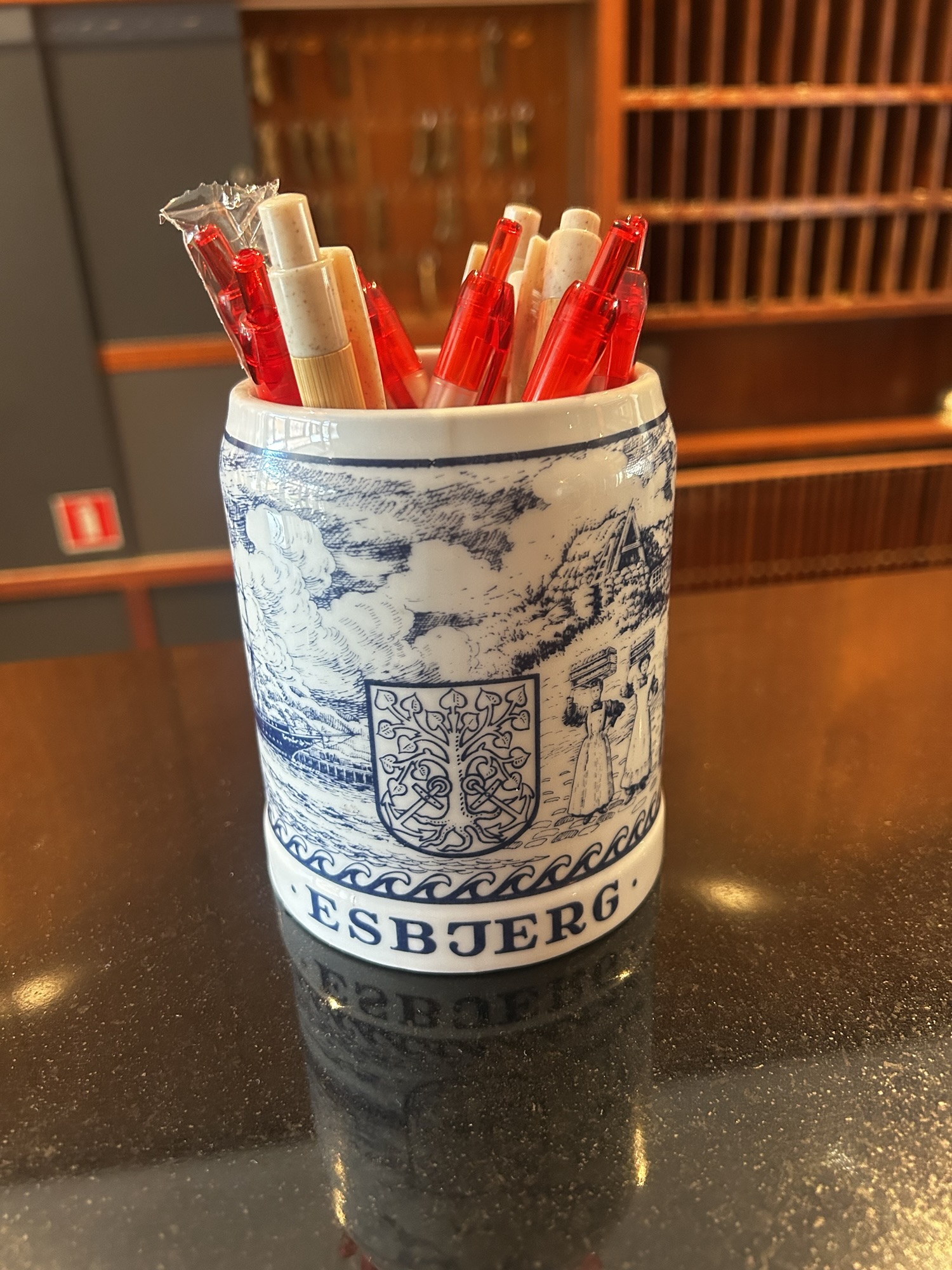
As we left Copenhagen and the beautiful waterfront area known as Nyhavn, stopping by to see the Little Mermaid statue, we had an original direction in mind. We planned to ride west toward Aarhus, continue to Esbjerg on the North Sea coast, then head south through northern Germany and ultimately end our tour in Amsterdam.
On the first day, I thought, “It’s just windy.”
How did I not know Denmark is called the “Country of Winds”?
By now, after riding for over two weeks before pivoting to Denmark, I was in good shape. However, in the Danish wind, a 40-mile ride felt more like an 80-mile ride.
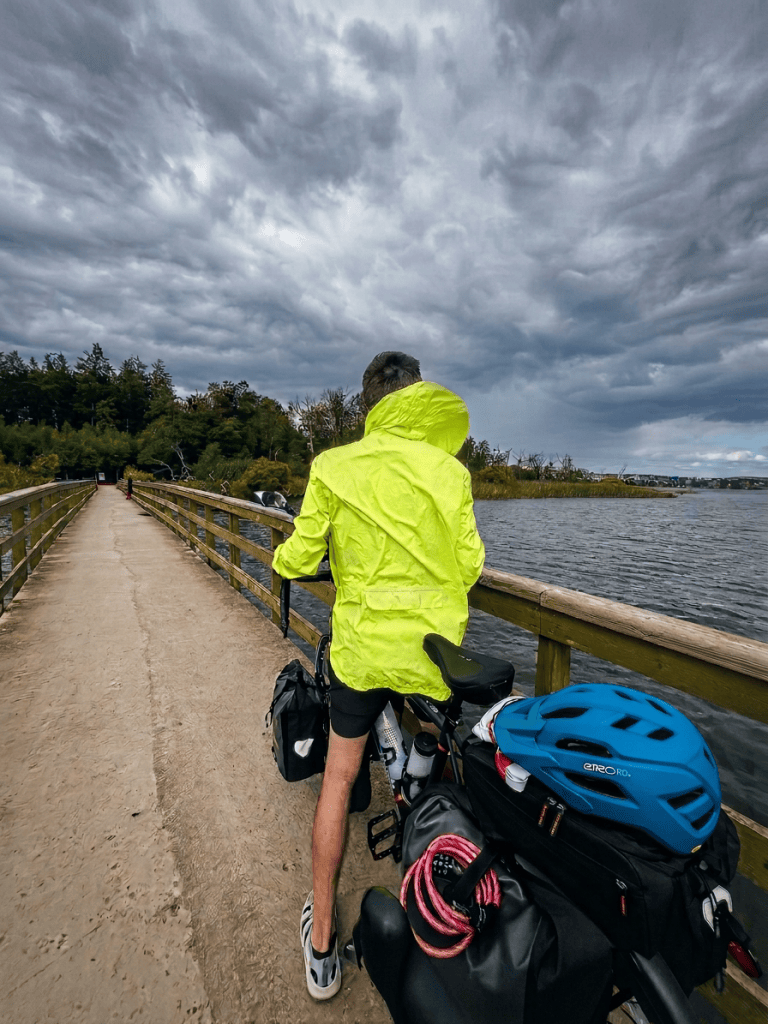
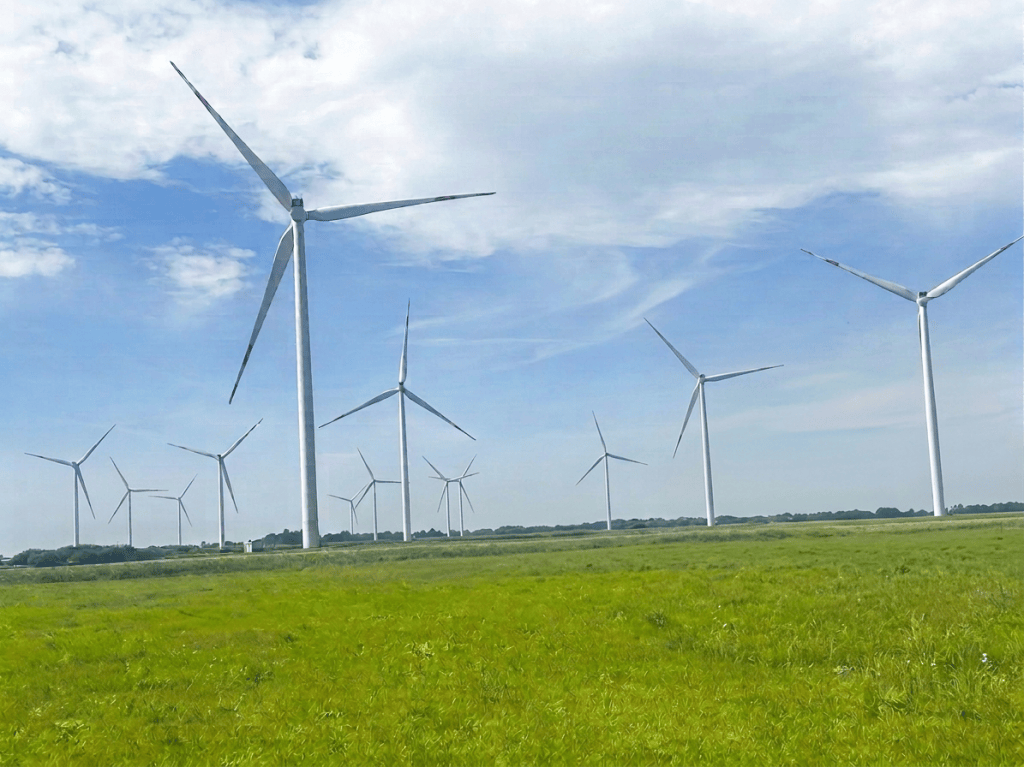
In most areas of Denmark, there is nothing to stall or block the wind, and giant turbines that reportedly generate 50% to 60% of the country’s electricity tower over the countryside.
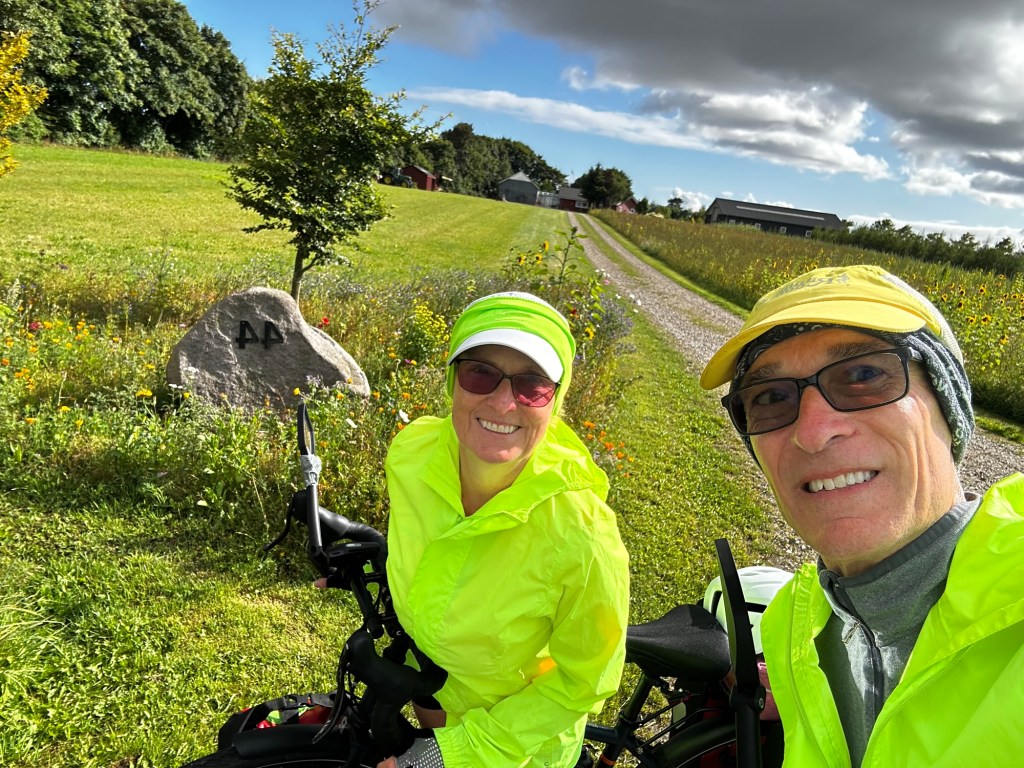
We rode west, with our heads down and muffs on our ears.
On the ferry to Aarhus on the Jutland peninsula, we met a fellow cyclist who encouraged us to head south rather than west to avoid the brutal winds.
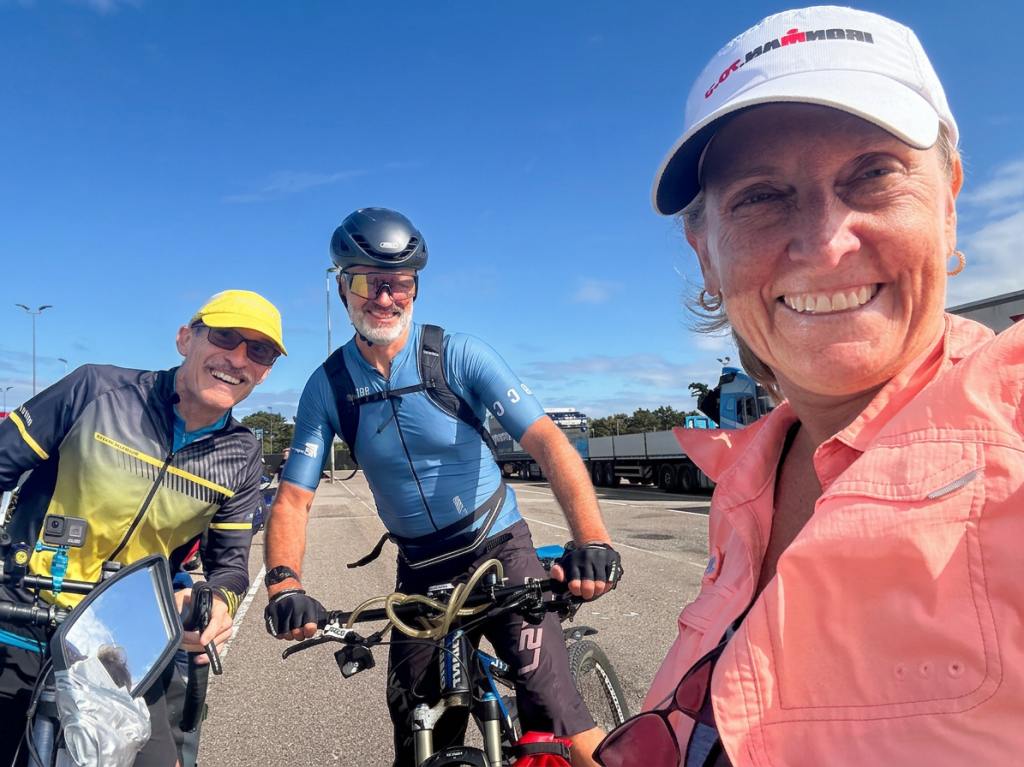
He noted that although the western route was gorgeous, the winds were substantial and could be avoided by heading south to Vejle.
He was speaking from experience, so that night we quickly rerouted ourselves with the help of Google Assistant (GA).
I asked GA to create a bike route from A to B and break it down into 40 to 45 miles per day. The results said we would wind our way through beautiful, scenic forests and fjords as we neared Vejle.
So, as described, the route led us straight into Vejle.
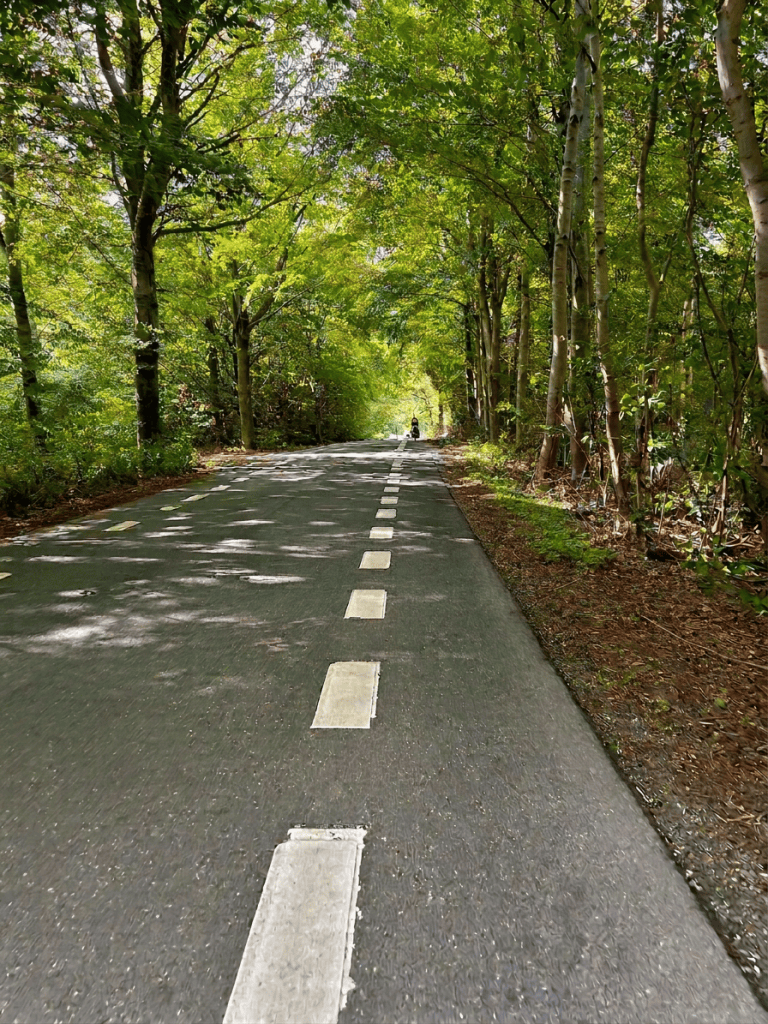
Have you heard of the area?
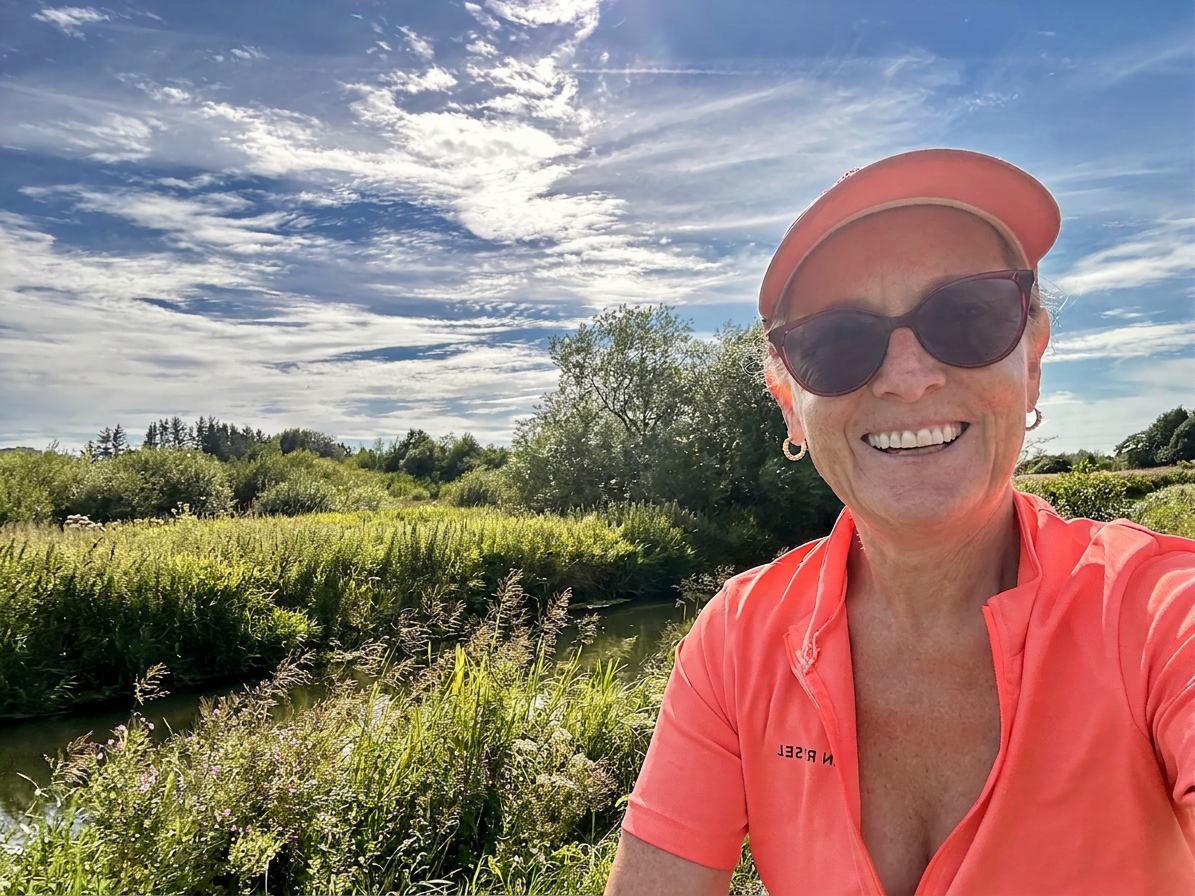
Well, let’s just say that in 2022, the Tour de France purposefully routed the riders through Vejle as a challenge.
You can google the area; it was stage 3 in 2022.
This area, known as the Vejle Adal Valley, is famous for steep, short inclines.
I’m proud to declare that I conquered the entire route without once walking the bike, although in granny gear, I rode every inch of it like a champ.
One of us, not me, turned out to be the better climber and waited patiently at the top of each climb.
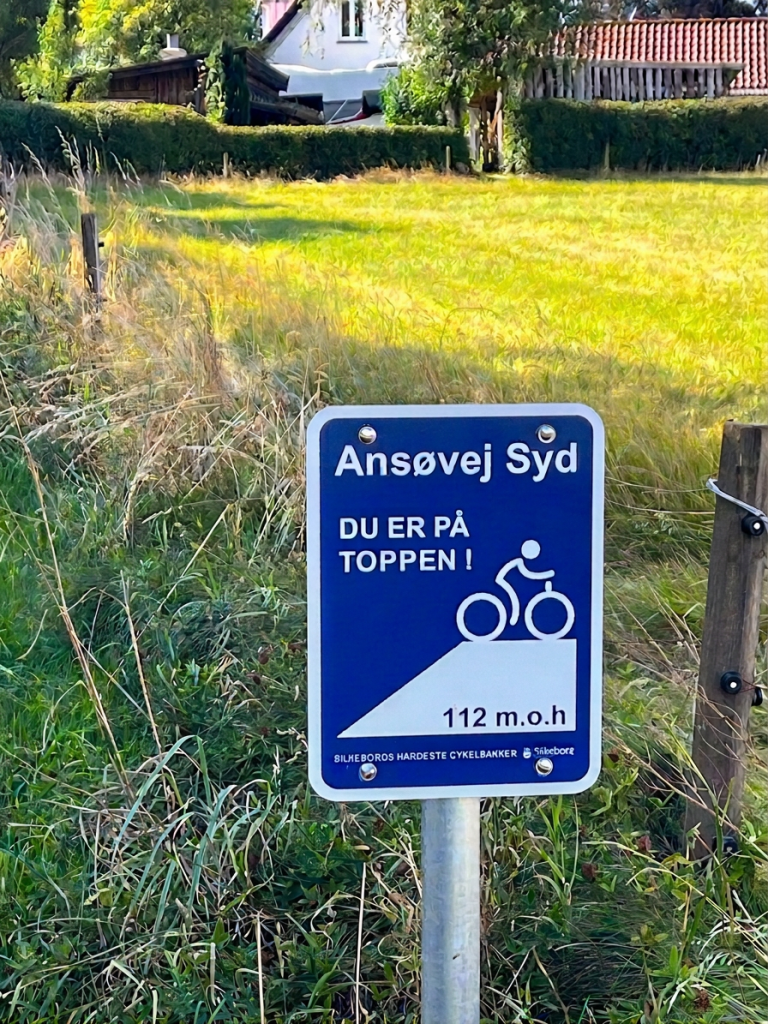
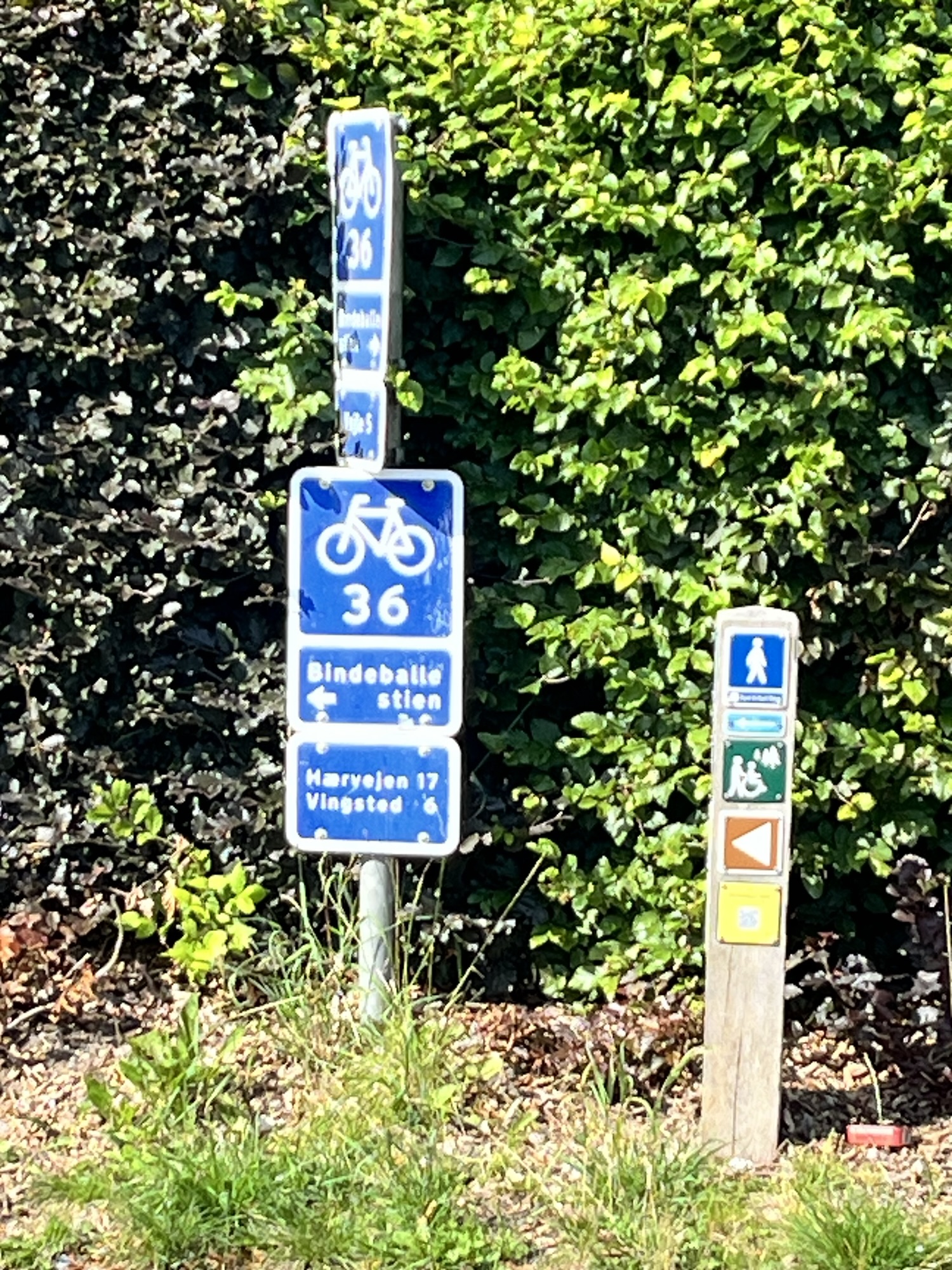
This one is the Ansovej Syd. sign and reads Silkeborg’s Hardest Cycling hills.
Once through the Vejle Adal Valley, we continued to head south through beautiful Danish farm and pasture lands filled with massive wind turbines.
Denmark was proving to be a great place for a cycle tour.
But the West Coast was calling my name.
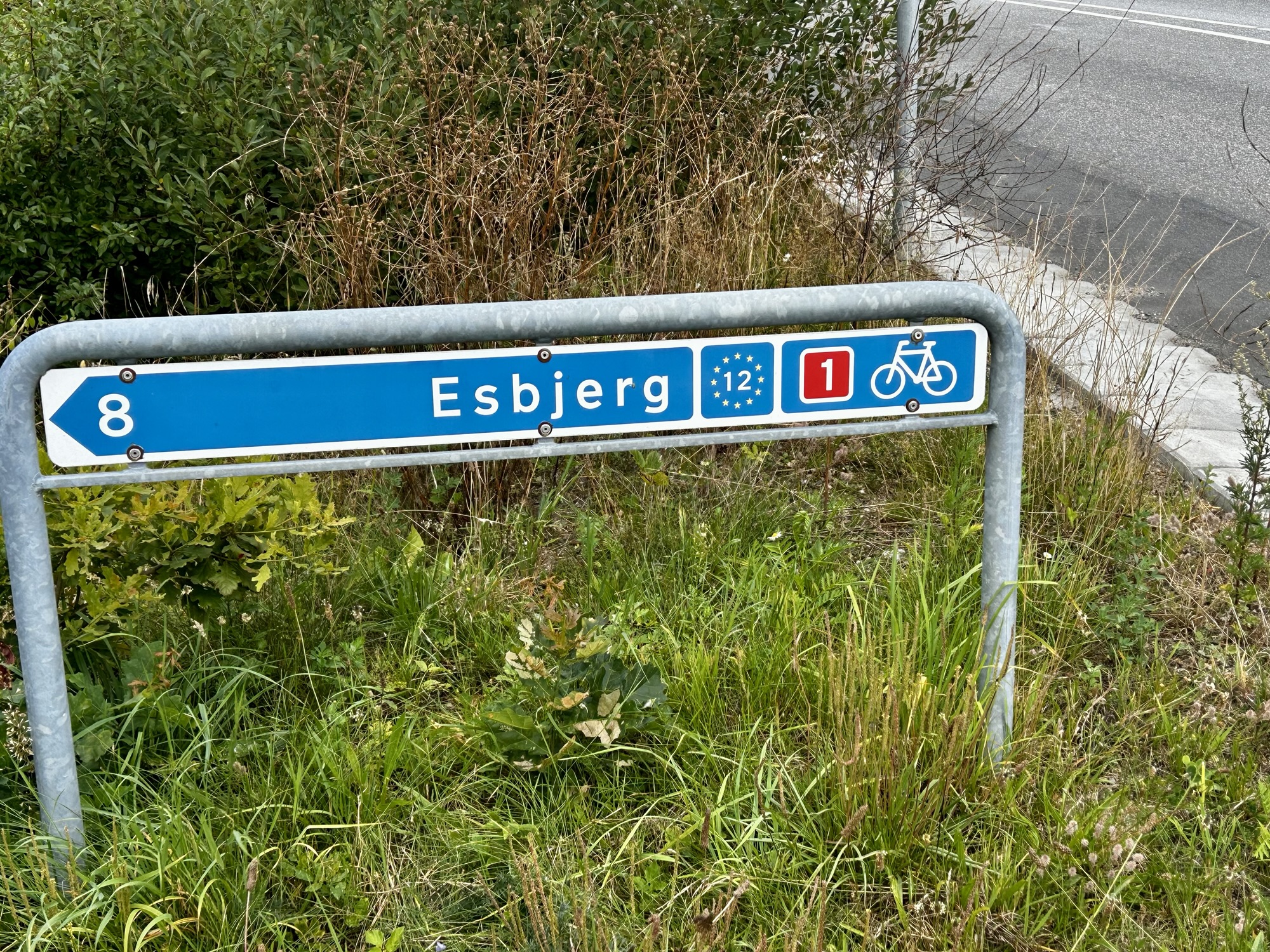
So, I asked GA again to create a bike route from A (our latest location) to B (Amsterdam), but this time to add back the town of Esbjerg, which had been on our original route.
With the hills of the Vejle Adal Valley behind us, we now only had to contend with the weather, and more specifically, the wind, as we were again heading due west and back into the wind.
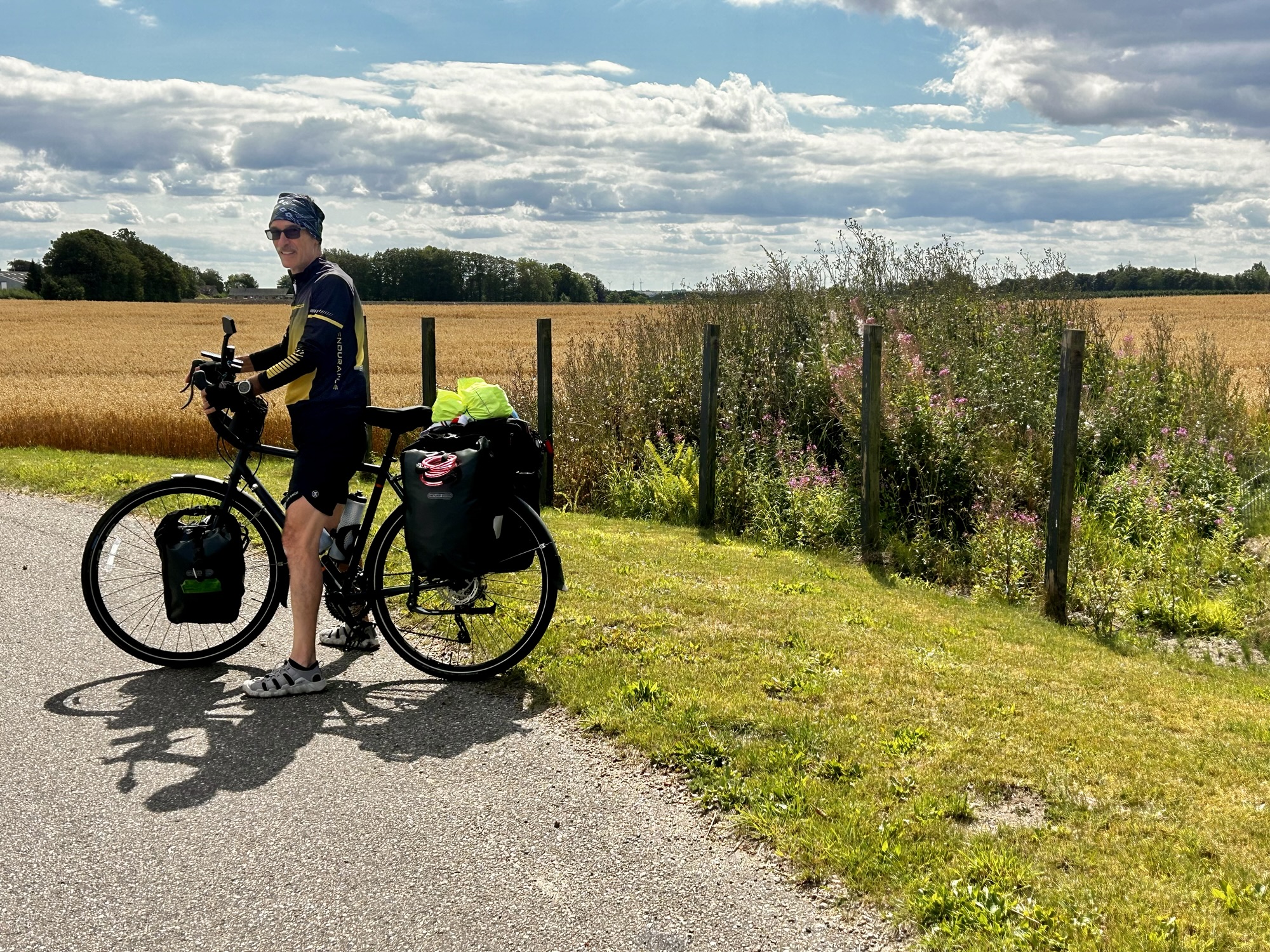
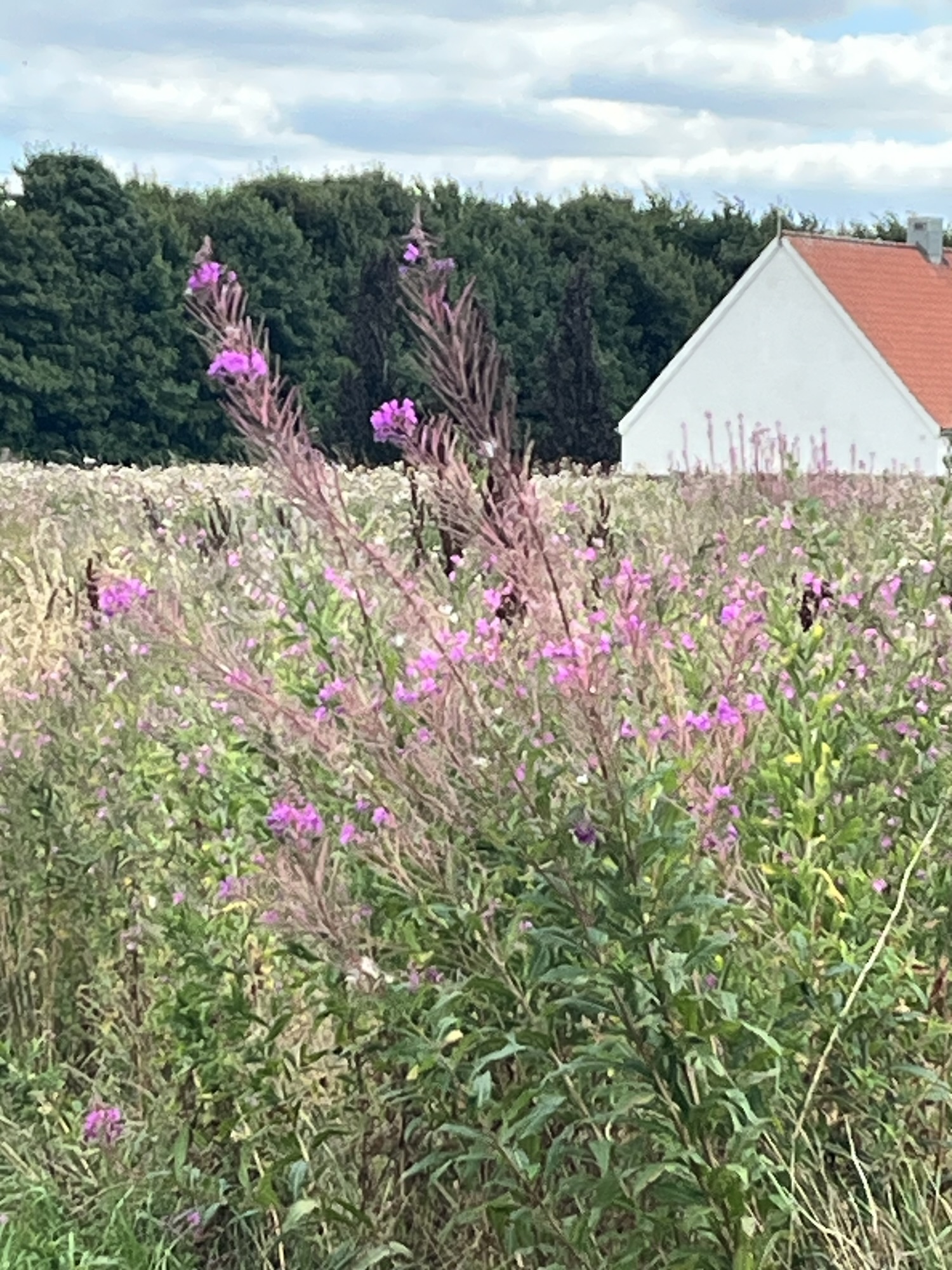
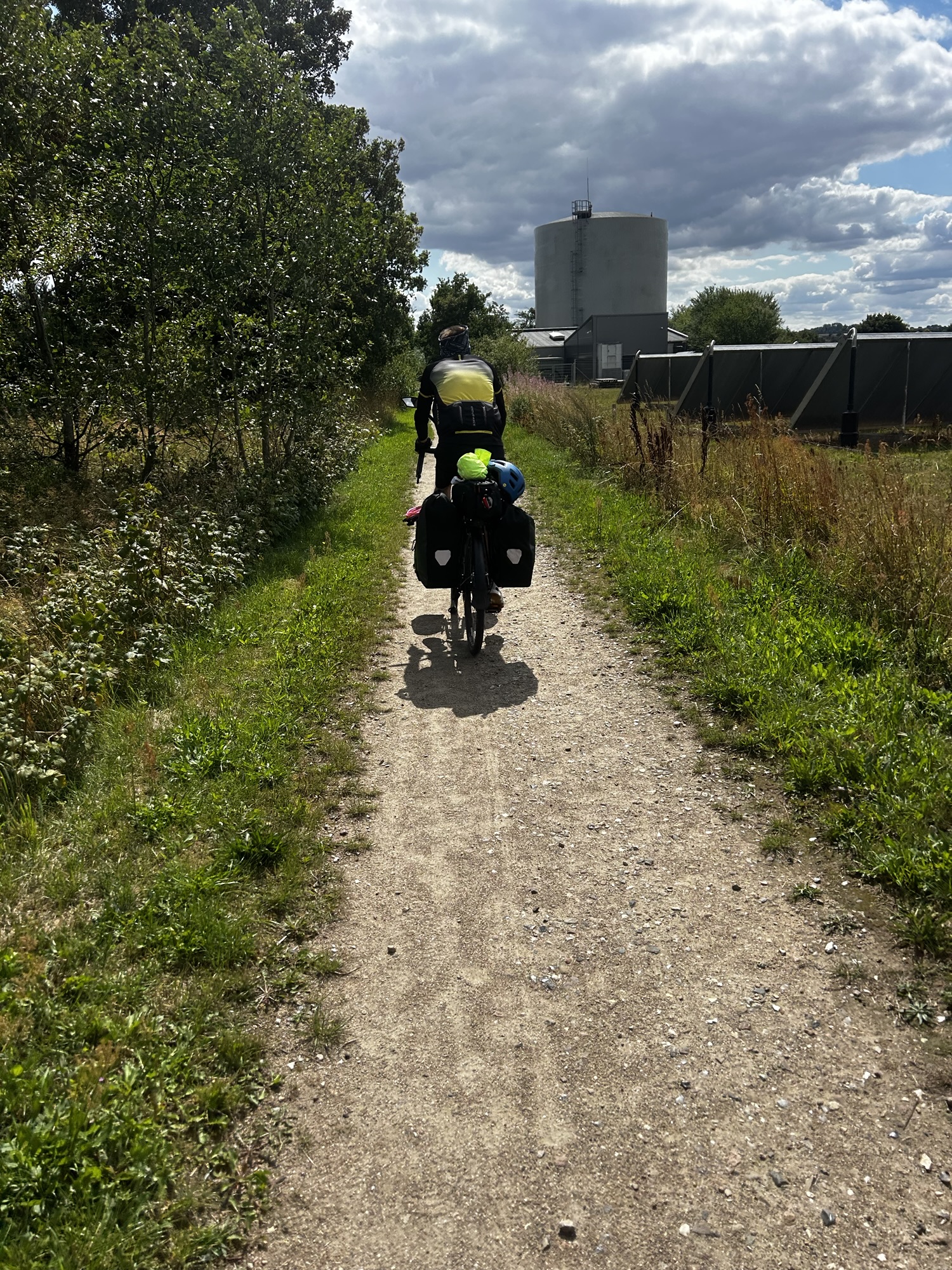
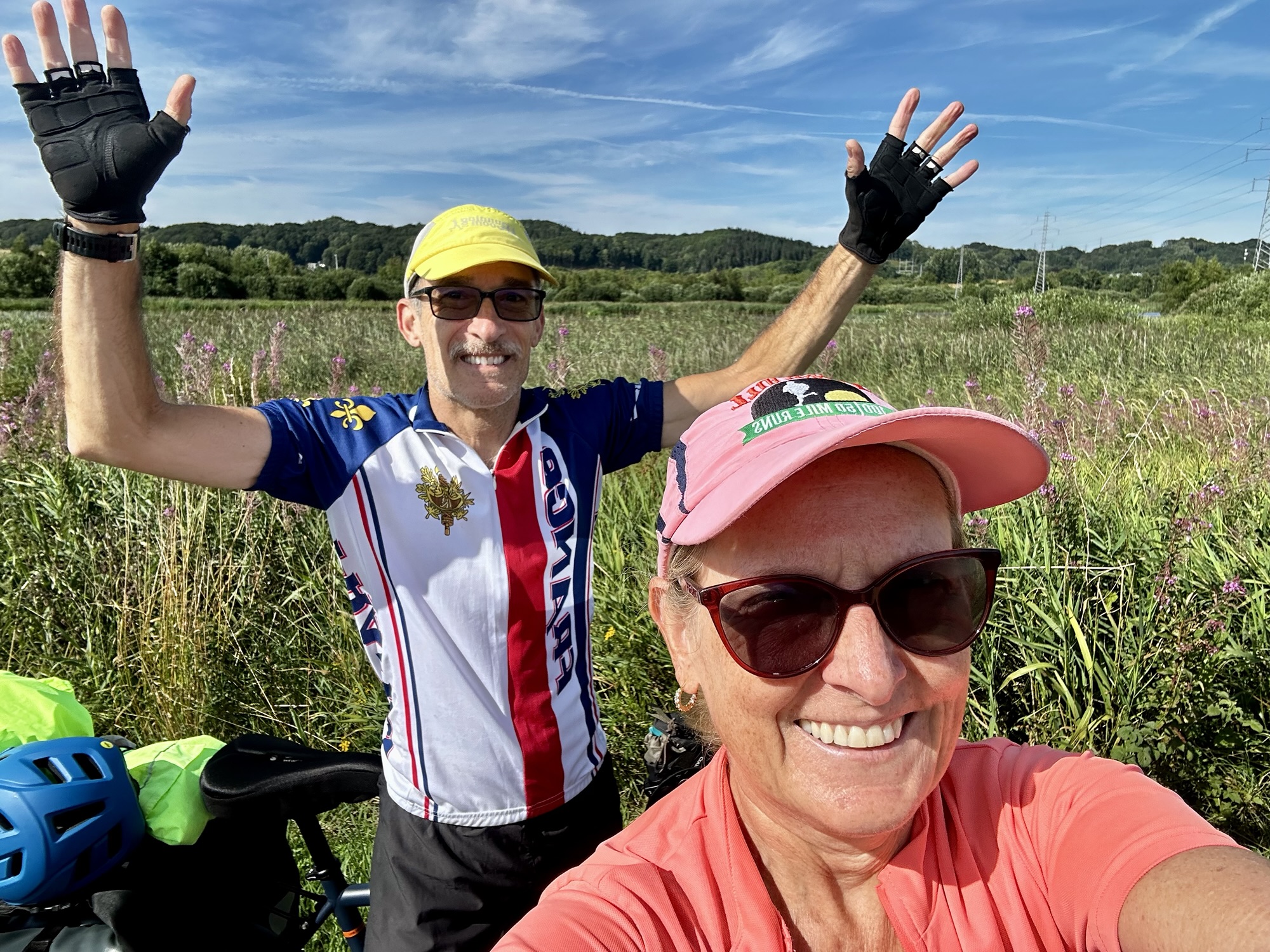
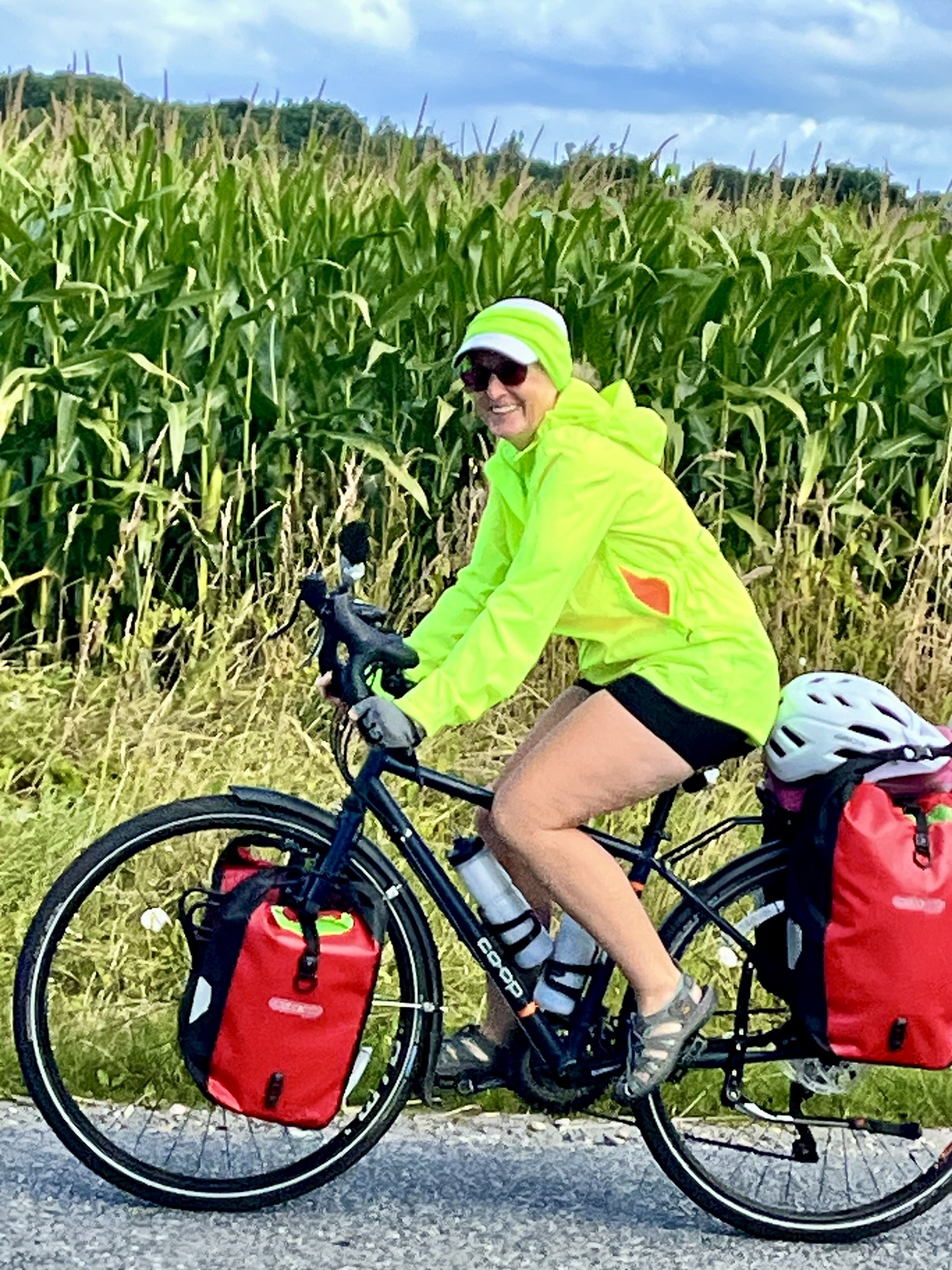
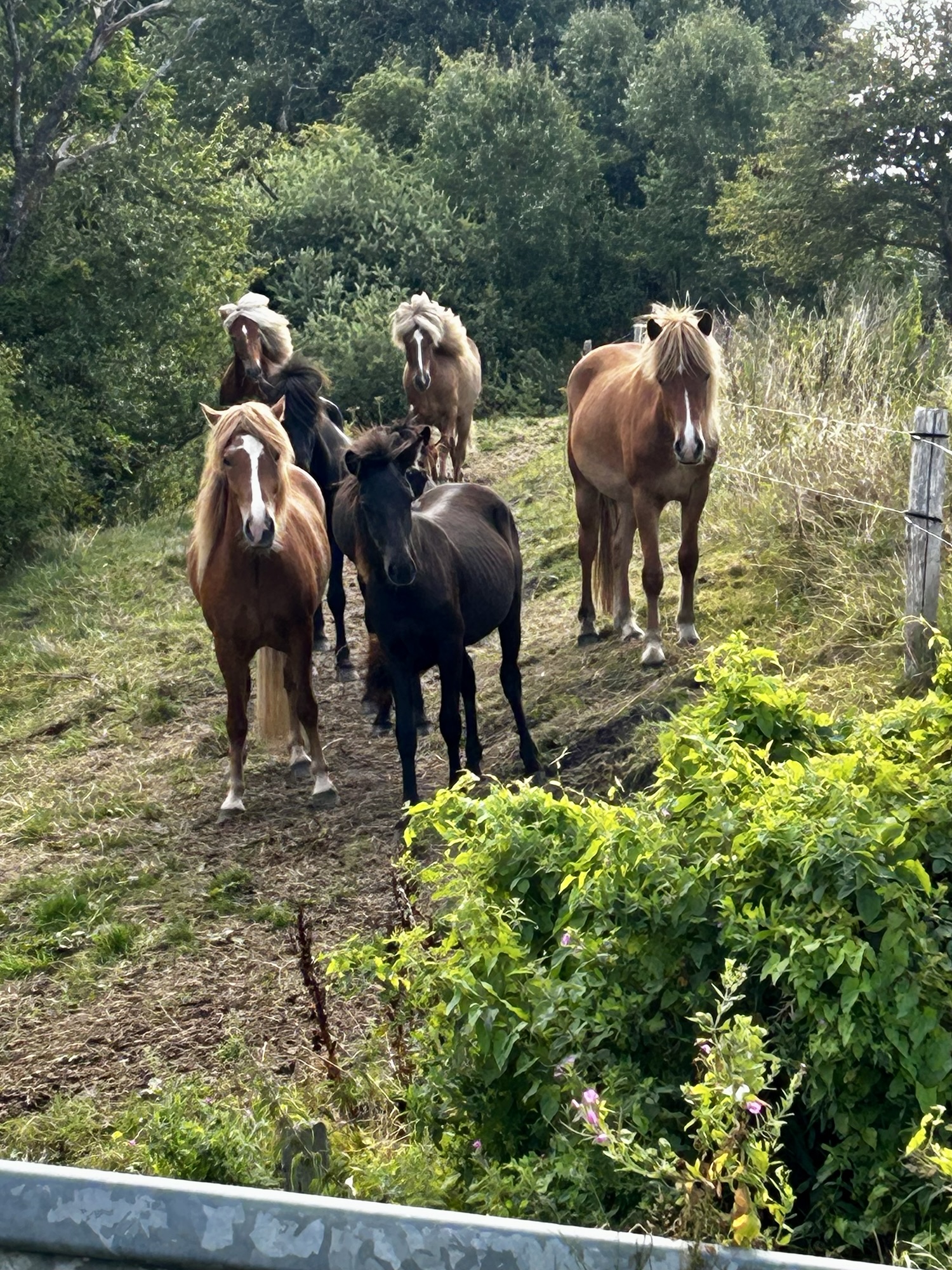
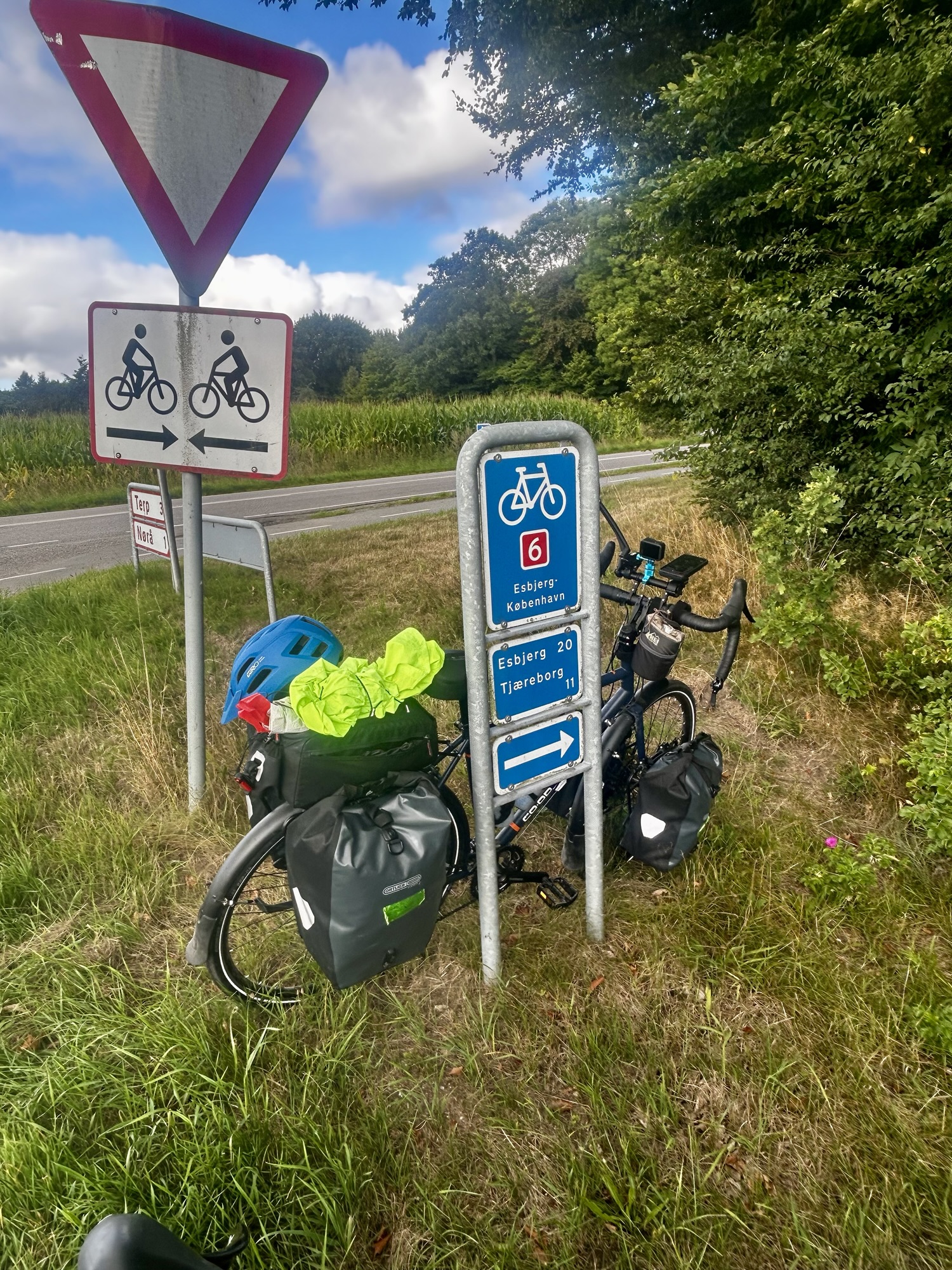
So here we were, in mid-August, having gone from the dog days of summer in Budapest to what felt like early-spring weather in Denmark.
Our bodies struggled to acclimate, and we eventually had to buy better gloves to keep our hands warm and dry in the rain.
I tossed out many of my summer clothes and bought each of us a long-sleeve riding shirt.
Thank goodness, when packing for our original trip, we had the sense to pack our green wind and rain jackets.
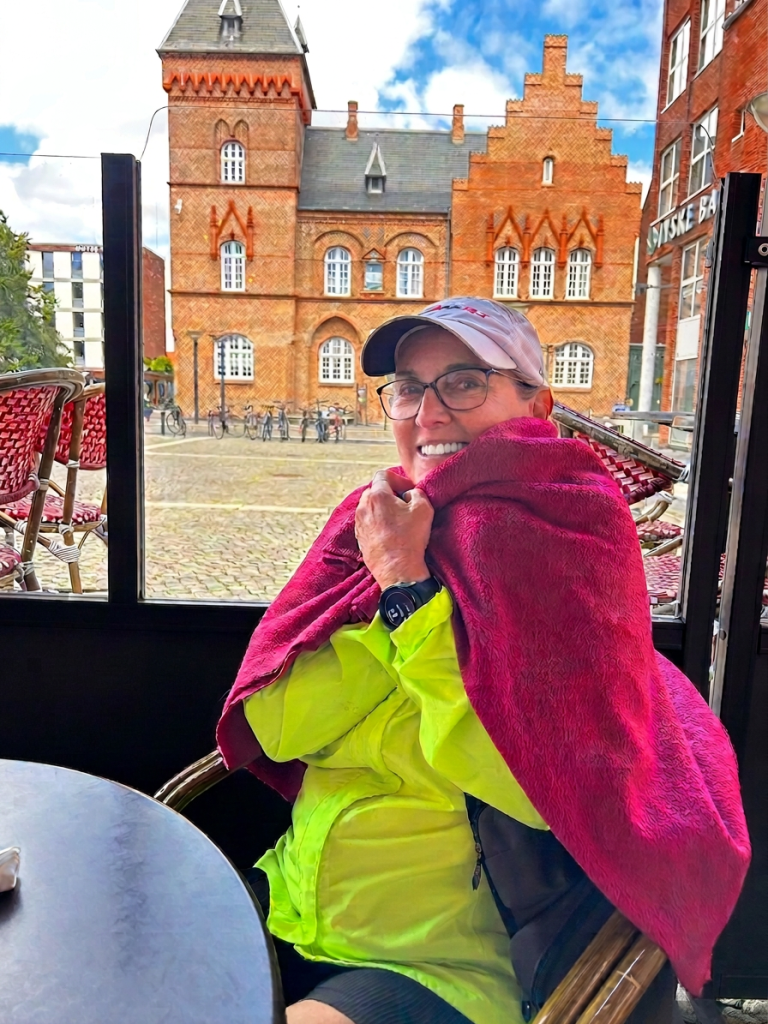
Arriving on the coast in Esbjerg was somewhat underwhelming because it was so damp and windy.
But by then, we both knew this Pivot of a tour was all about adapting to changes and challenges. And as hard as 2026 tried, it wasn’t going to beat us.
We found a wonderful outdoor cafe with tall plexiglass wind blocks, space heaters, and blankets.
We smiled at what we had accomplished together on the fly and talked about what was to come.
With all the reroutes from west to south back to west, we found ourselves a day behind, and believing every European bike tour should include at least one train ride, we saw the opportunity to take a 40-mile train jump to the German border, putting us back on schedule.
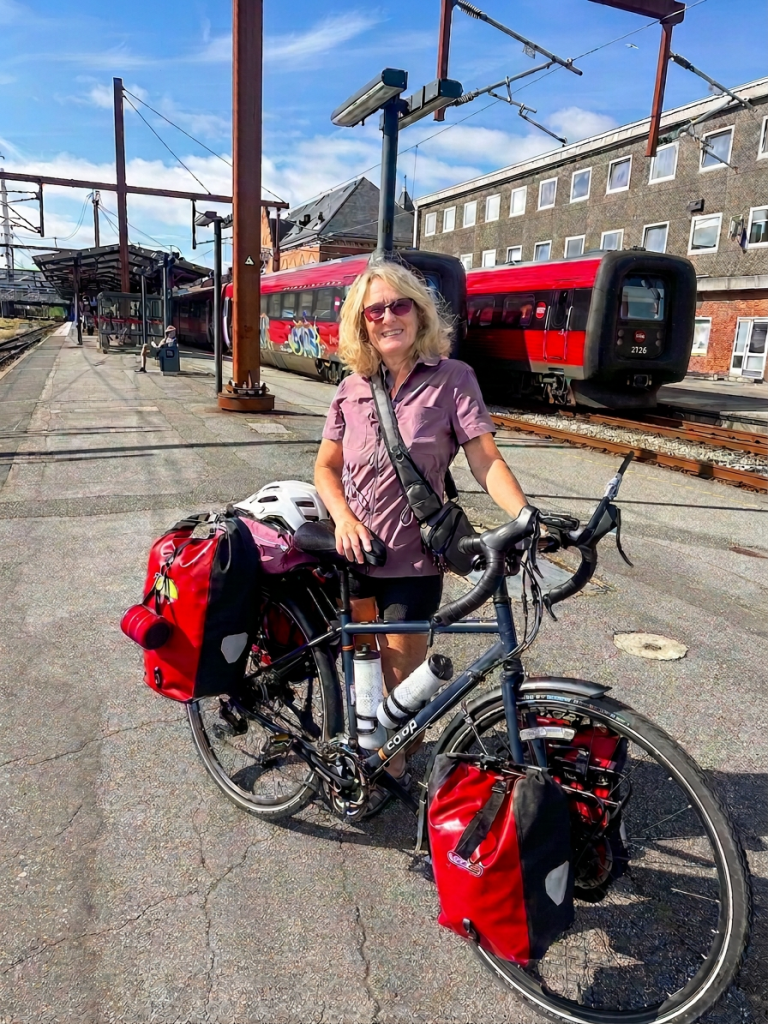
We still rode 20 miles that day, but the train ride gave us time to rest and prepare for the next segment of the trip.
Note on Denmark: a beautiful country with top-notch bike infrastructure, but it truly lacks enough bakeries to support my kind of bike route. And way too windy – bring ChapStick.
Pivot tour: Denmark ✅, Germany ⏹️, the Netherlands ⏹️
Germany
During this Pivot tour, which we undertook without preparation or planning, we relied on GA to guide us daily from point A to point B and describe the route.
We used the results only as a rough draft, since the mileage calculation was often off by 10 or more miles.
But on the fly, it (GA) worked great – even suggesting where to stop for lunch or what you might not want to miss along the way. It was a great tool, and if you’ve ever planned a bike tour, you know you want to have as many tools at your disposal as possible.
We also used Google Maps and Komoot. Both are awesome and worked so well. We used Google Maps’ search-along-route feature to find cafes and supermarkets. We also leaned on Komoot’s multi‑day planner, which automatically splits journeys into stages and suggests accommodations.
“Why are we going so fast?” I thought to myself as we approached the German border.
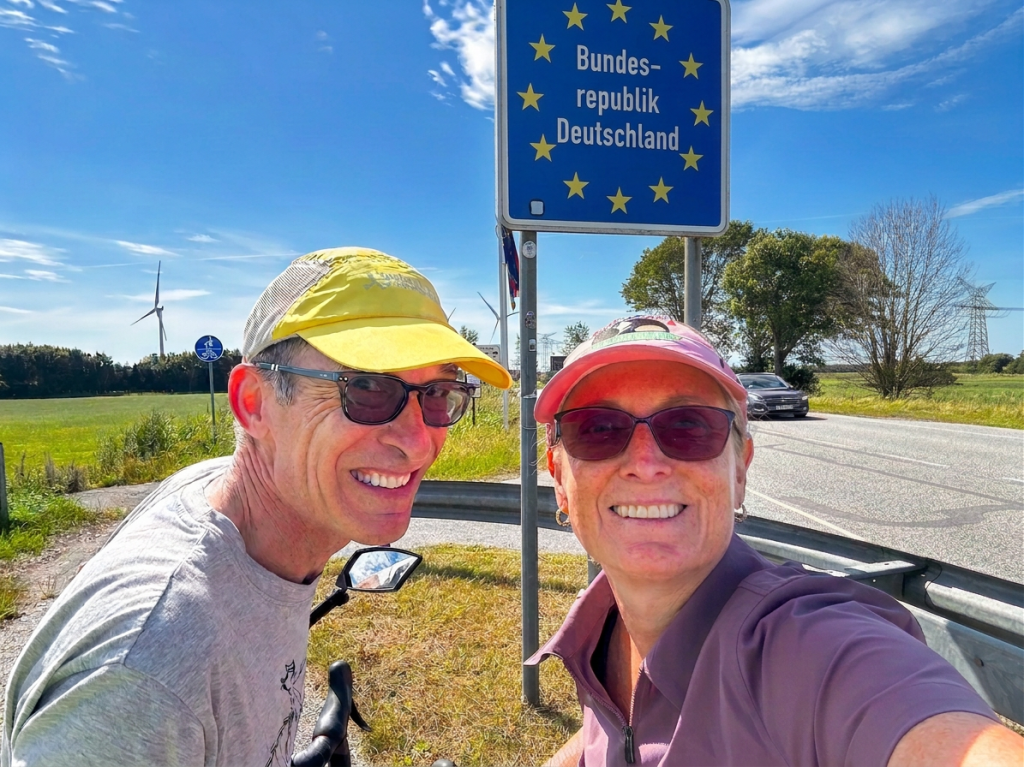
We were both so excited, as Germany has always been a place we enjoy and often feel very much at home.
However, we quickly noticed that this northern section of the country seemed to have just as many wind turbines as Denmark, which meant more WIND. But it was, or seemed to be, a little warmer and a bit sunnier.
In addition, we were back in the land of the Euro (€), which meant we could quickly calculate how much each schnecke pastry would cost.
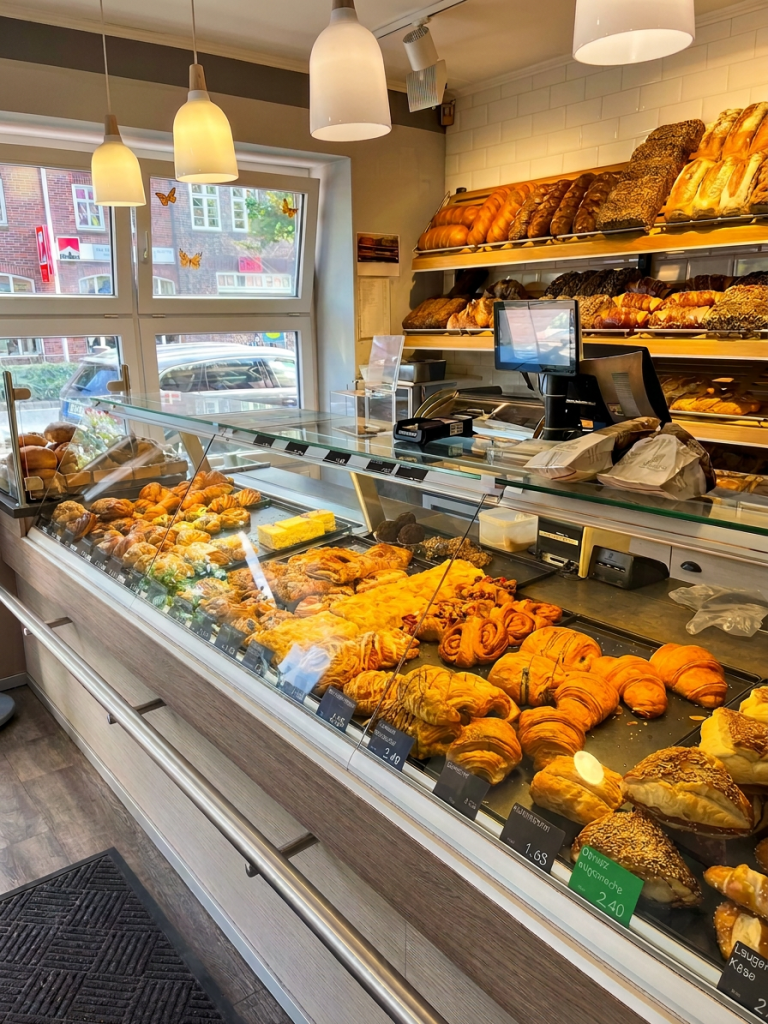
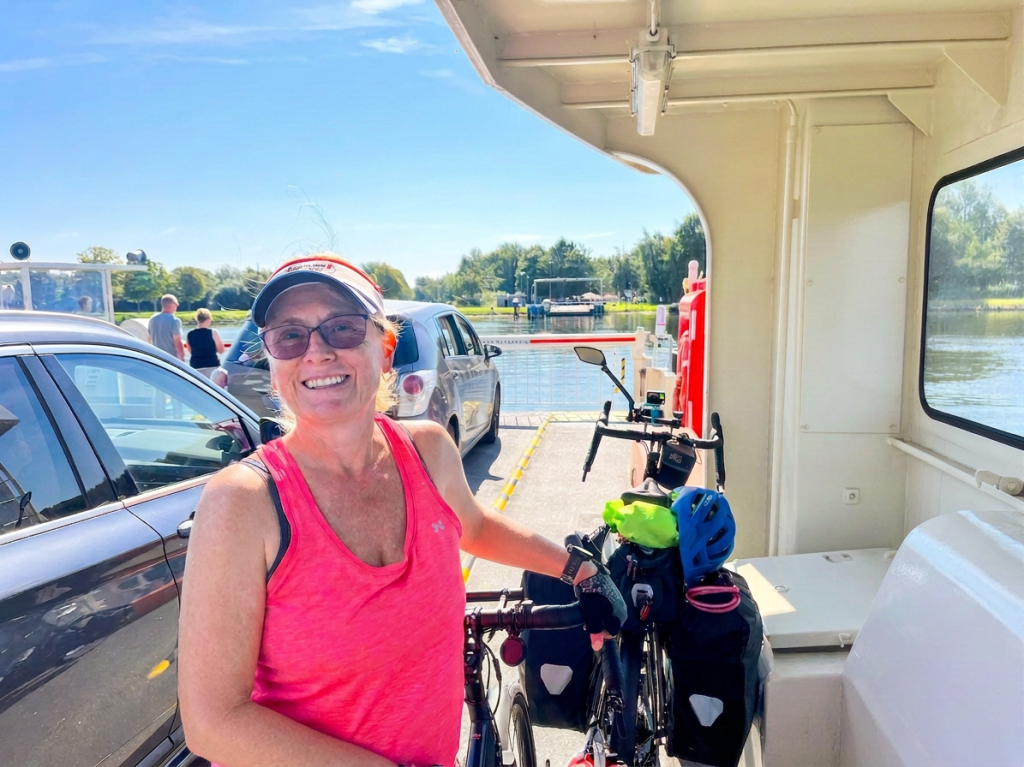
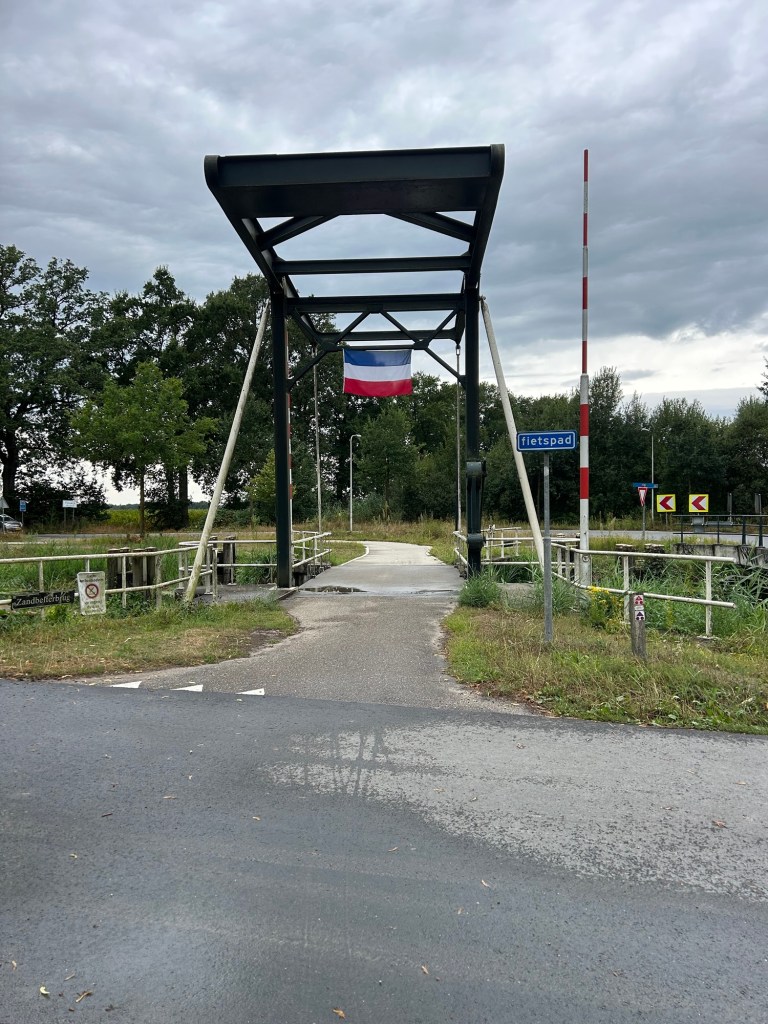
We also knew we would be taking several ferries during this section of the trip. One long one and a few short ones. I was wary of how they would operate, but after a quick Google search, it was obvious that people did this every day in this area. It’s simply the way you move around.
The ferries are affordable, quick, and efficient.
In fact, the Kanalfähre Breiholz (ferry) crossing the Kiel Canal is free for cyclists, pedestrians, and motor vehicles.
When the canal was constructed in the late 19th century, it separated many local roads. To compensate, Kaiser Wilhelm mandated that all 14 crossing points remain permanently toll-free.
Northern Germany was a wonderful contrast to the southern region near Munich, where our original bike tour had kicked off just a few weeks before.
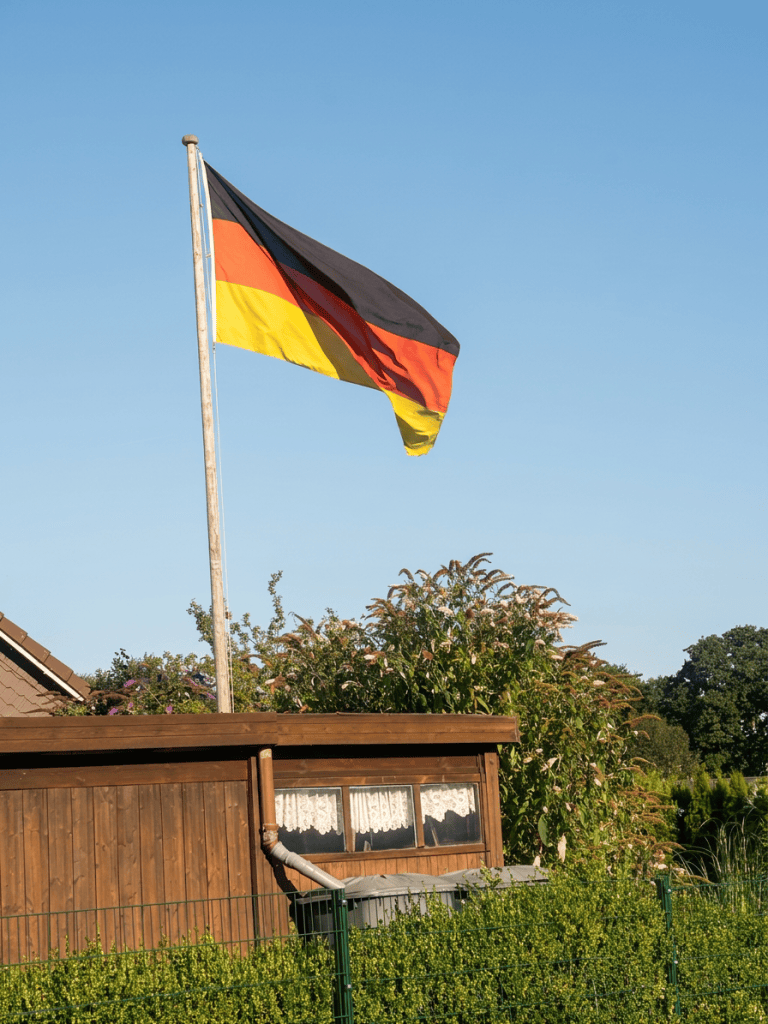
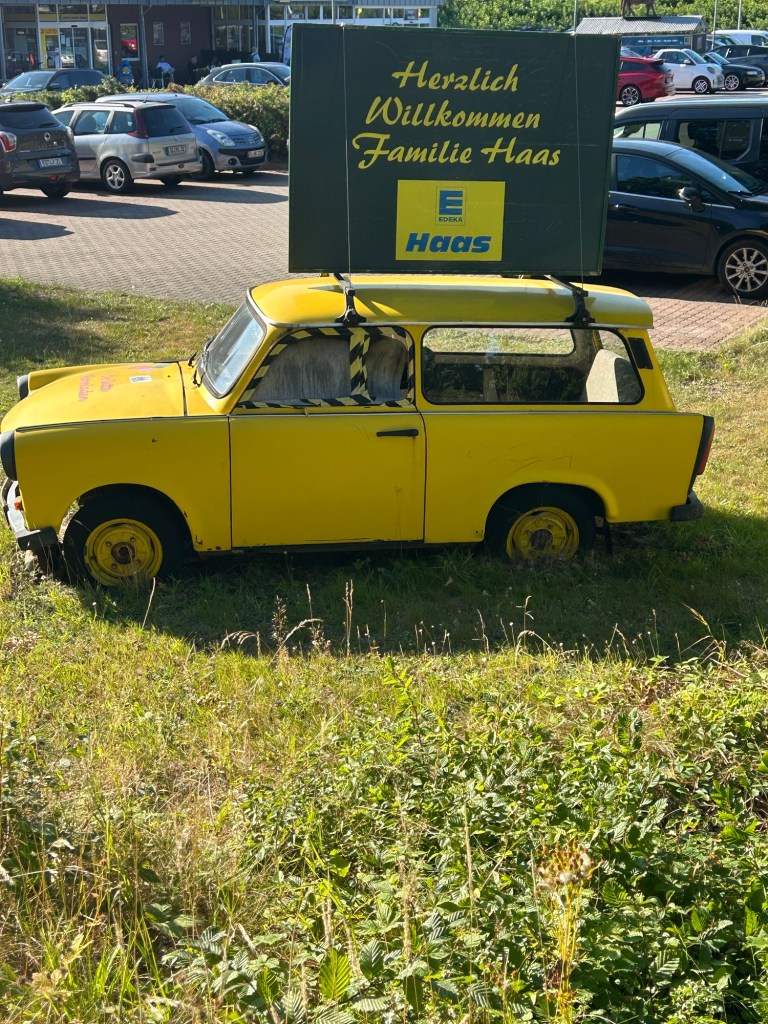
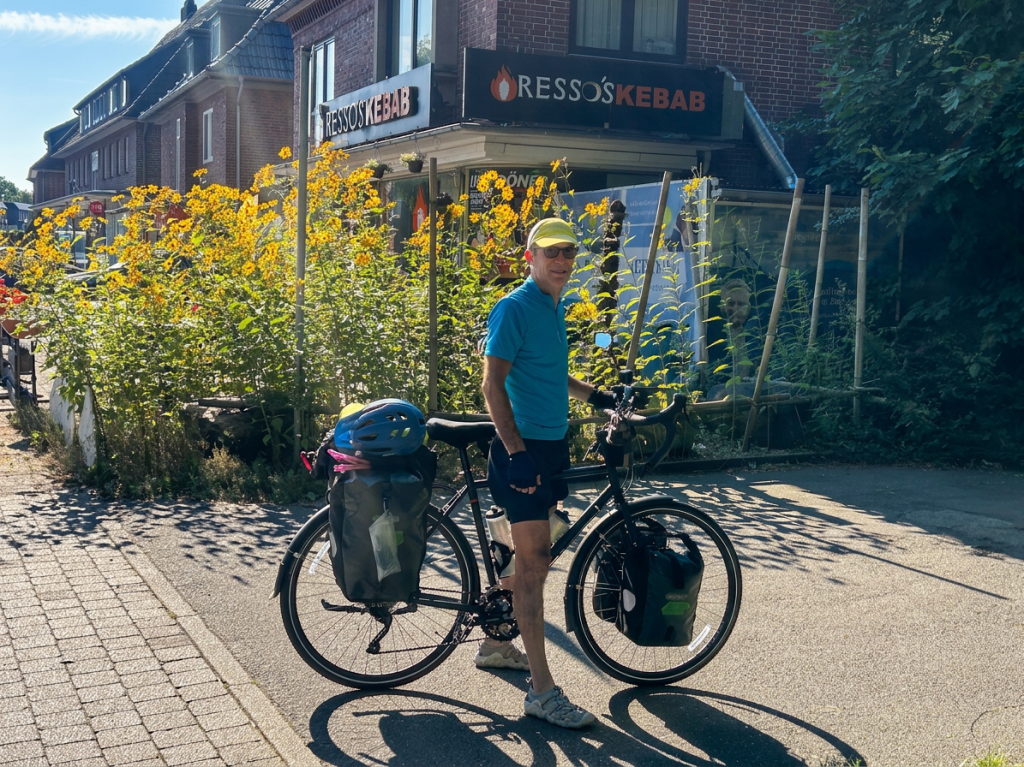
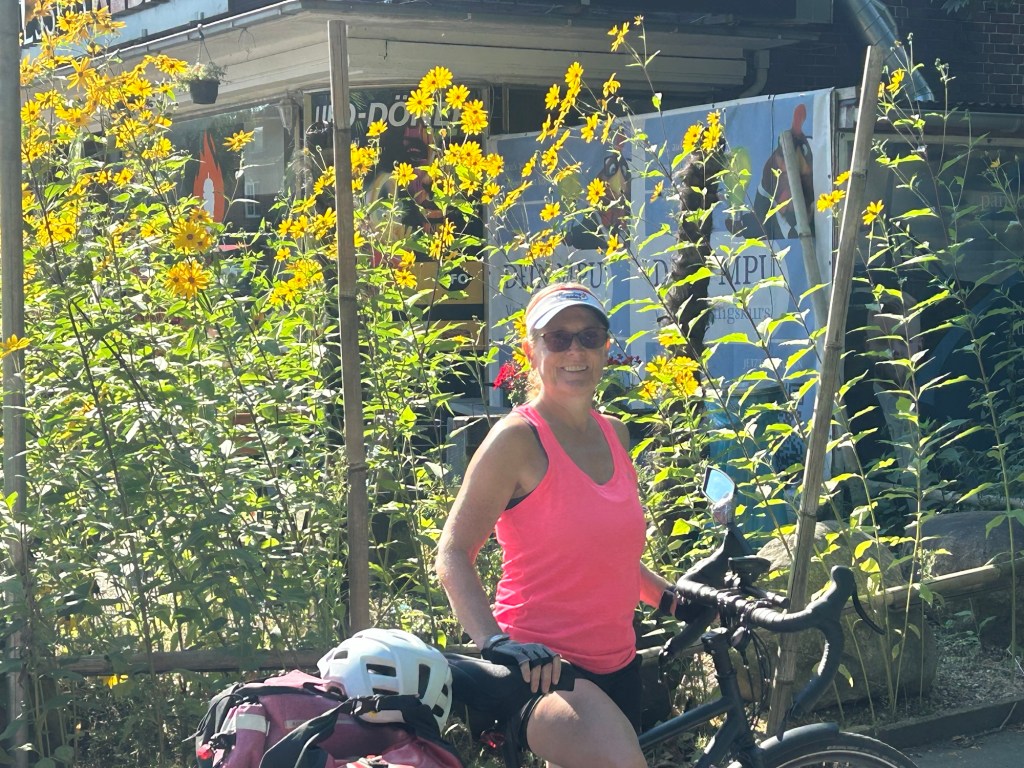
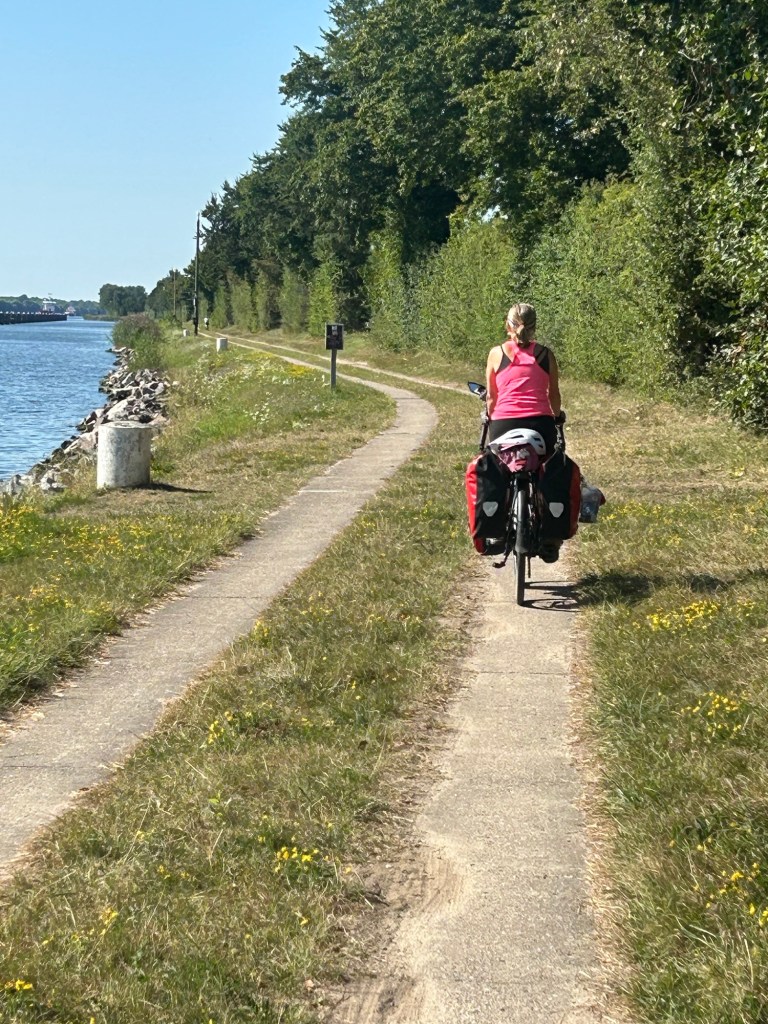
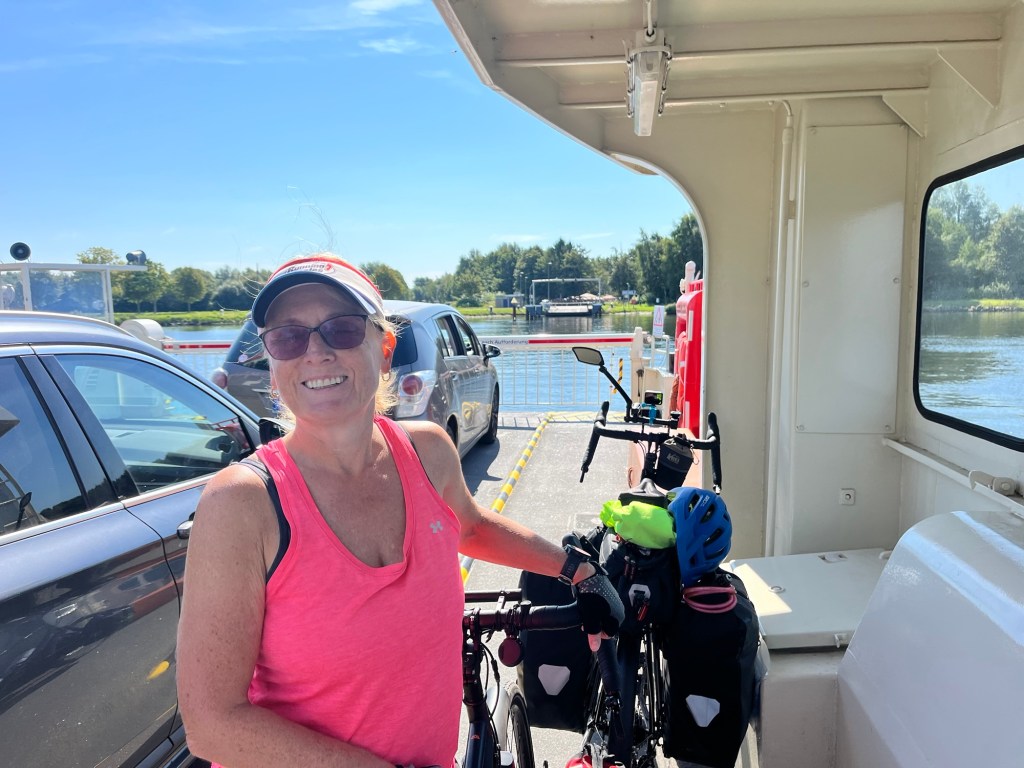
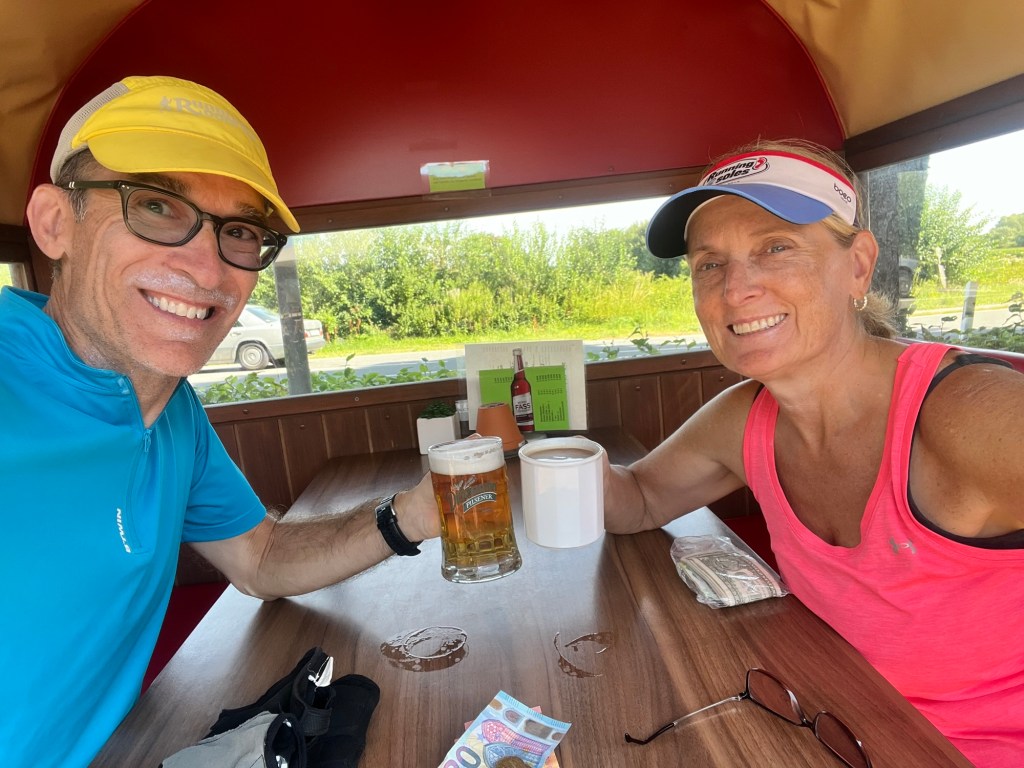
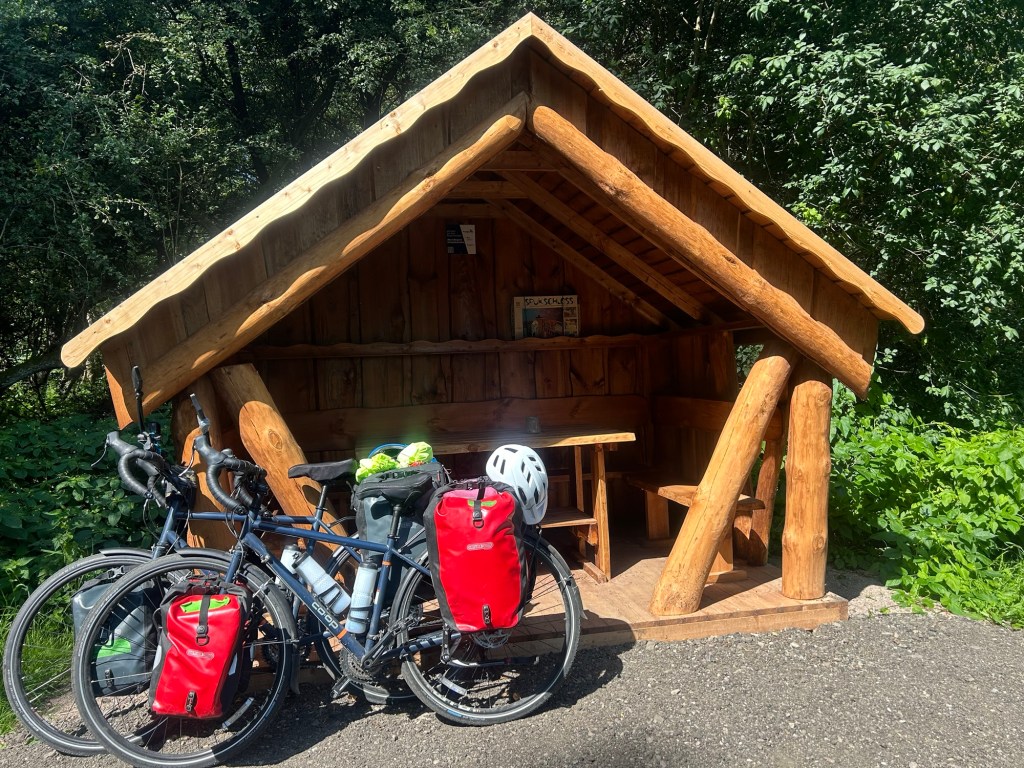
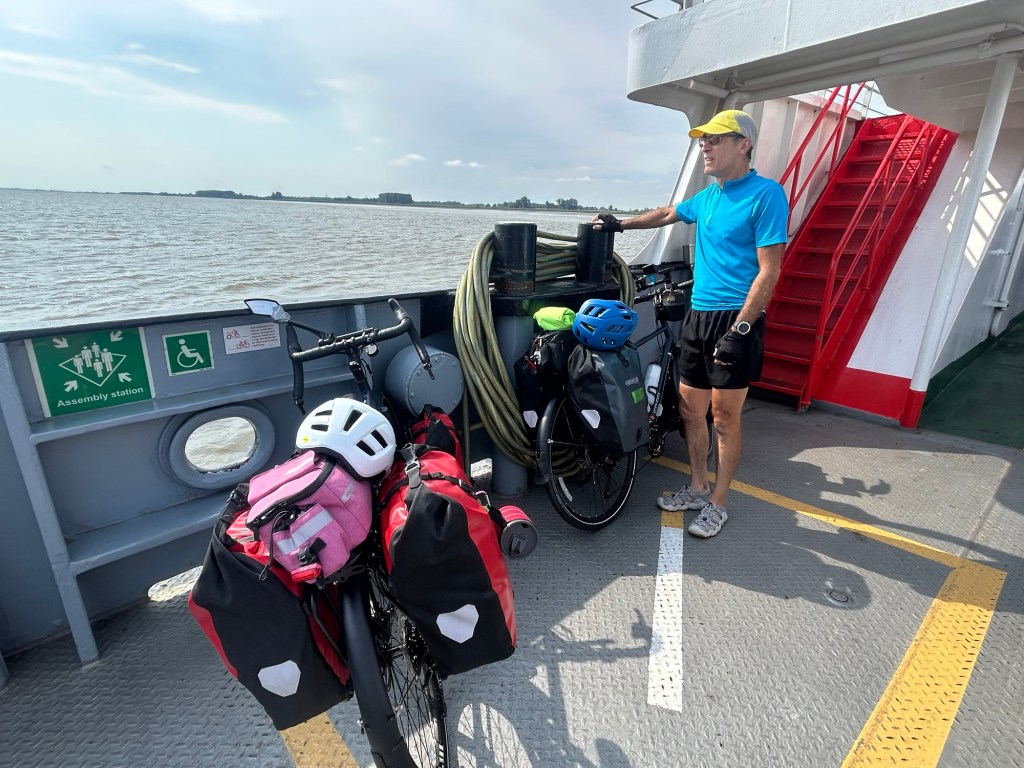
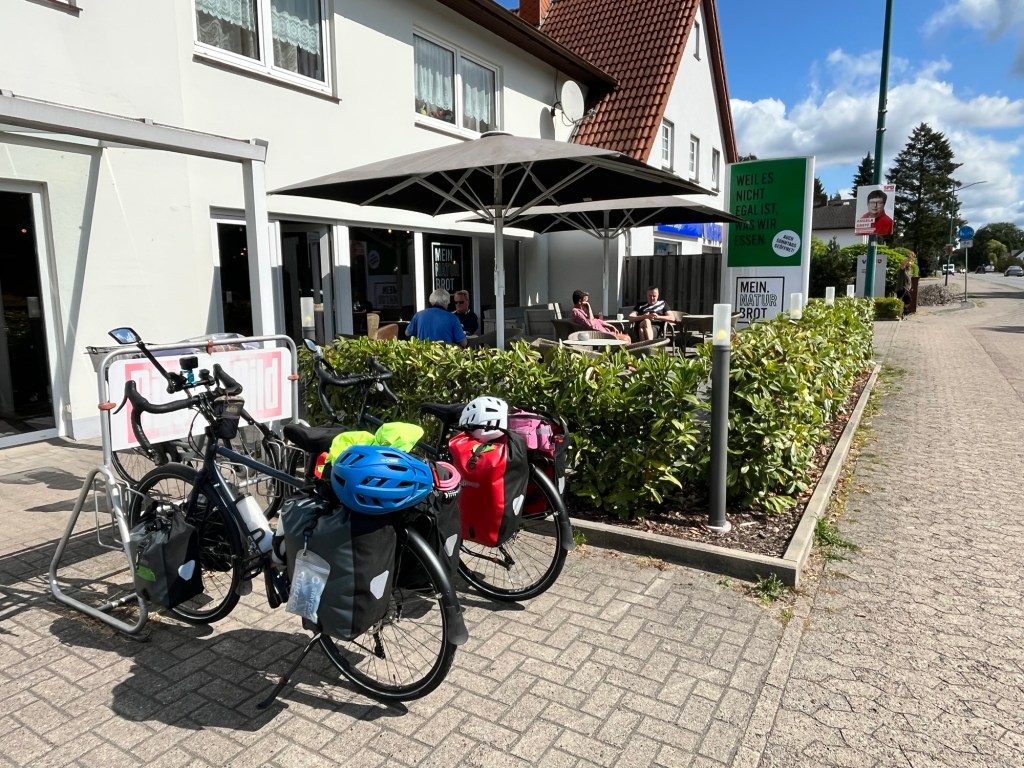
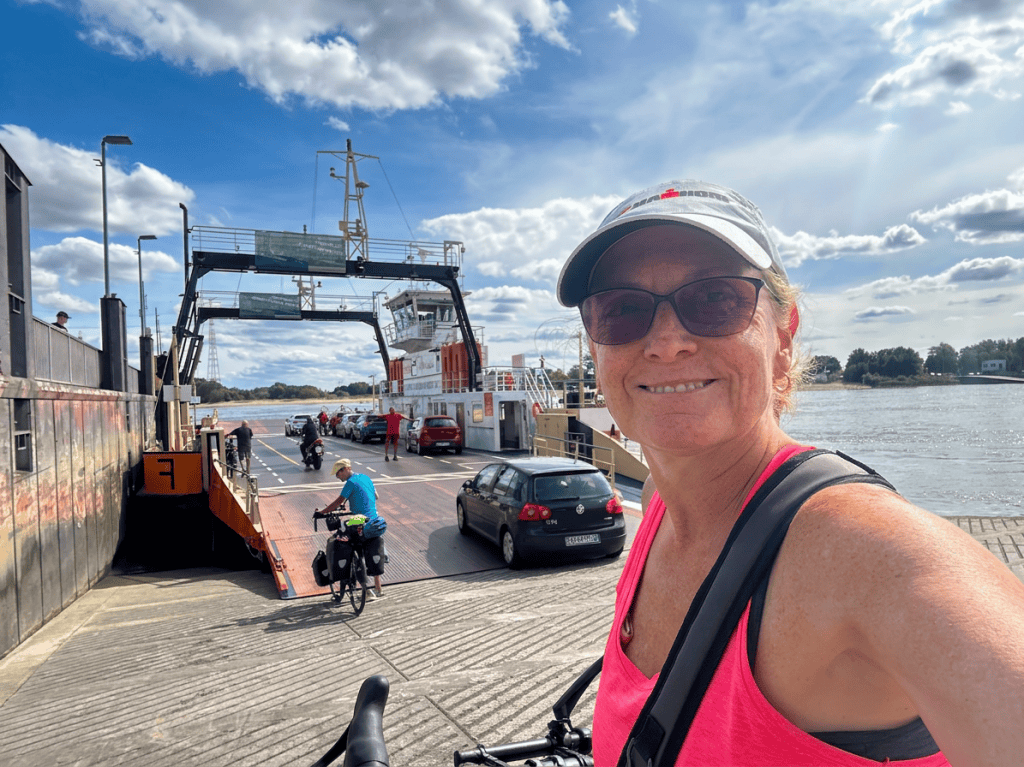
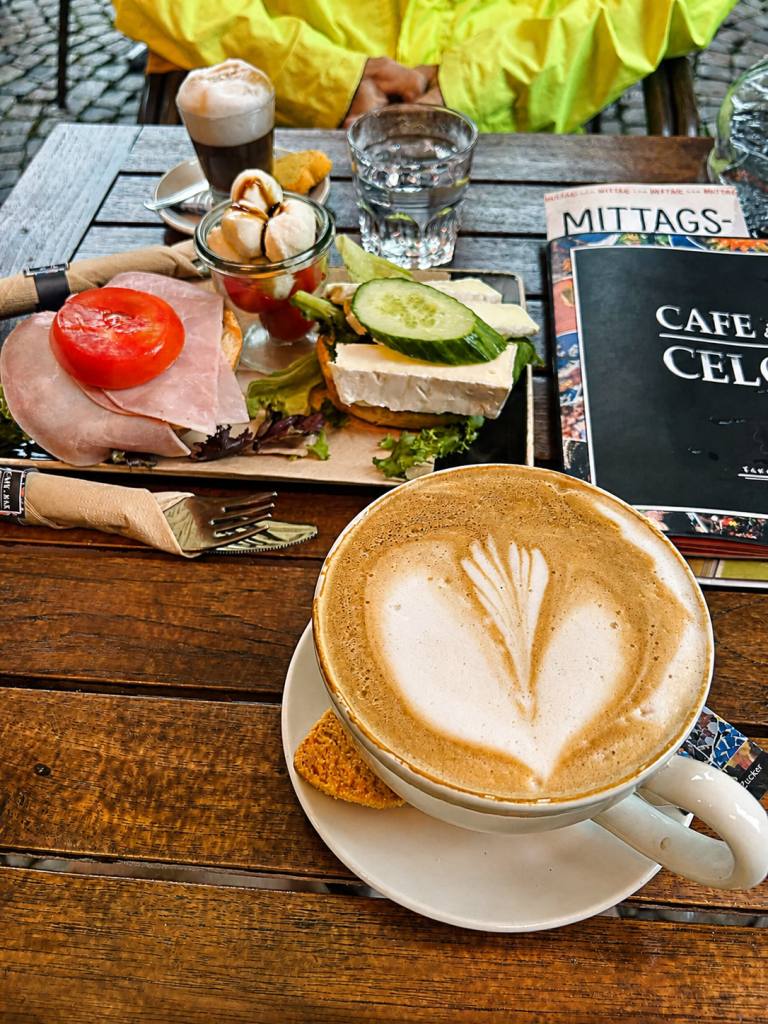
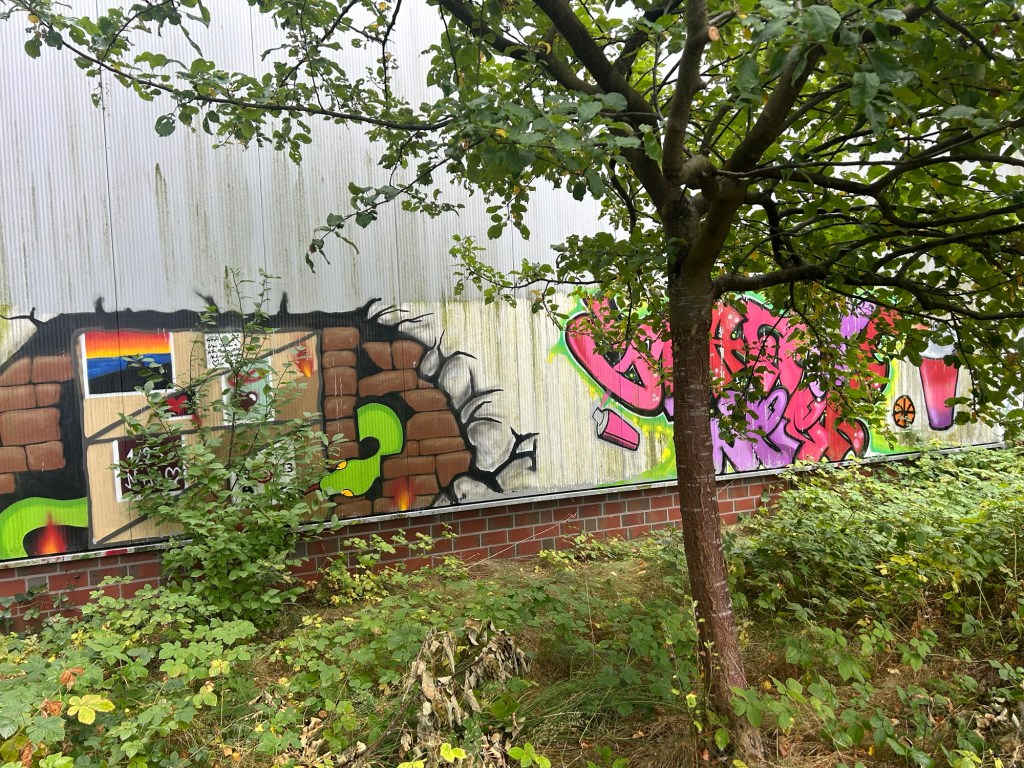
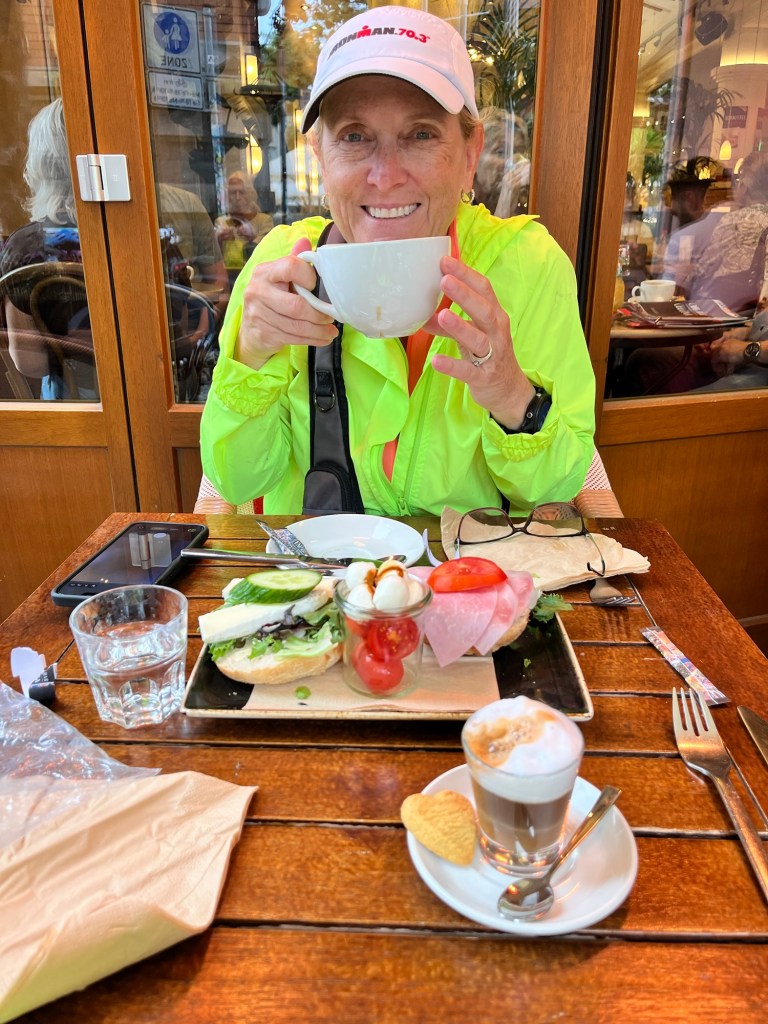
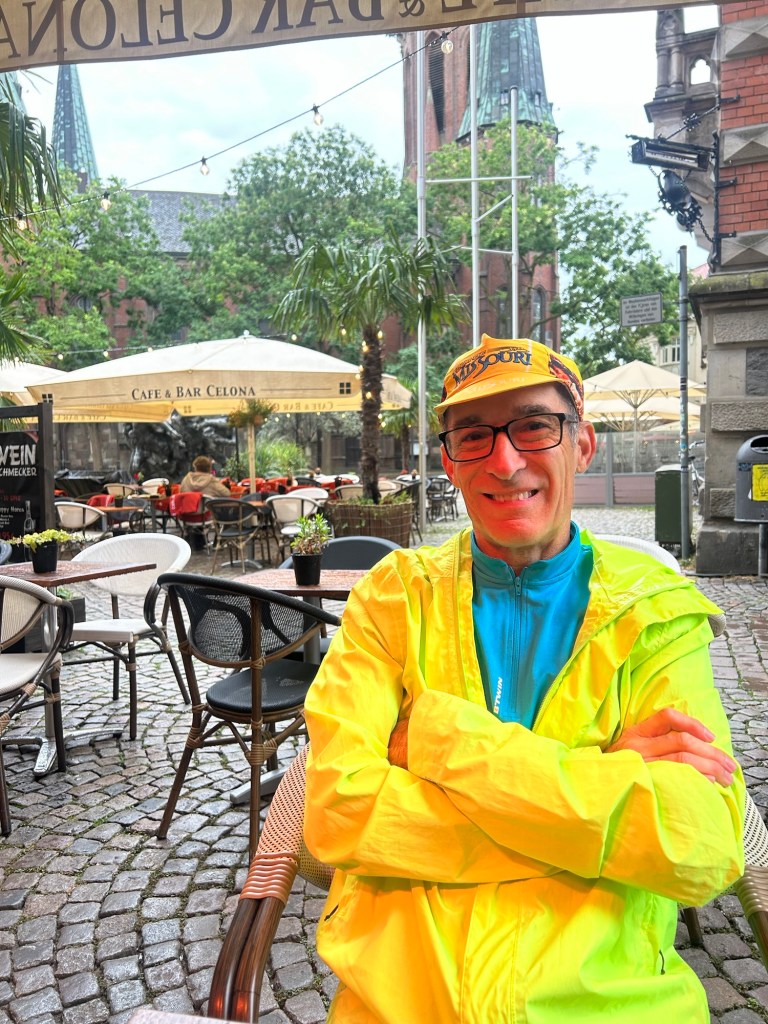
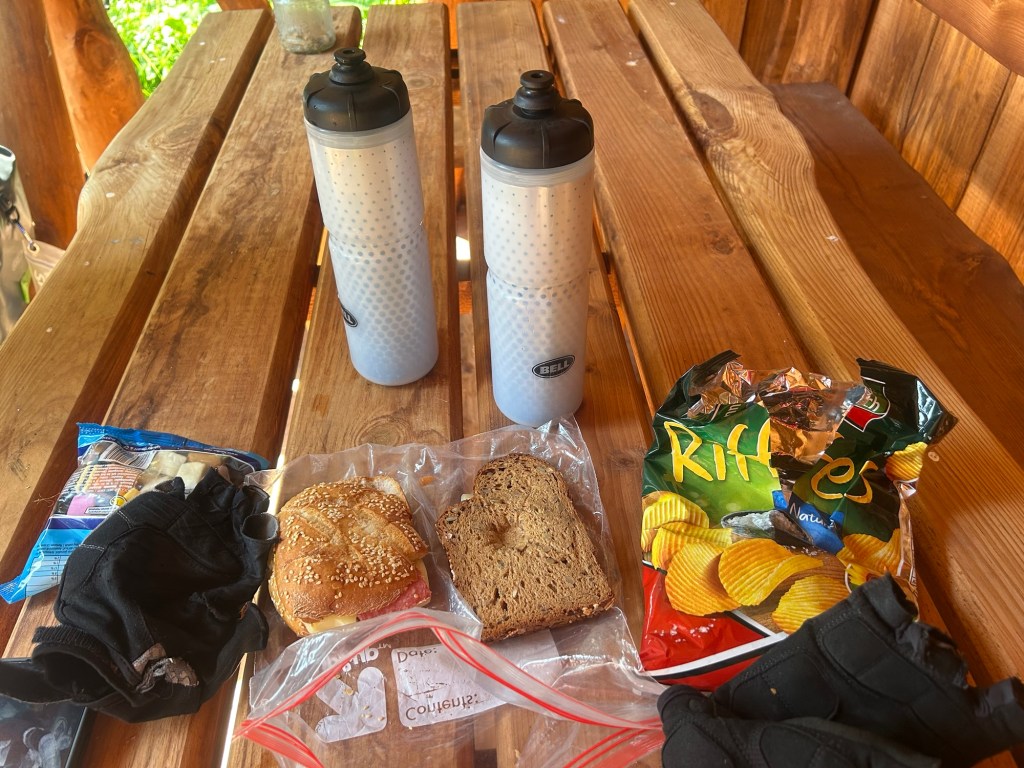
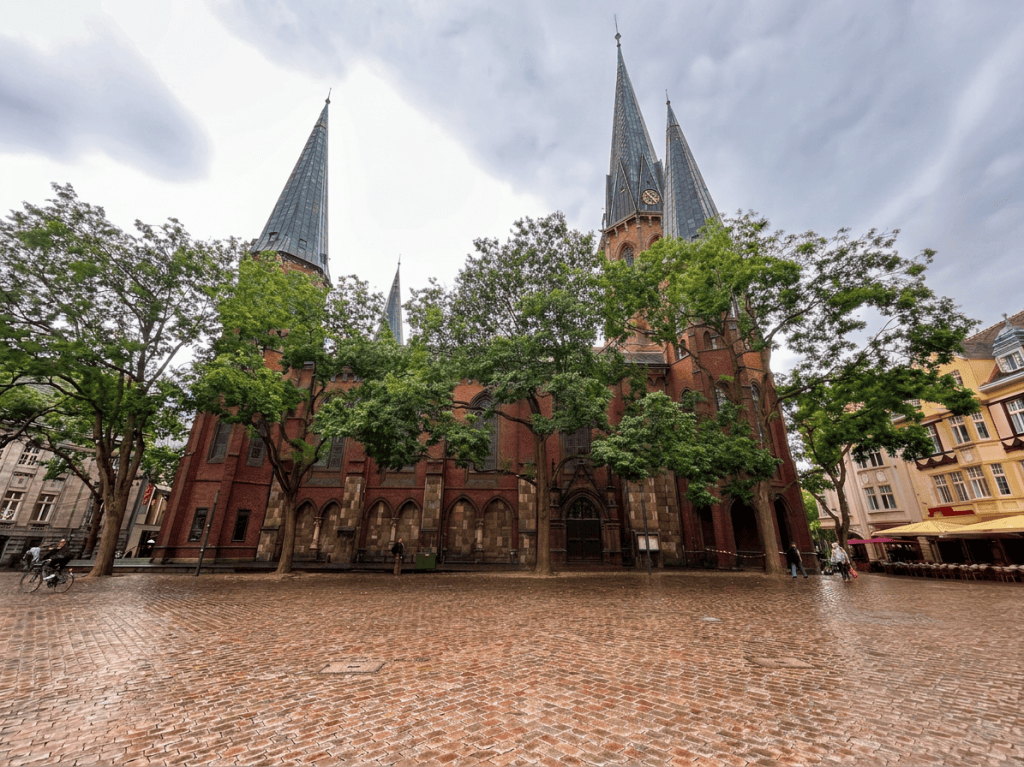
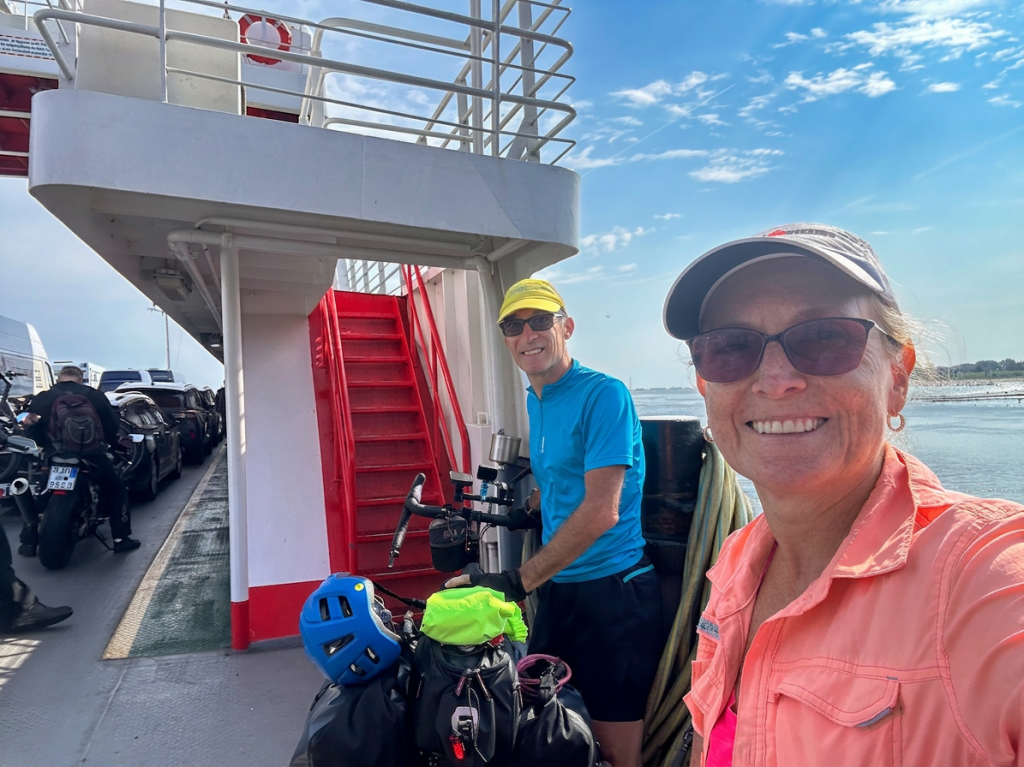
Note on Germany: Upon entering northern Germany, we noticed that the landscape retained Denmark’s charm. As we departed, we discovered it possessed a rich history of canals, akin to that of the Netherlands.
Pivot tour: Denmark ✅, Germany ✅ , the Netherlands ⏹️
The Netherlands
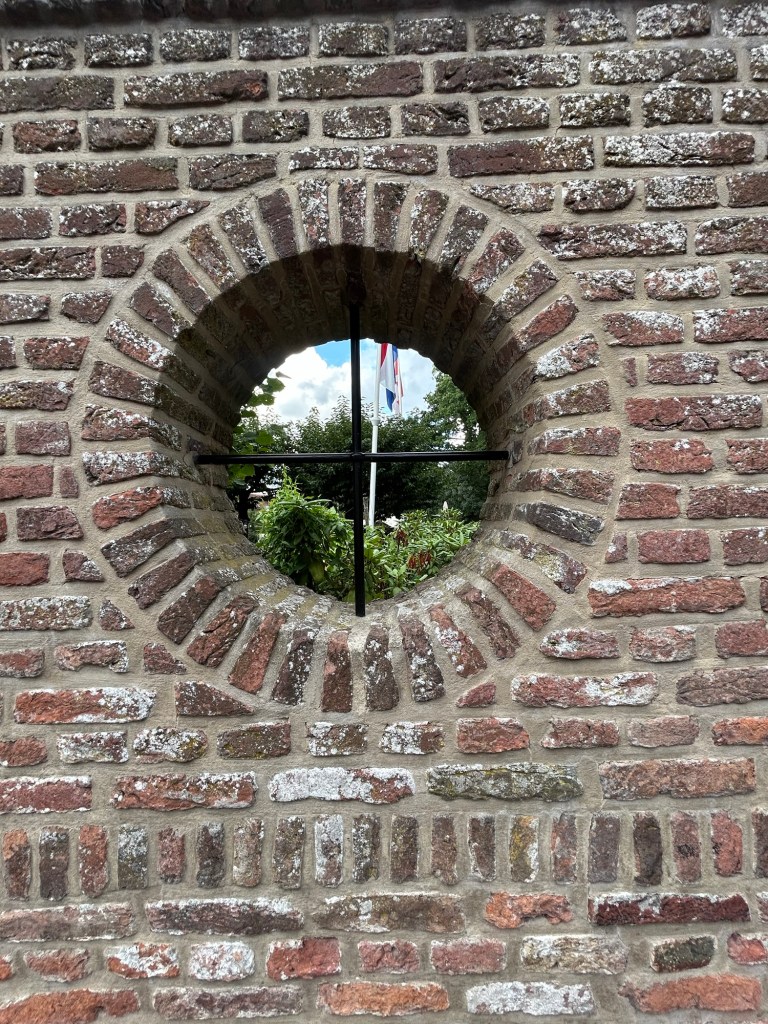
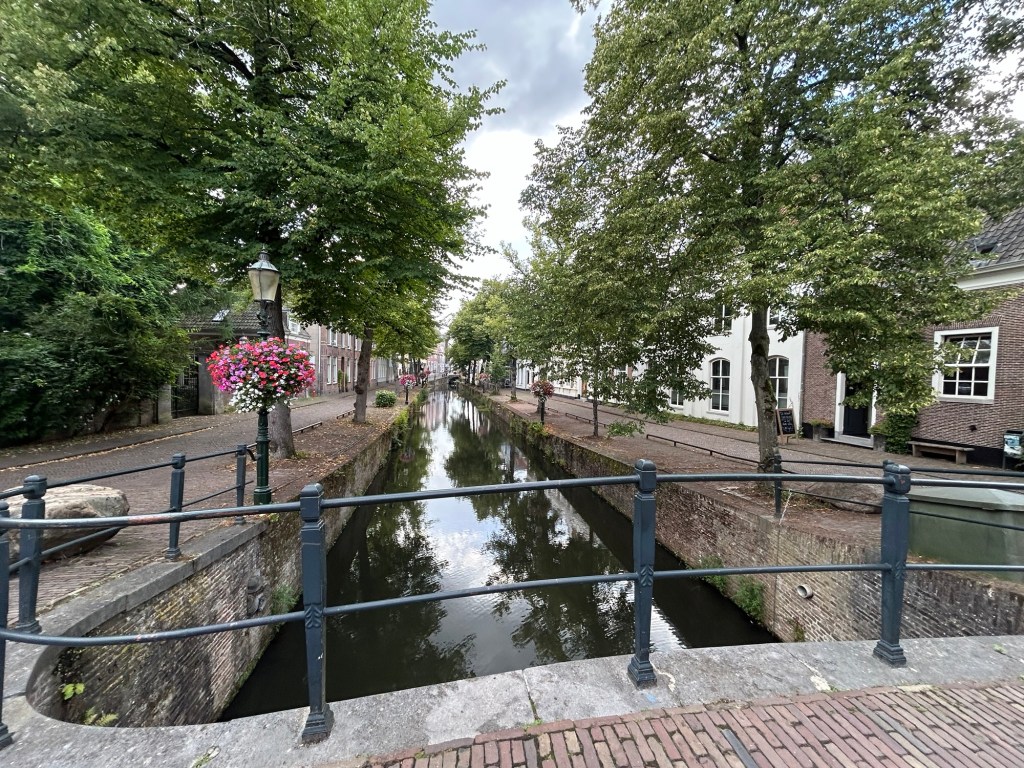
From pivoting to Copenhagen to discovering the canals and rivers of northern Germany, we’d made it to the Netherlands.
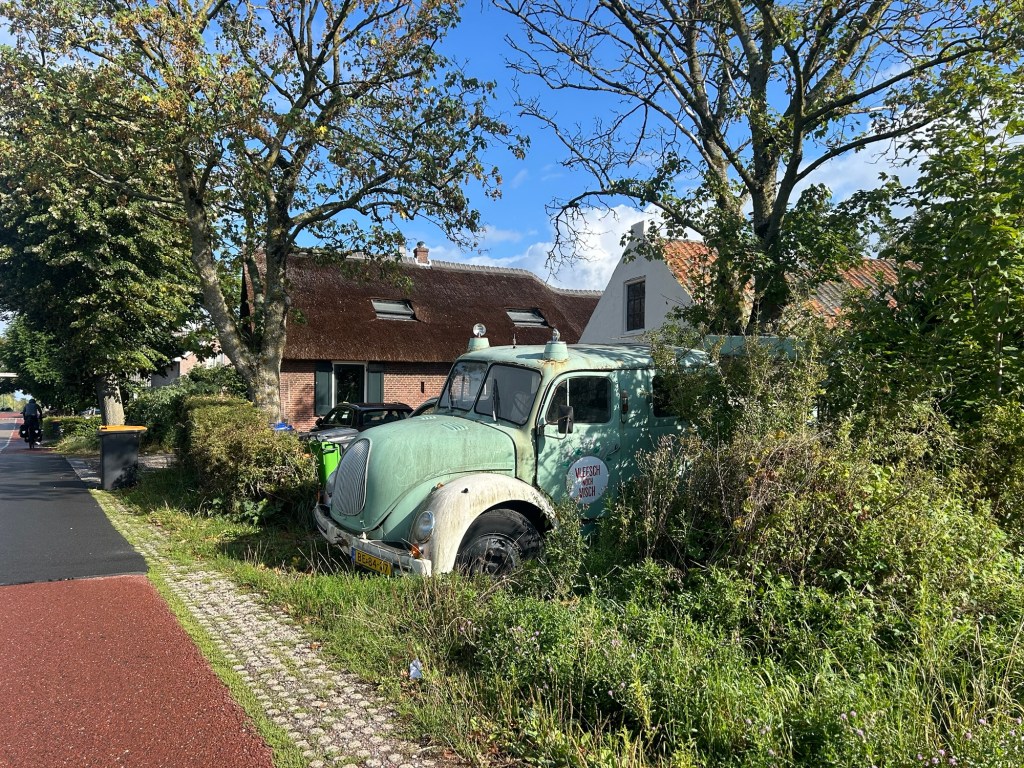
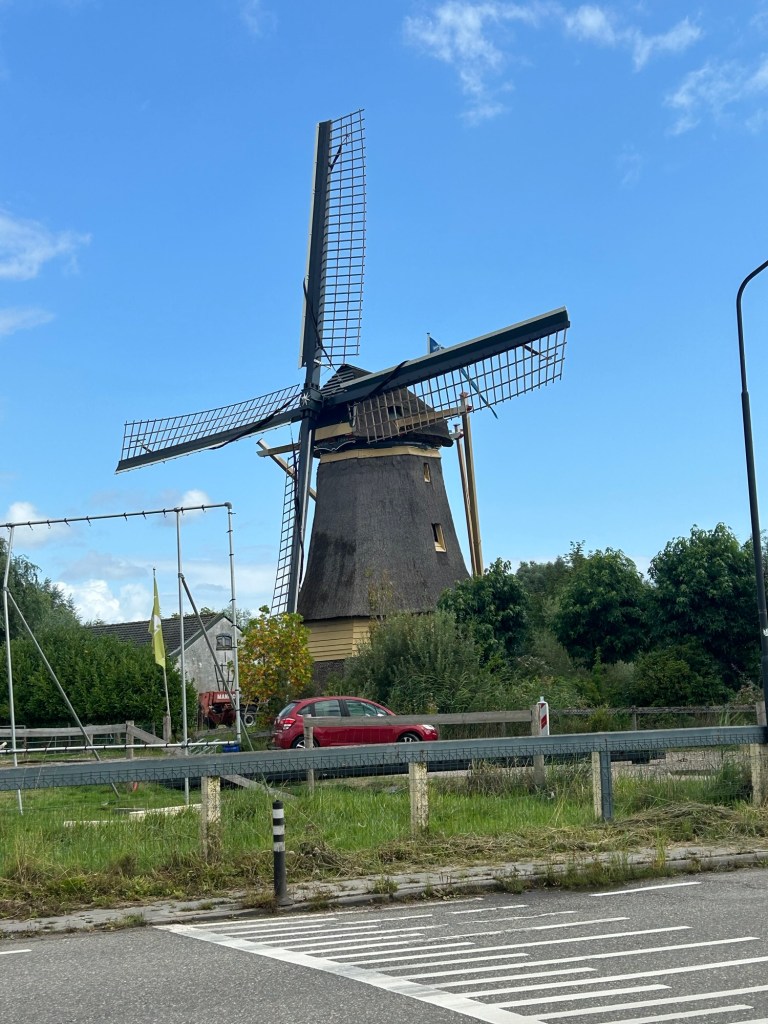
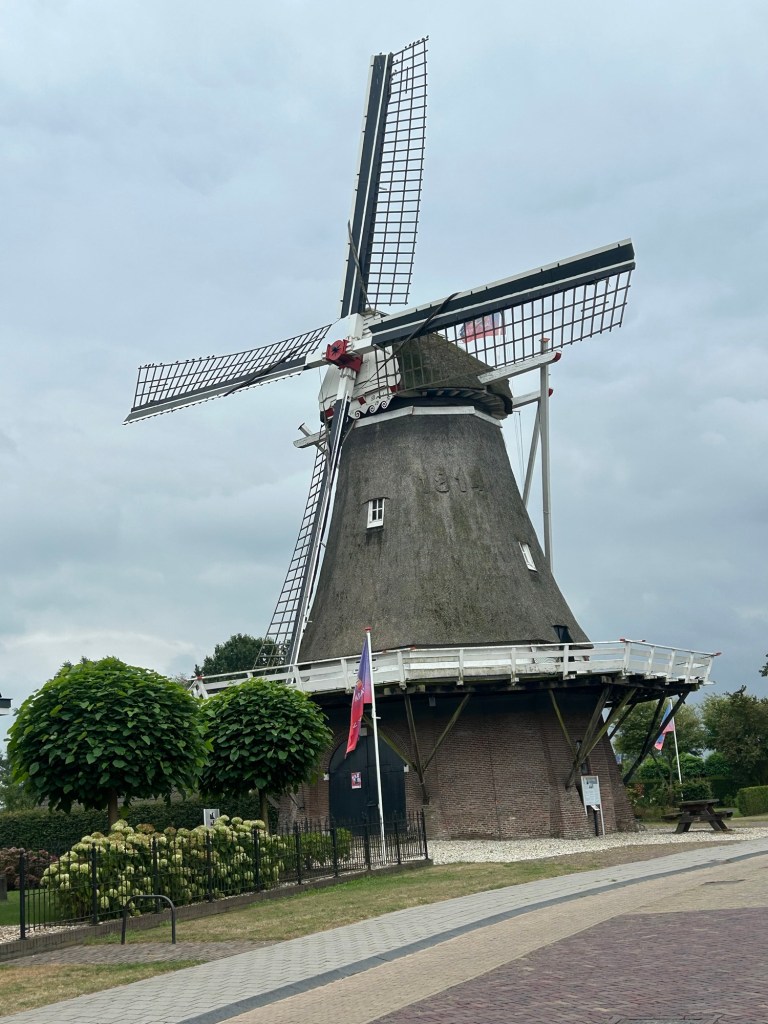
We were almost to Amsterdam, and although we had passed many thatched roofs in recent weeks, we were now truly in the land of the thatched roof.
Fun fact: the Netherlands is reportedly home to over 150,000 thatched roofs.
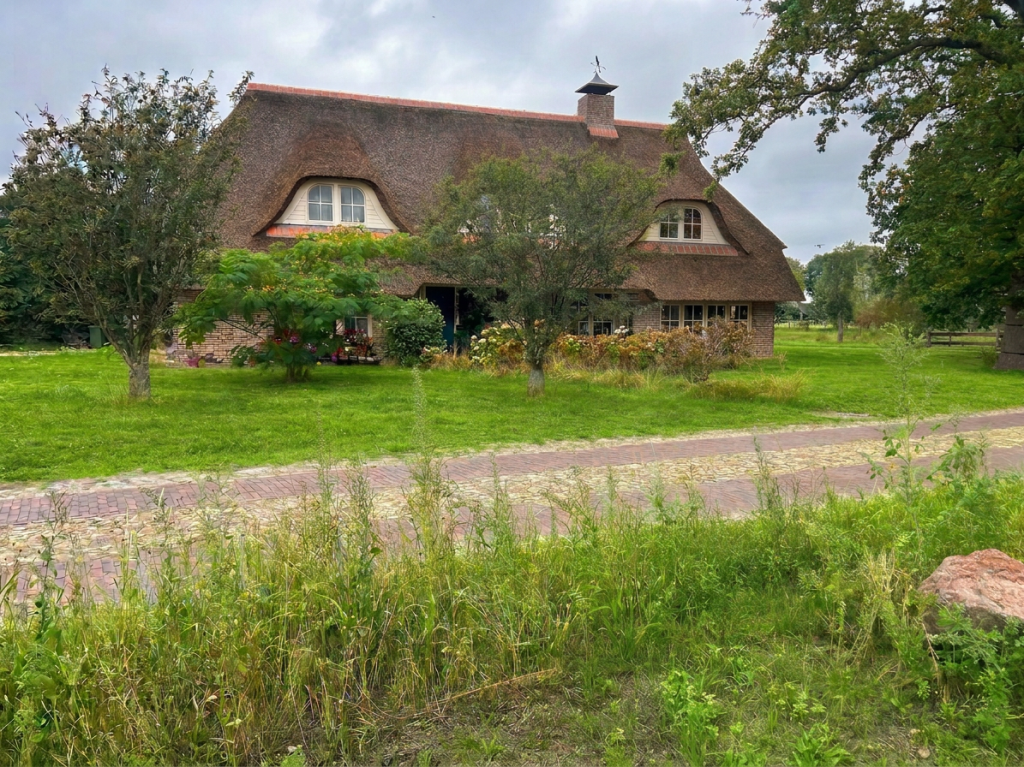
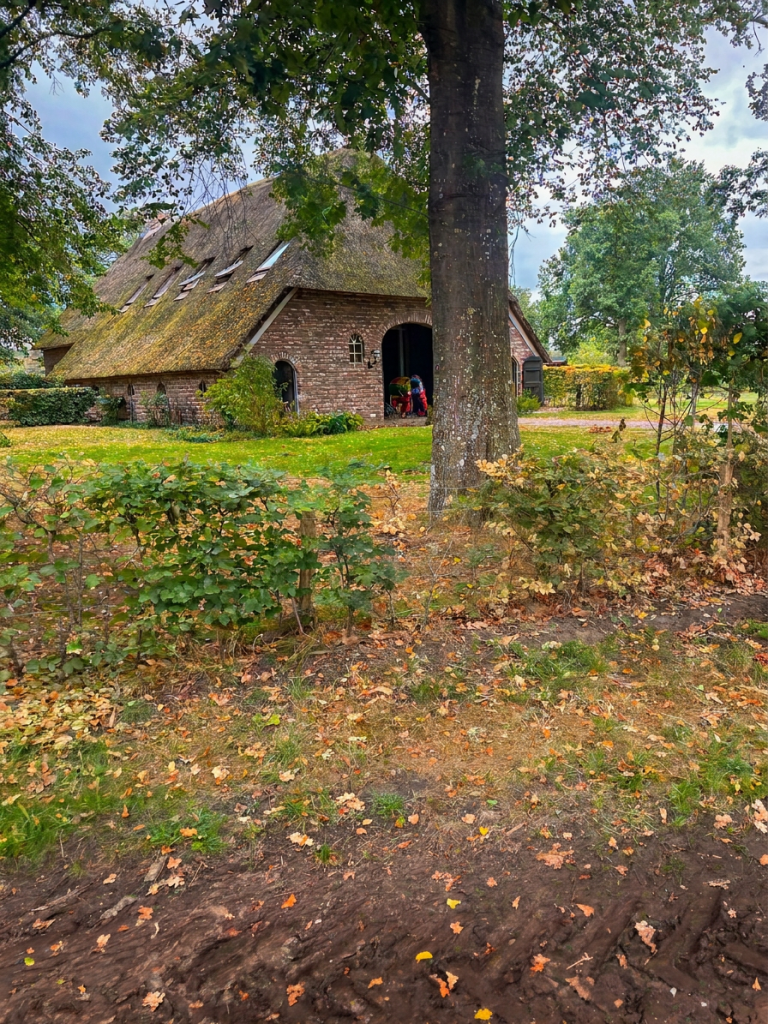
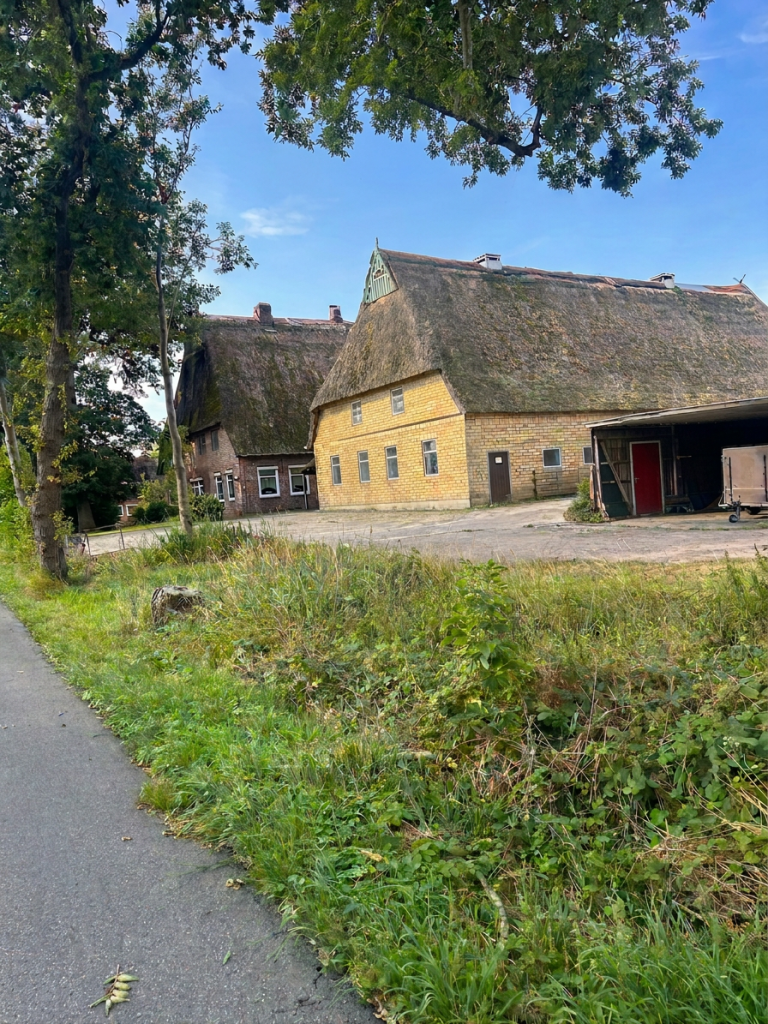
They are really remarkable; when you see one, you are instantly transported to an earlier, simpler time. Of course, we had to read about how they work and discovered that they are actually very expensive and in high demand.
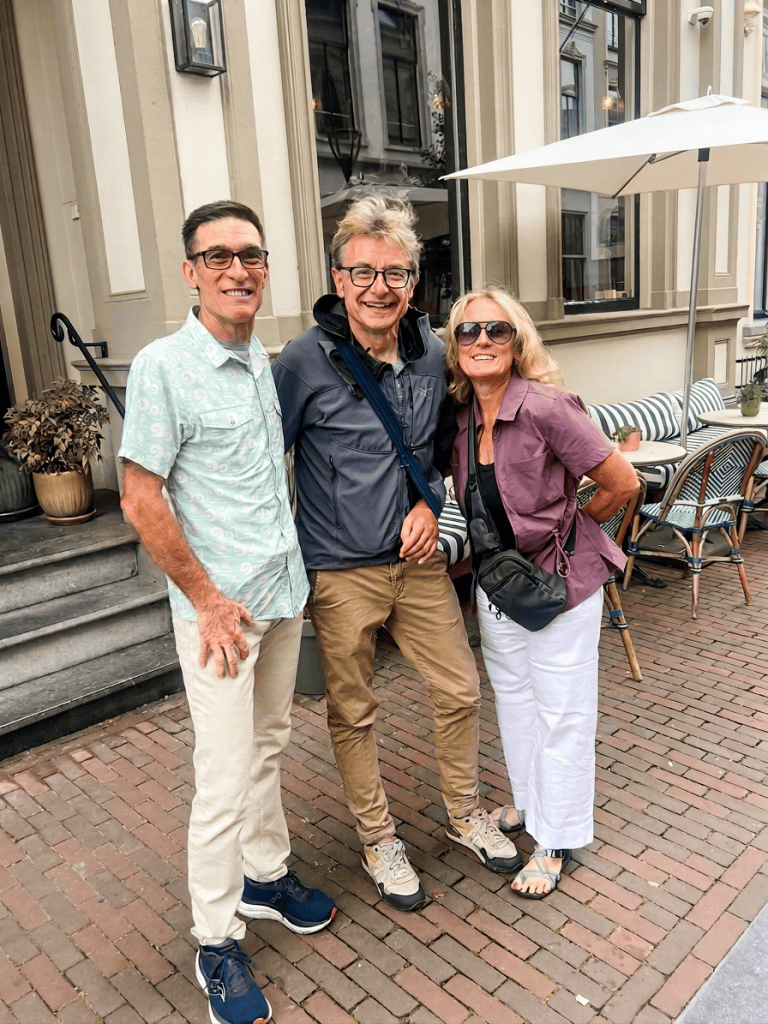
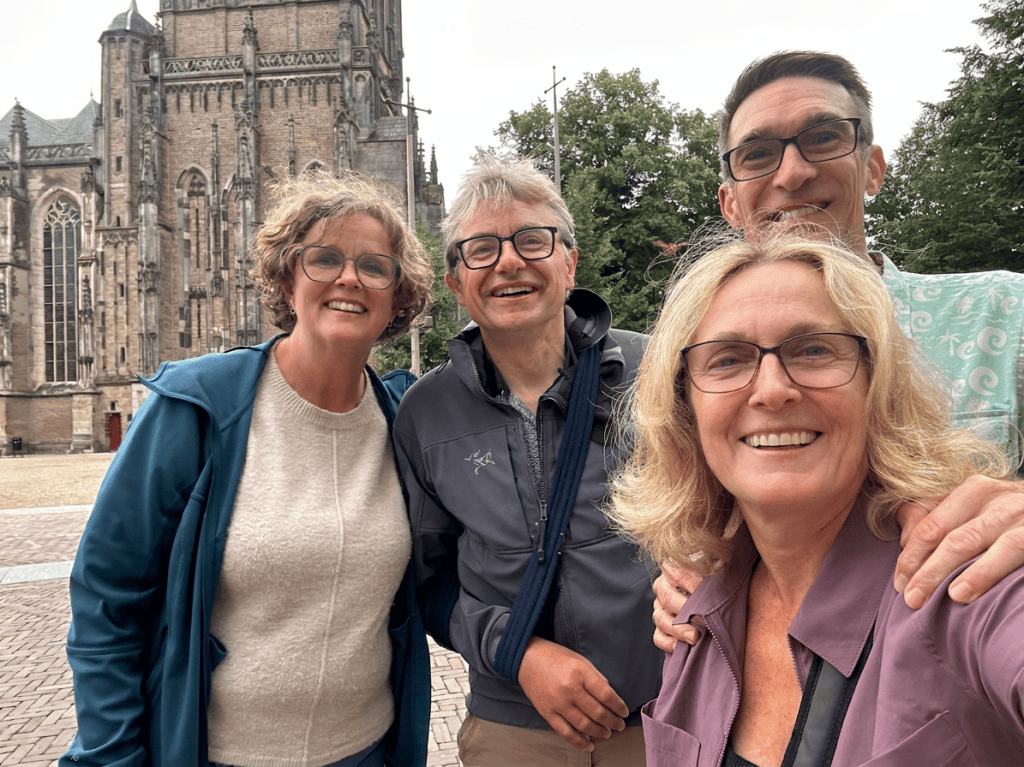
So many wonderful things to see when touring by bike in the Netherlands, but the highlight of this segment was seeing our friend G who we met when he stayed with us when he cycled across the U.S. several years ago.
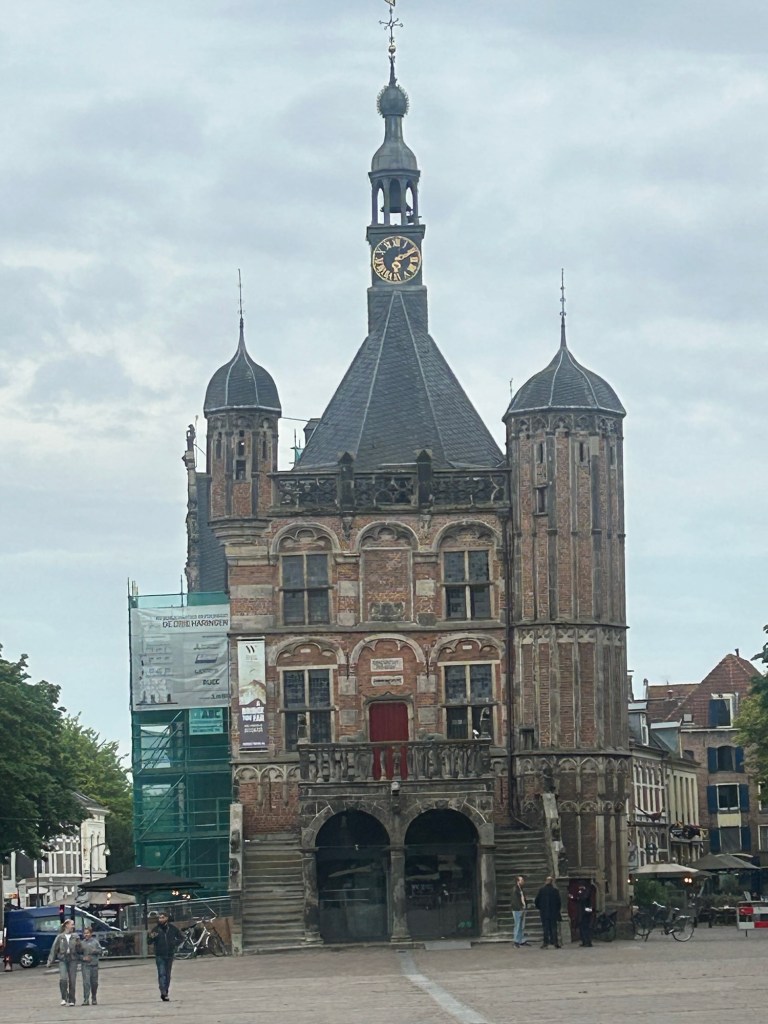
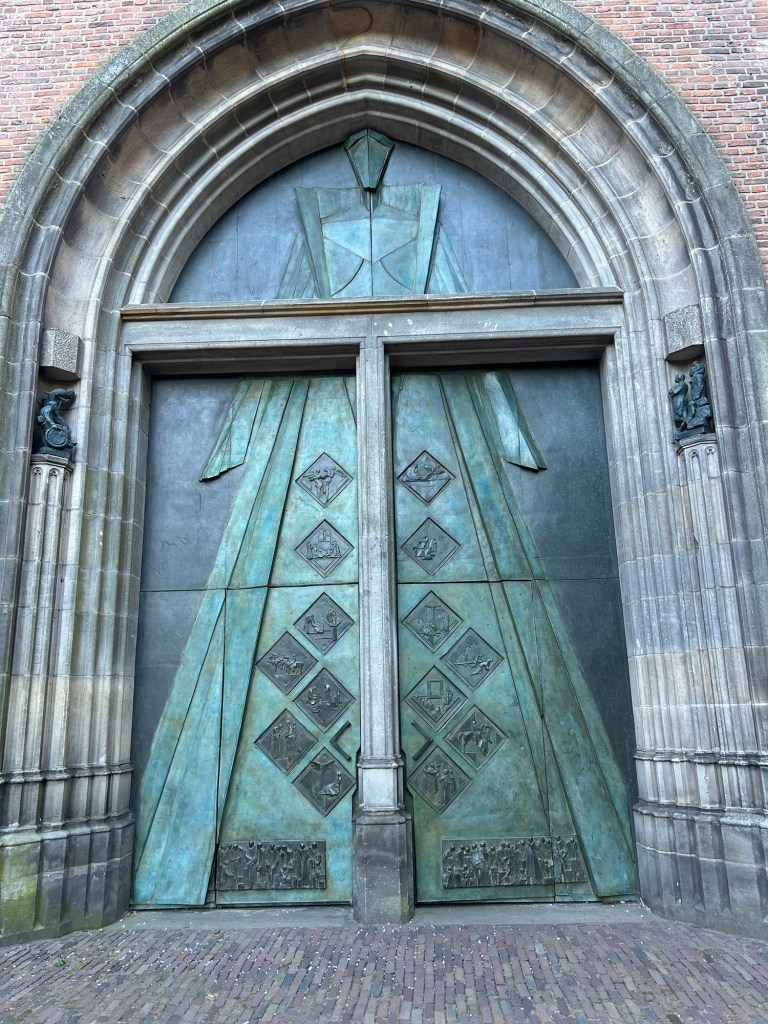
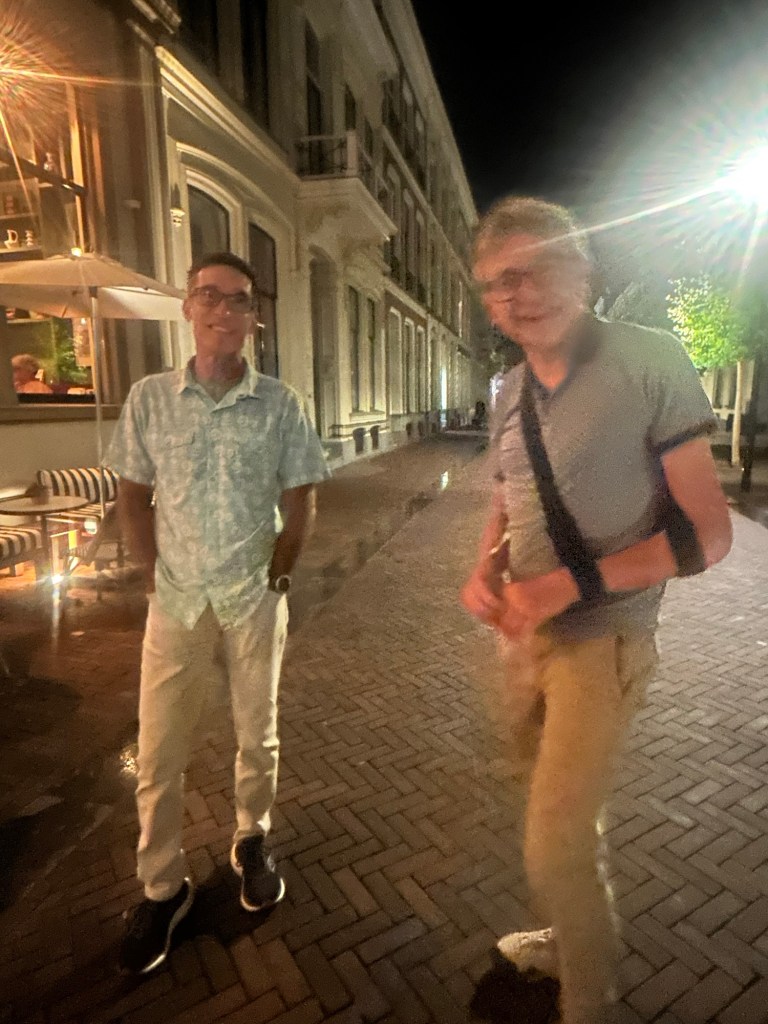
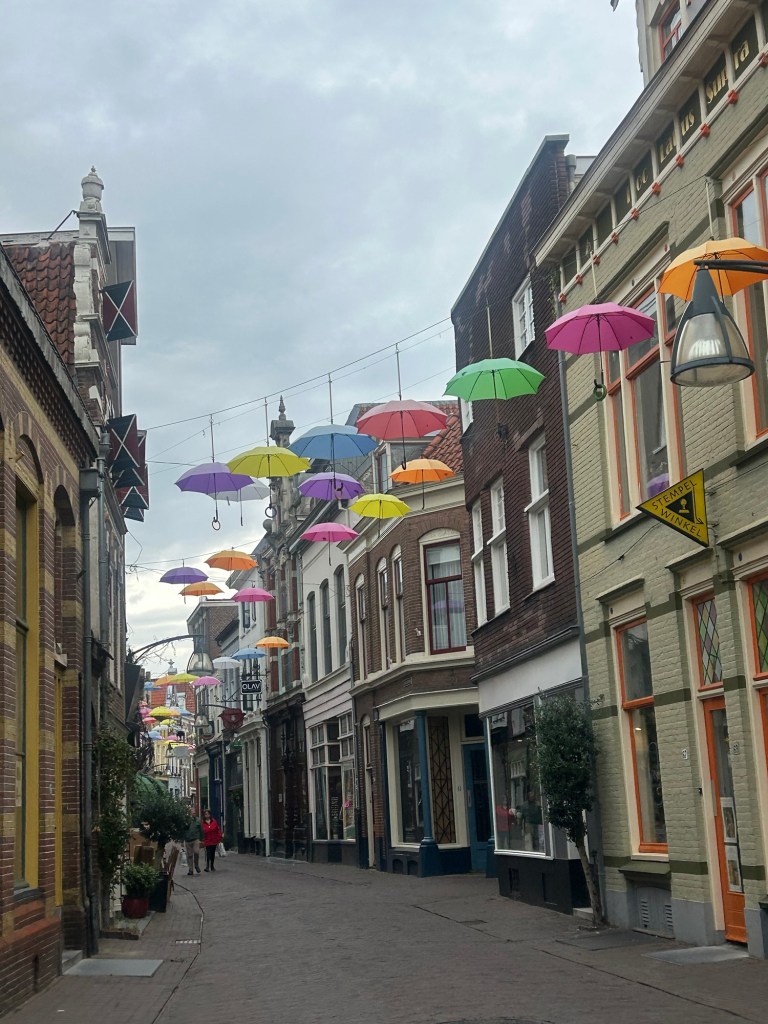
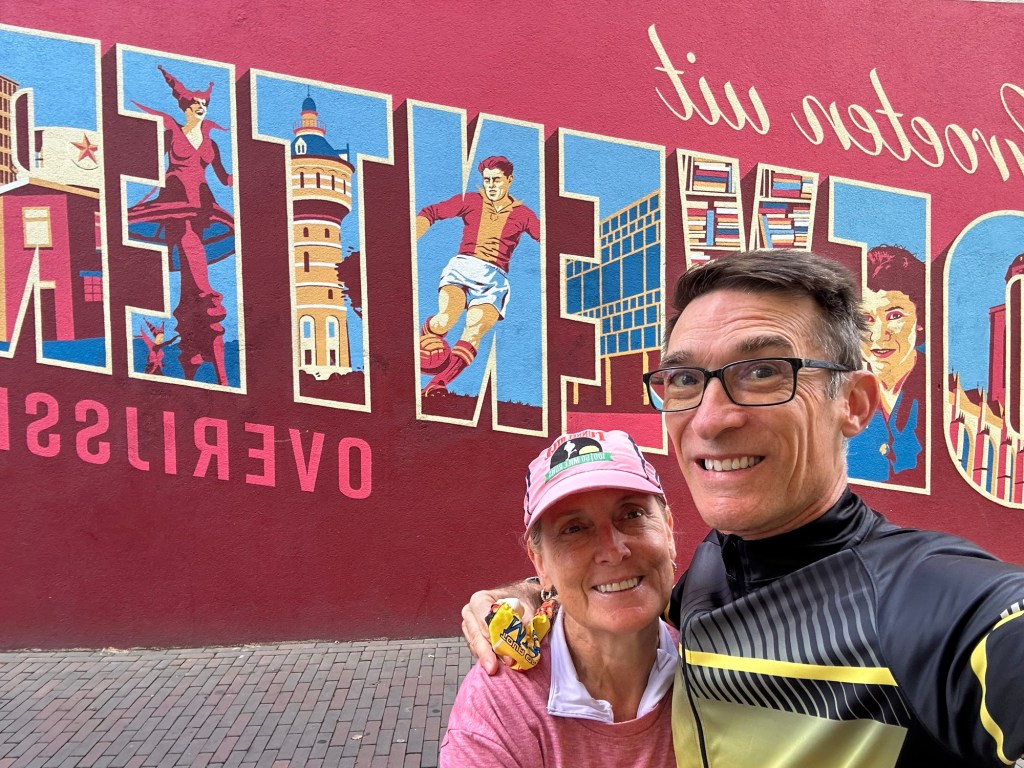
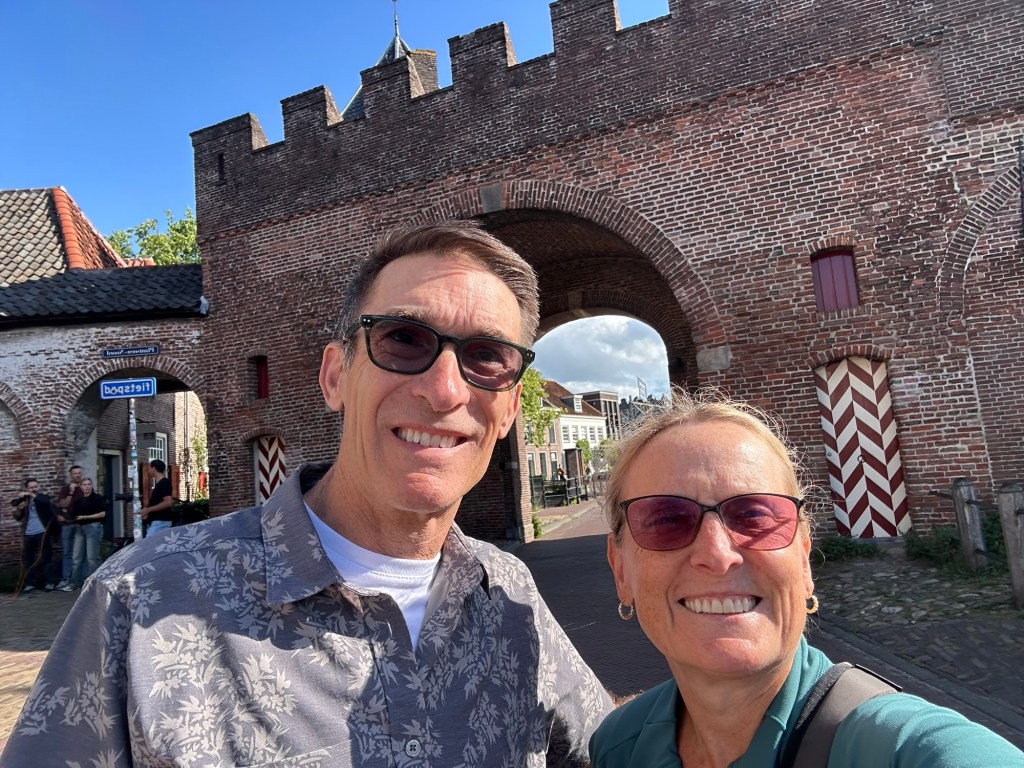
We’ve kept in touch, and when we made the PIVOT north, I knew we had to stop in his town of Deventer. He and his wife gave us a personal tour of their beautiful town and treated us to dinner in a fantastic restaurant.
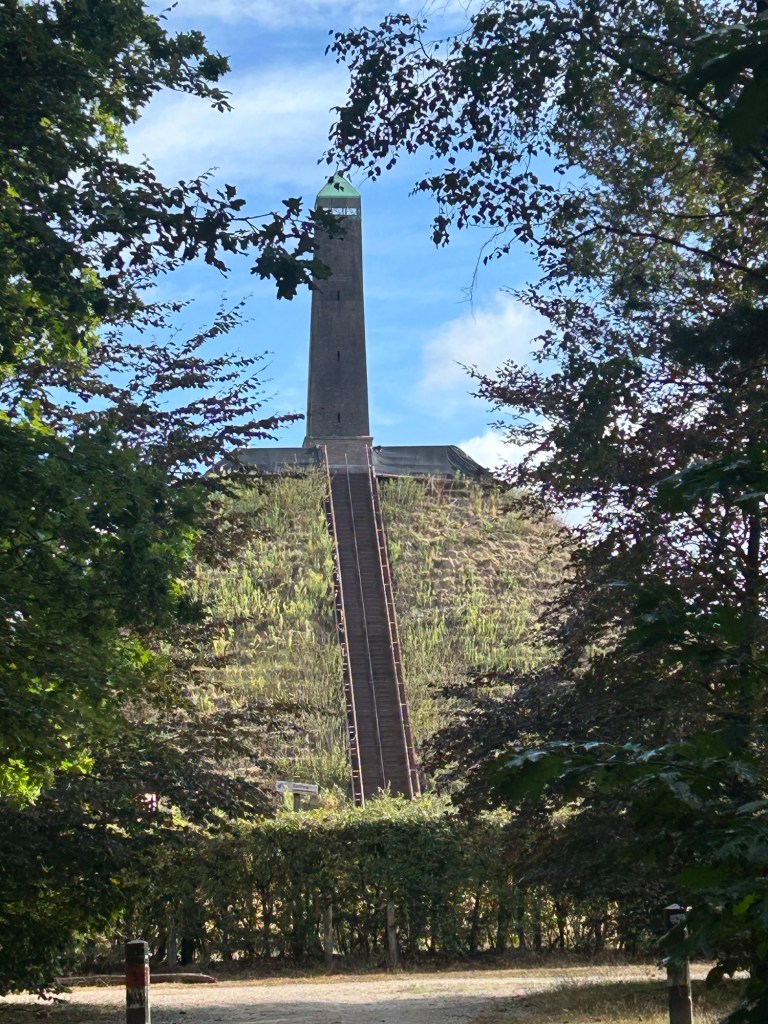
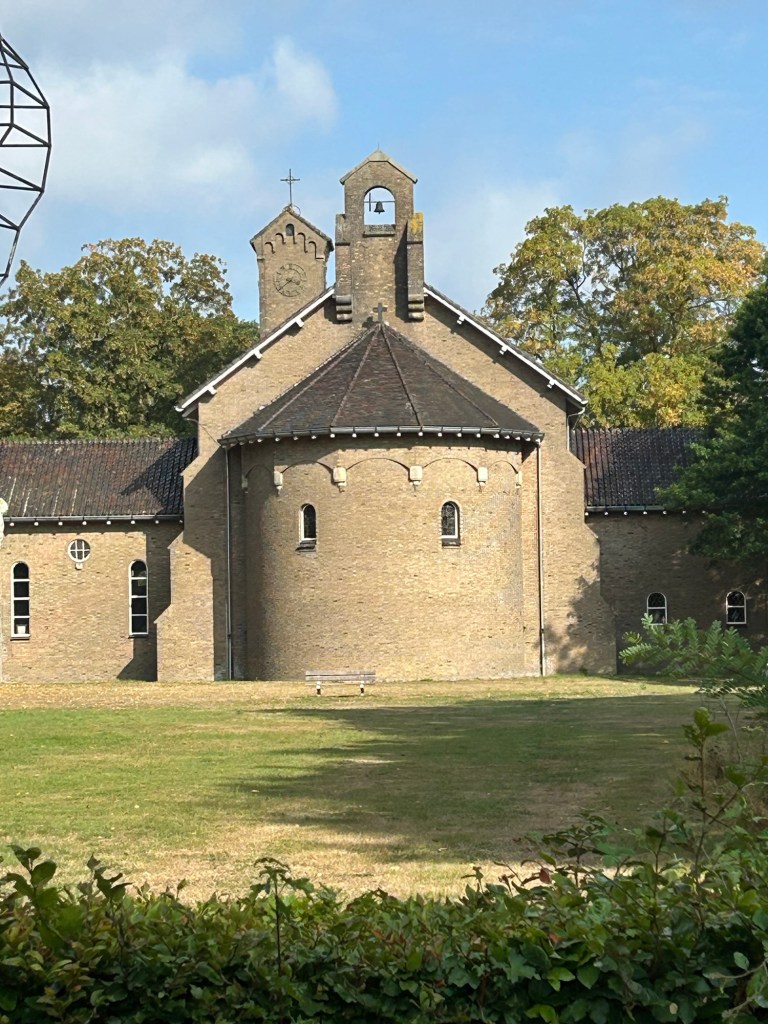
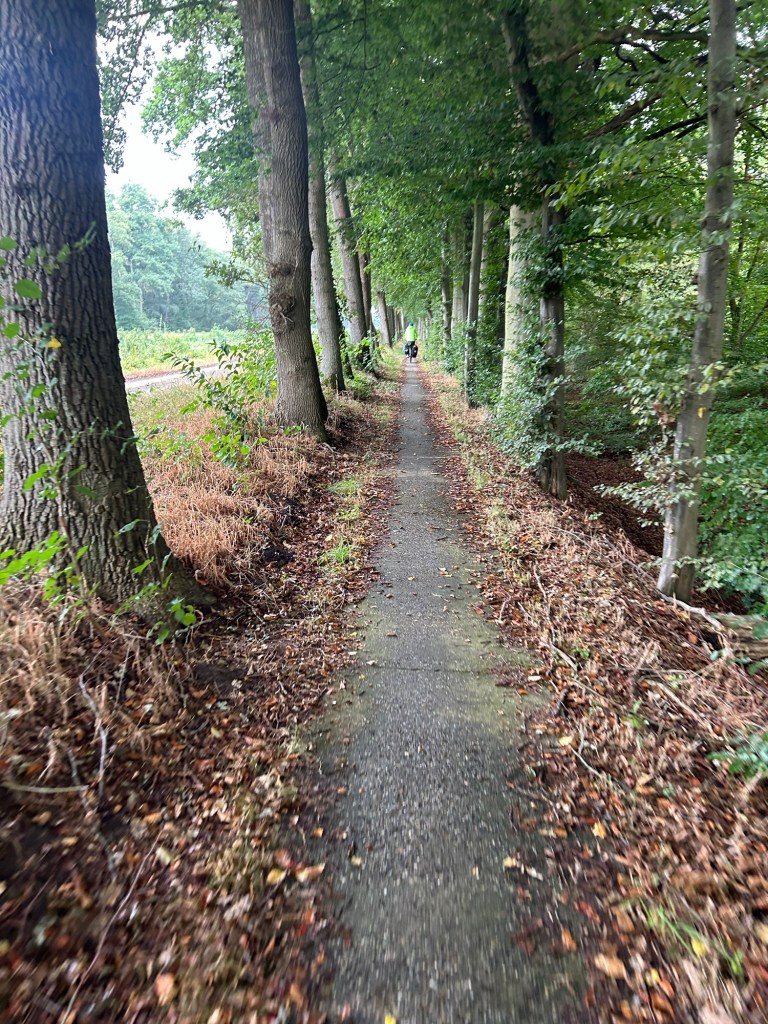
Leaving Deventer and our friends, we rode toward the famous Radio Kootwijk building, which was a Dutch long-distance radio transmission station, established in the early 20th century to maintain a communication link with the Dutch East Indies about 12,000 kilometers away using longwave and later shortwave radio technology.
According to the Radio Kootwijk Webpage, as technological developments such as satellite communications took off in the 1970s, Radio Kootwijk’s broadcasting was limited mainly to supporting maritime communications. By the end of 1998, Radio Kootwijk went off the air for good, and in 2009 the Forestry Commission took over the former radio station.
The station has a lengthy legacy, including a German occupation during World War II, when it was seized and used to communicate with U-boats and jam communications.
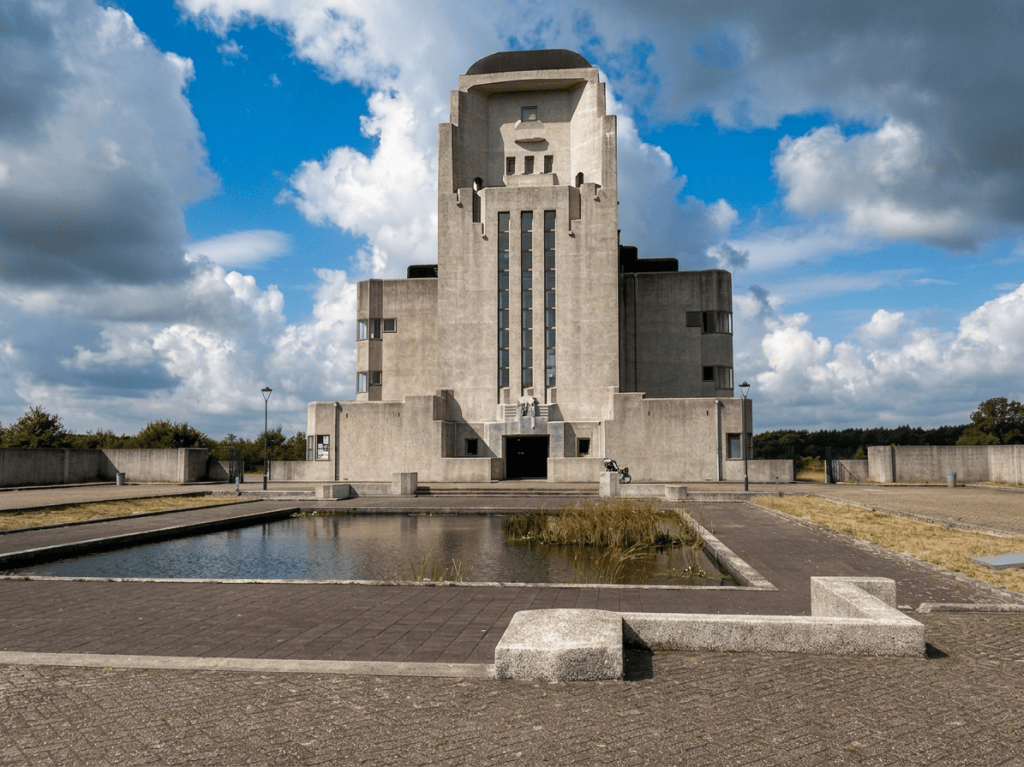
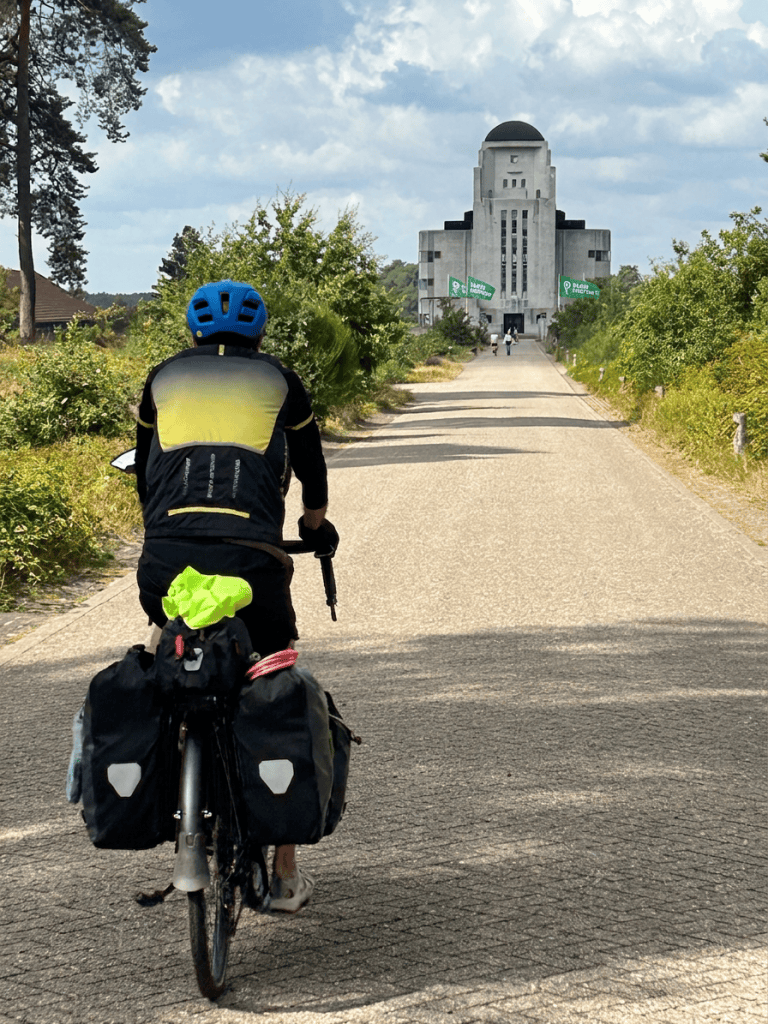
The webpage goes on to describe the area as a rugged environment and protected nature reserve.
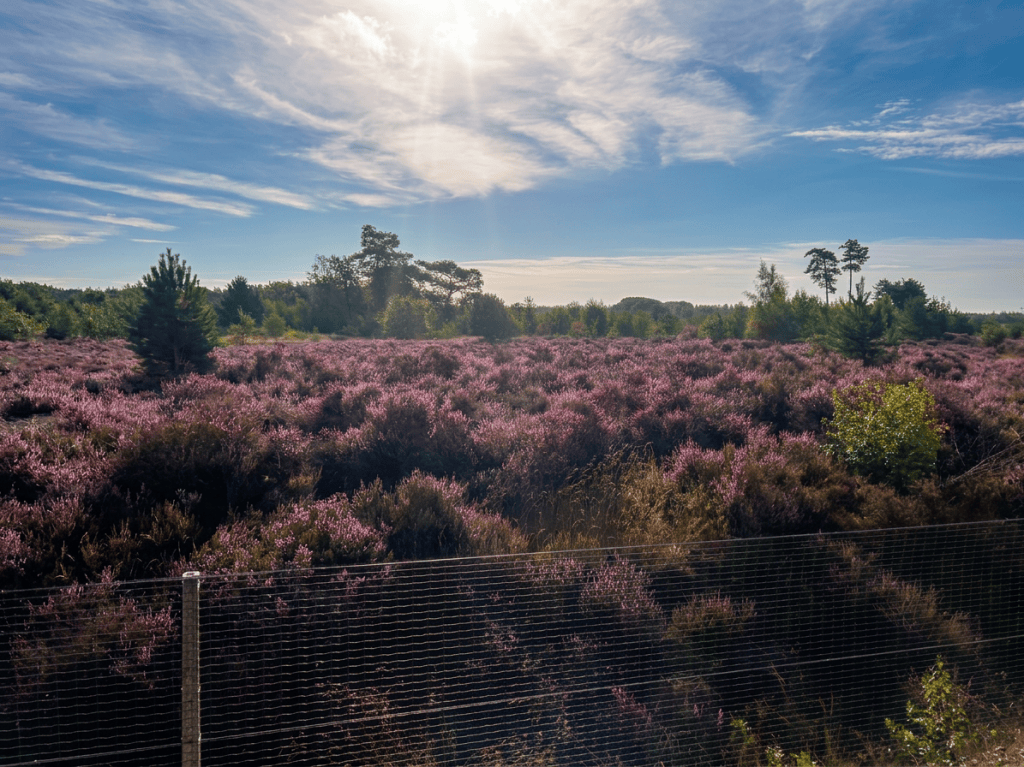
Radio Kootwijk stands in the heart of the Veluwe in the province of Gelderland, in a large open area bordered by the Netherlands’ largest forest and surrounded by the Kootwijkerzand (the largest drifting sand area in Western Europe), covering 700 hectares.
Oh, what an incredible journey it has been!
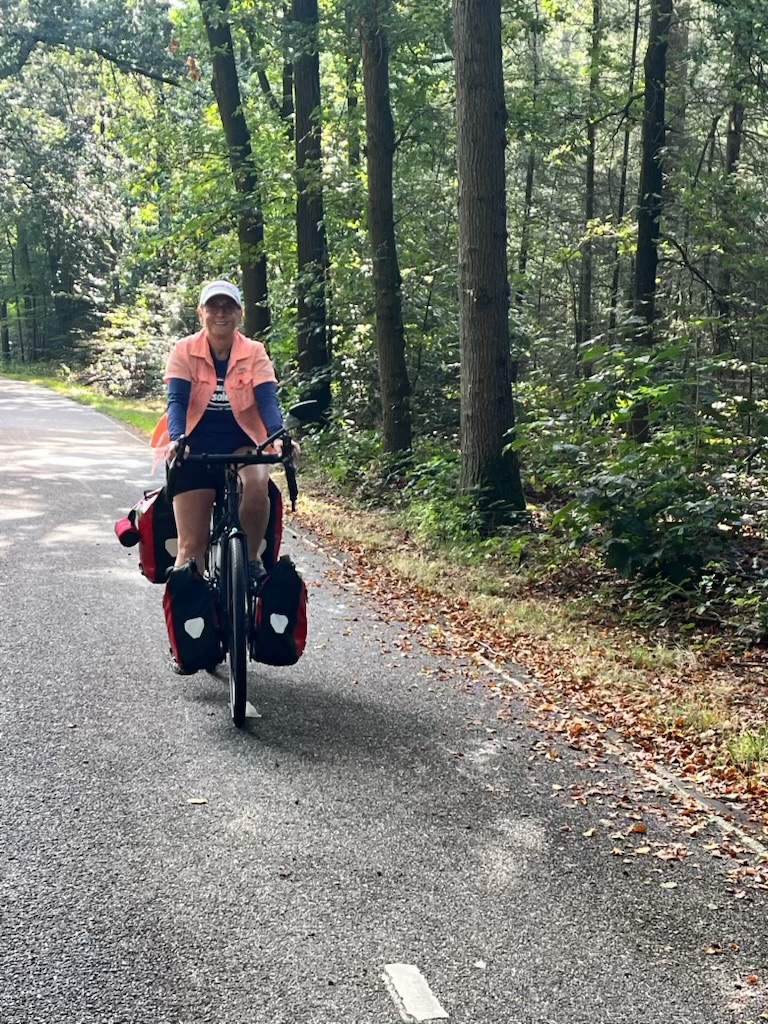
With just one week left, we found ourselves experiencing a profound sense of anticipation; while our determination to complete the task brought us joy, we couldn’t help but feel a twinge of sadness as we acknowledged the end of our journey and the remarkable moments we shared along the way.
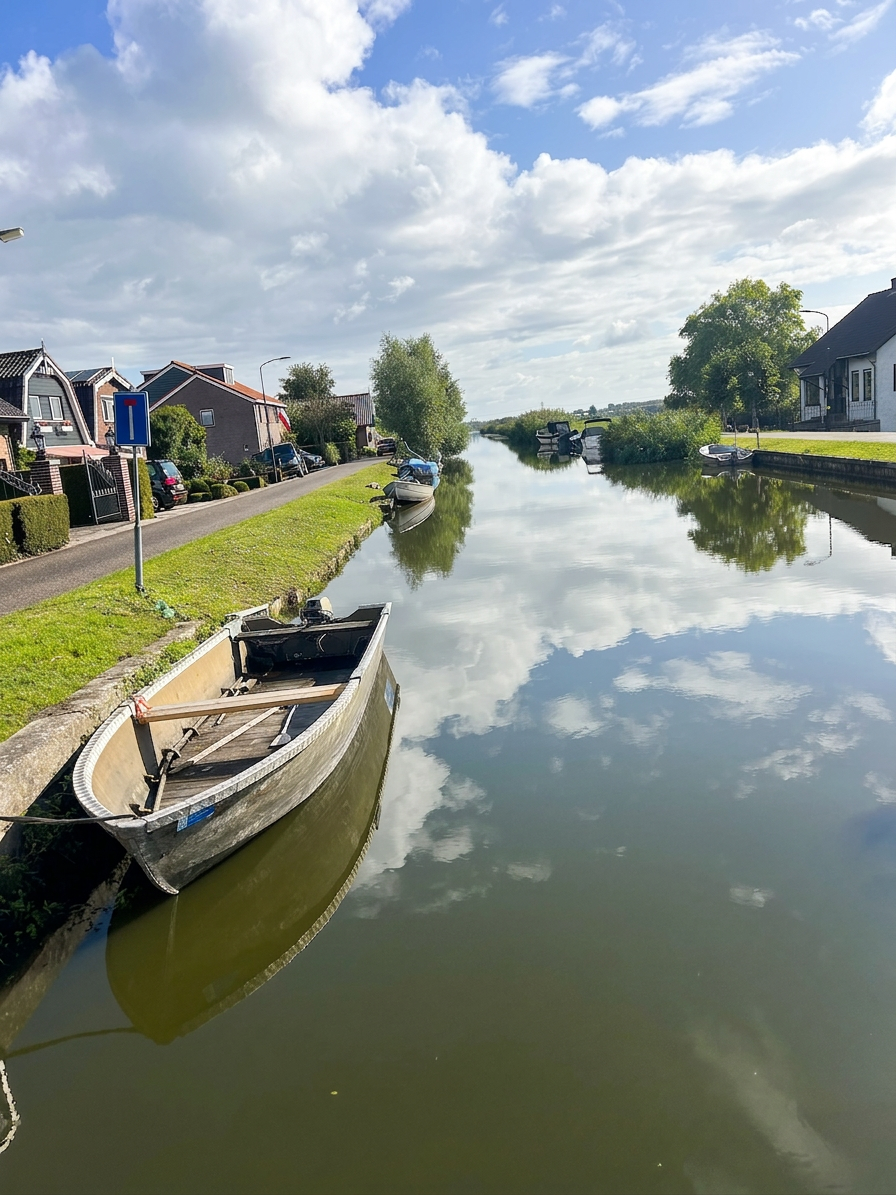
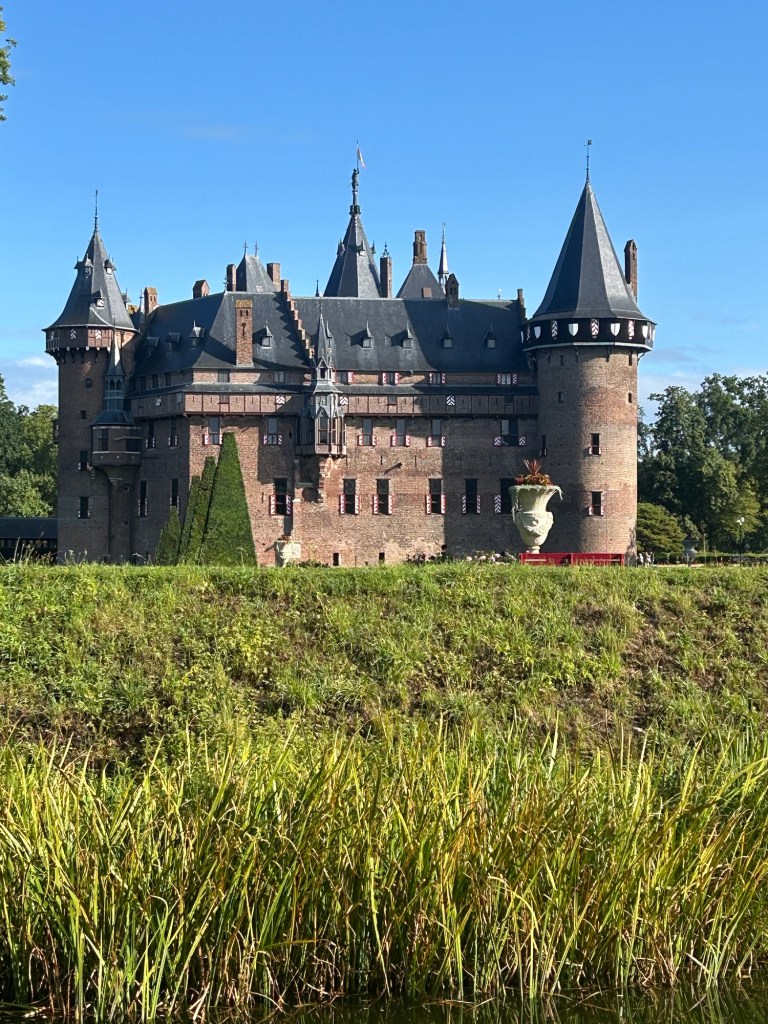
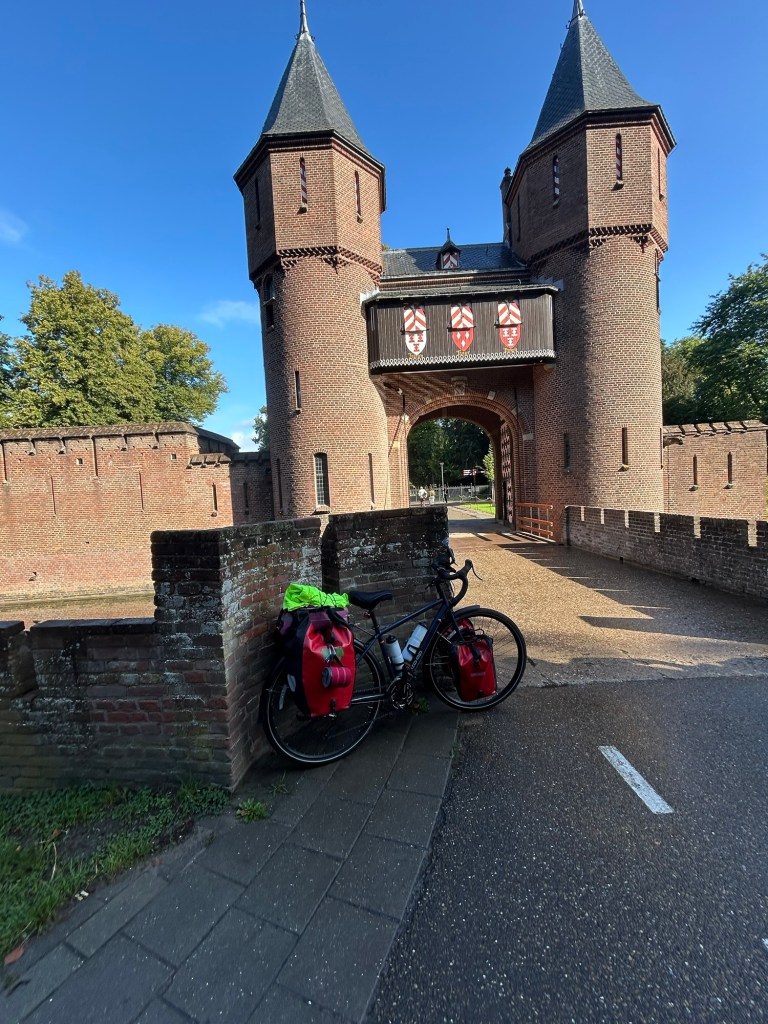
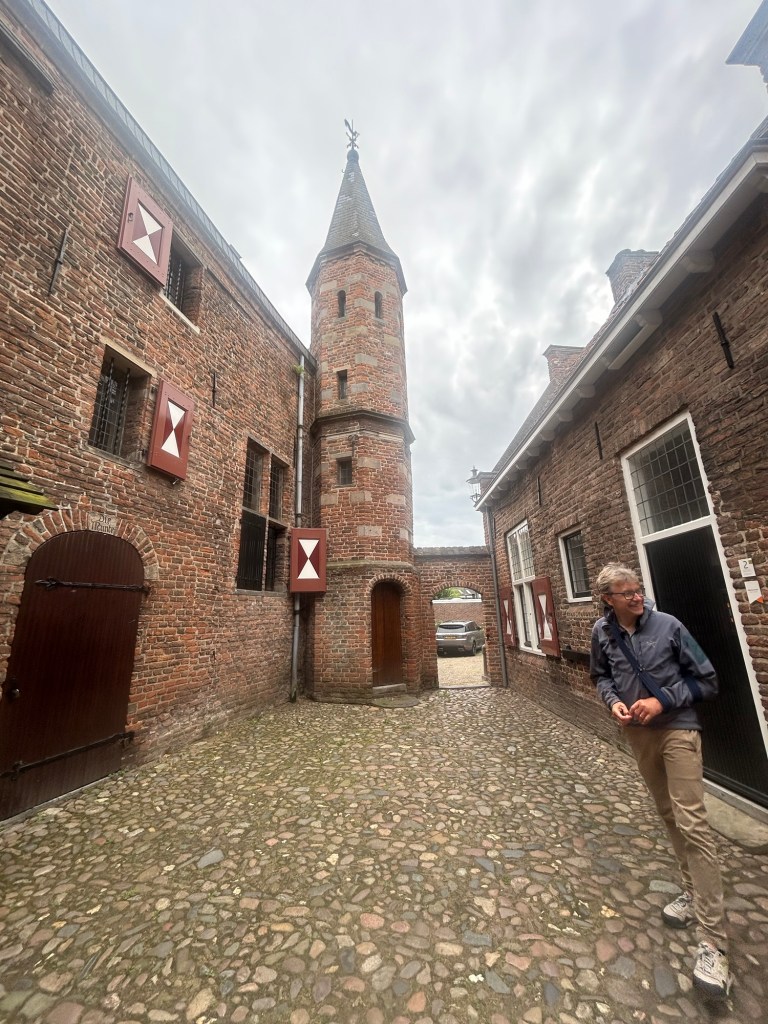
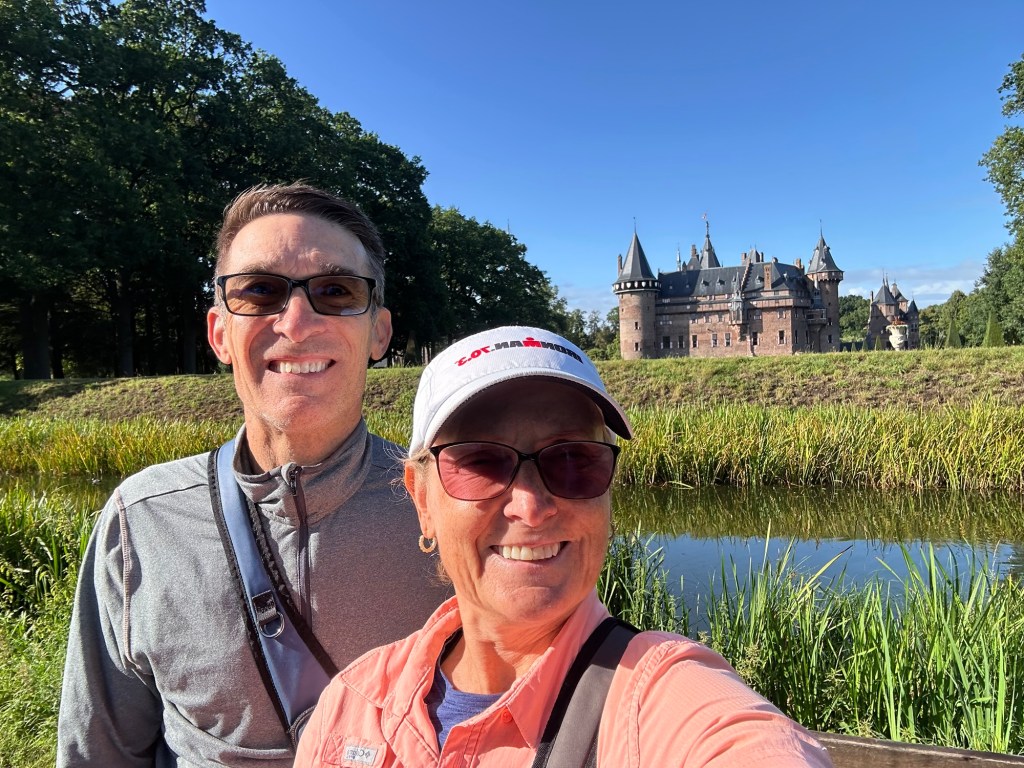
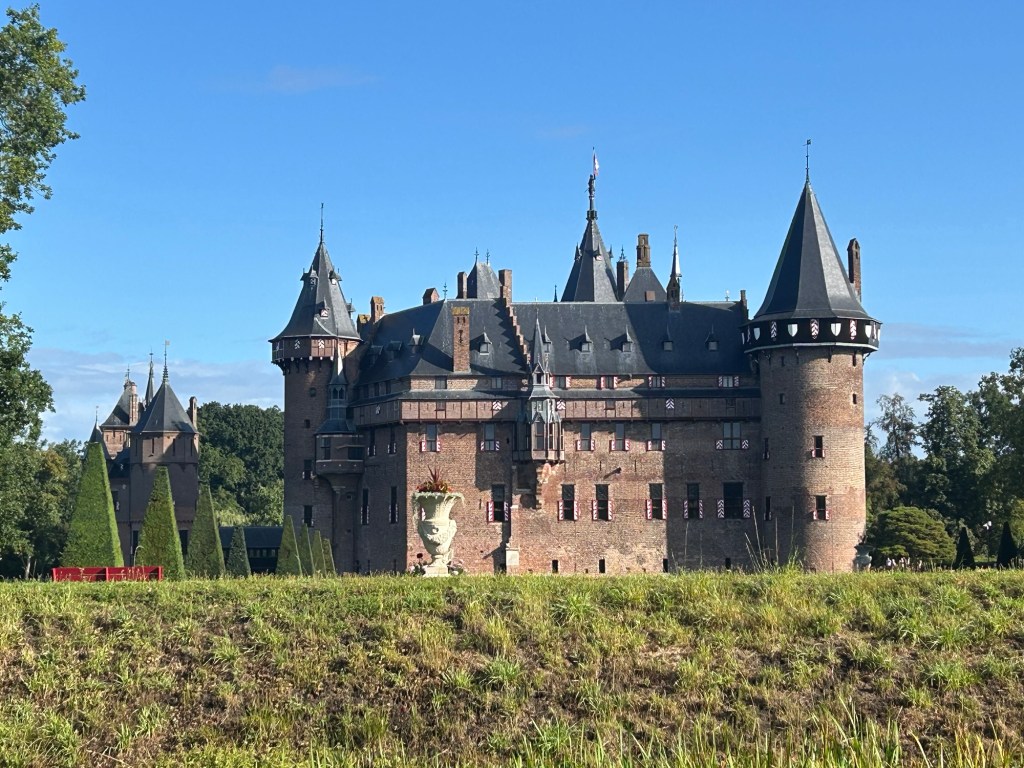
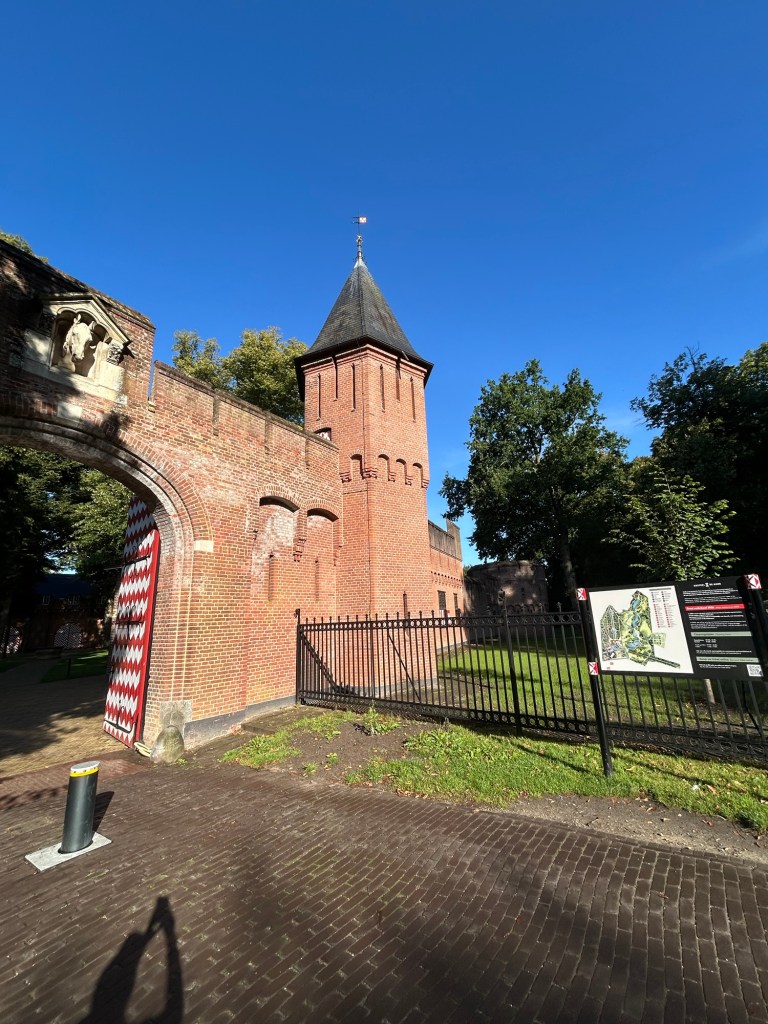
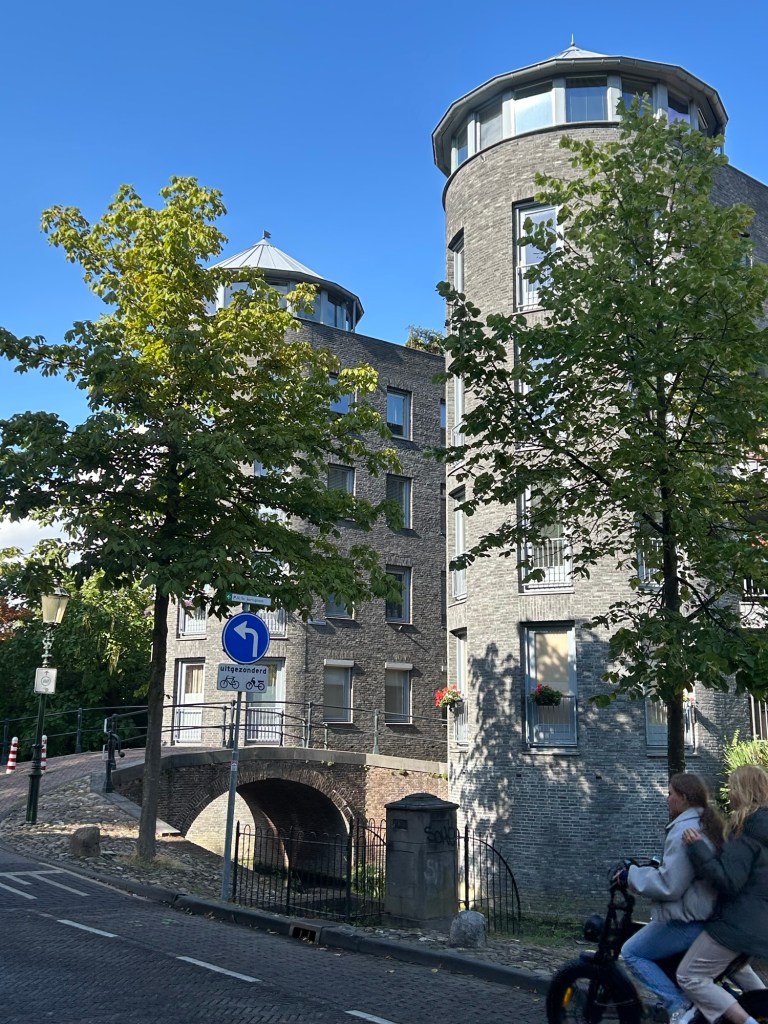
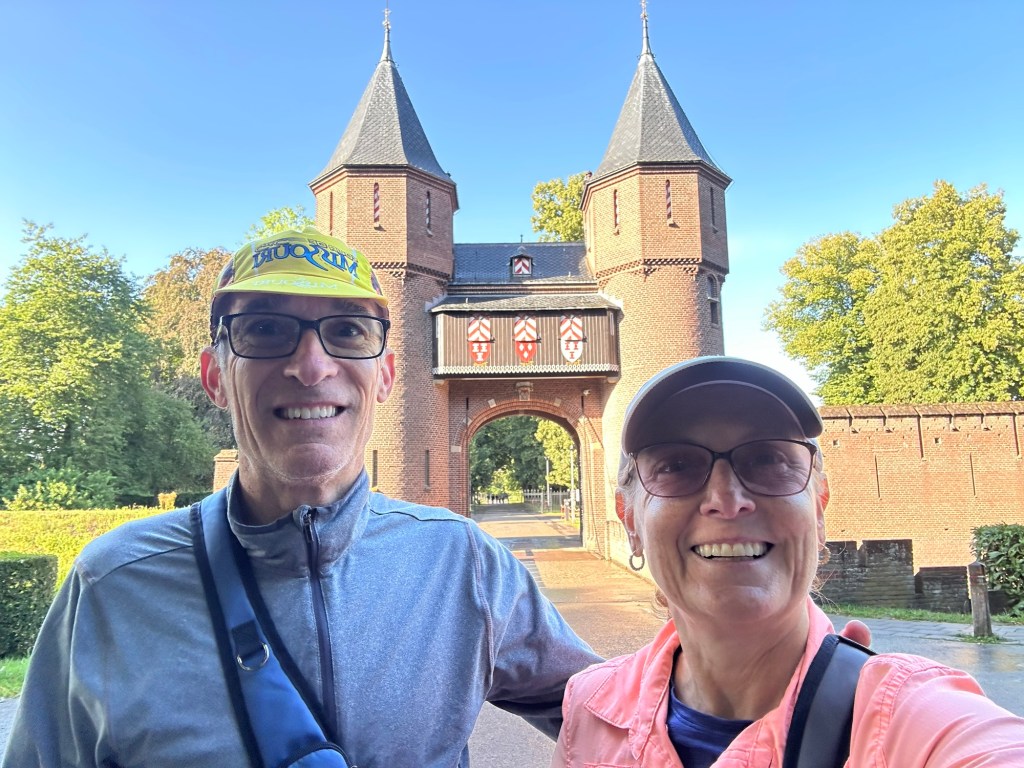
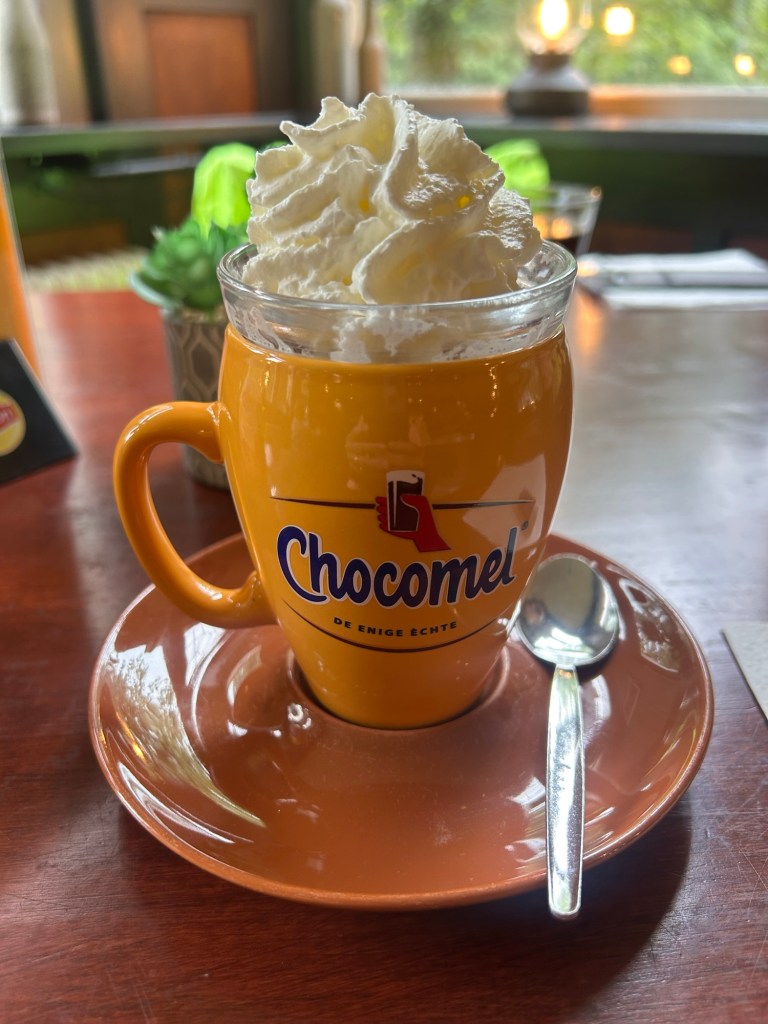
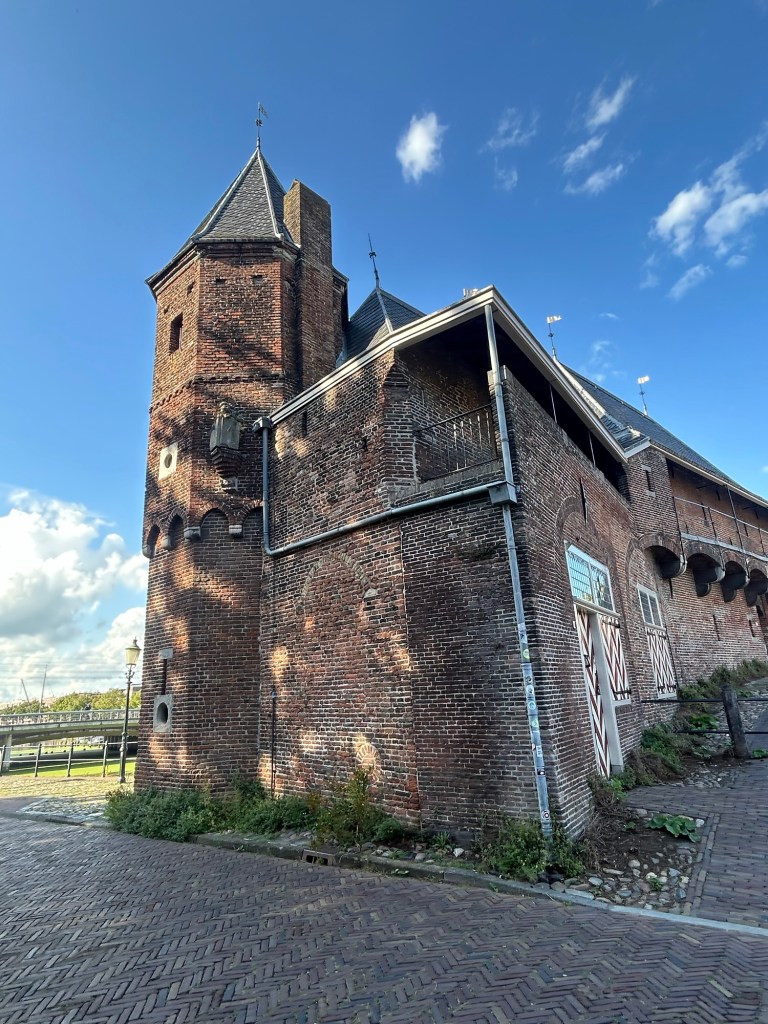
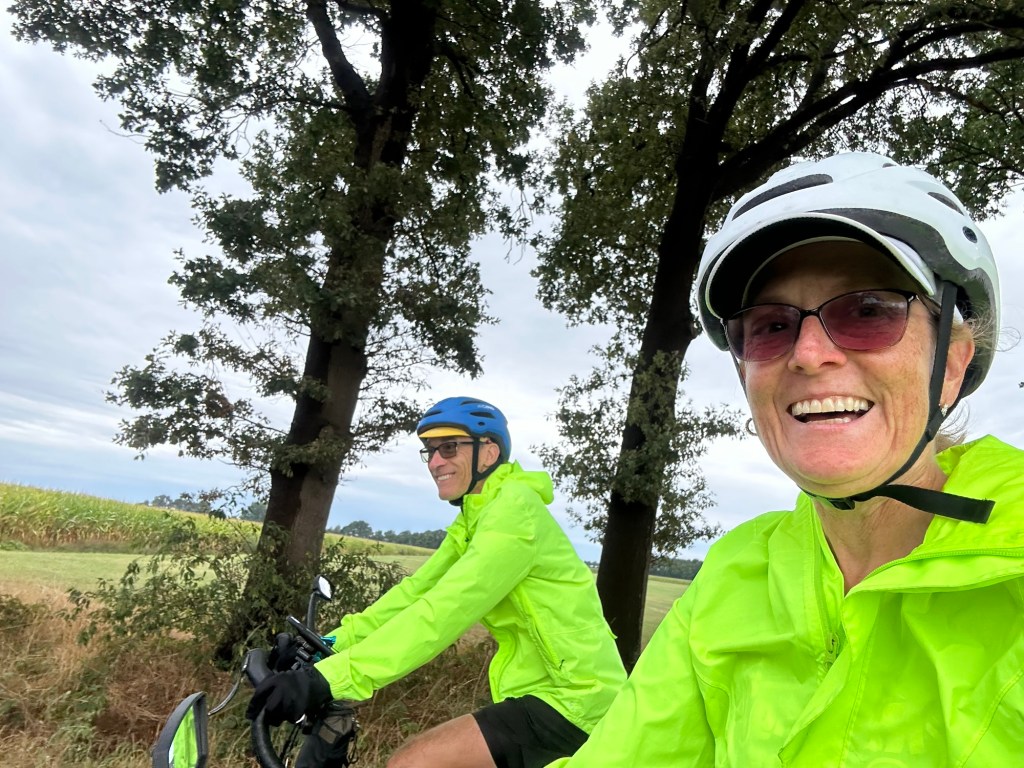
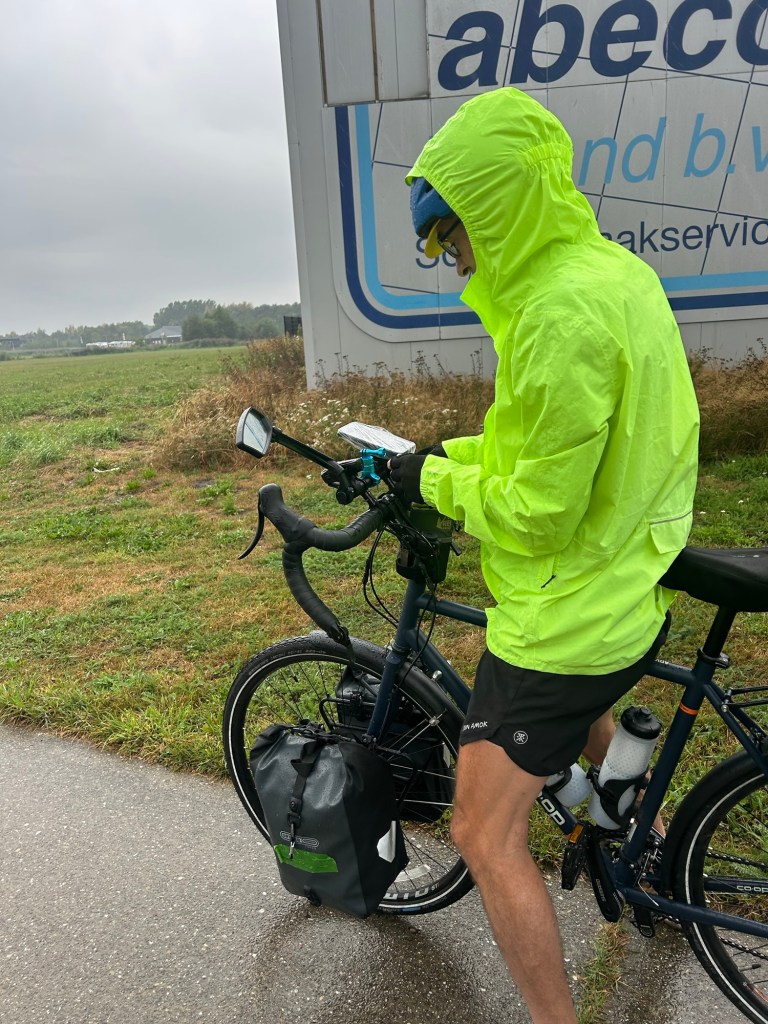
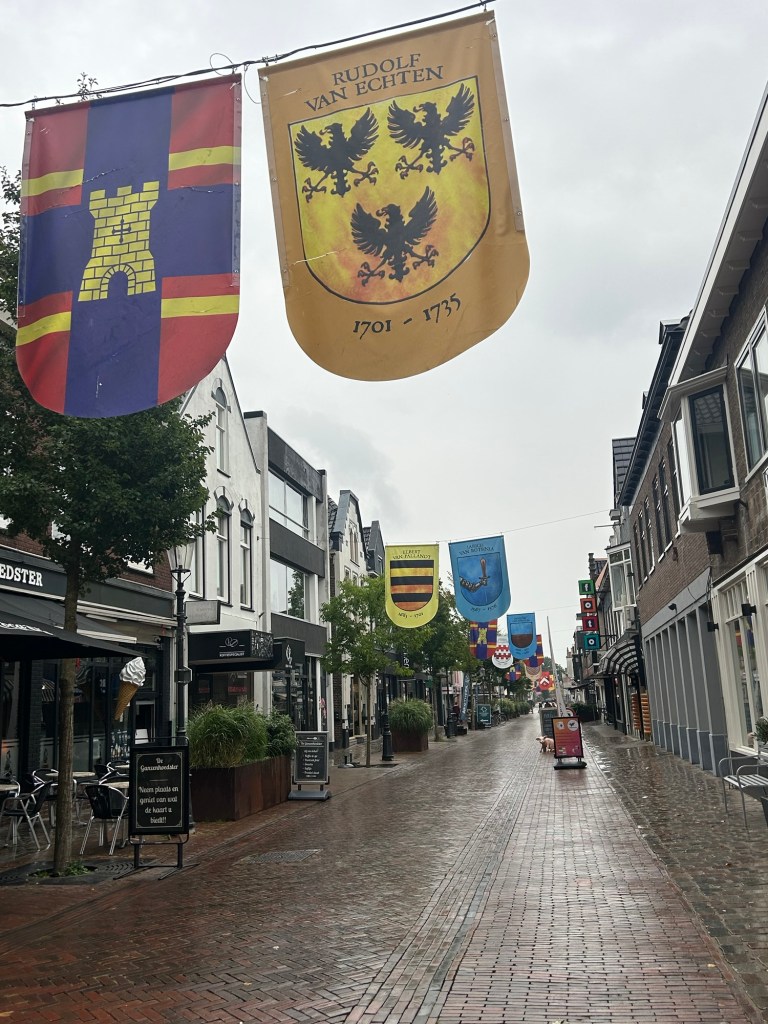
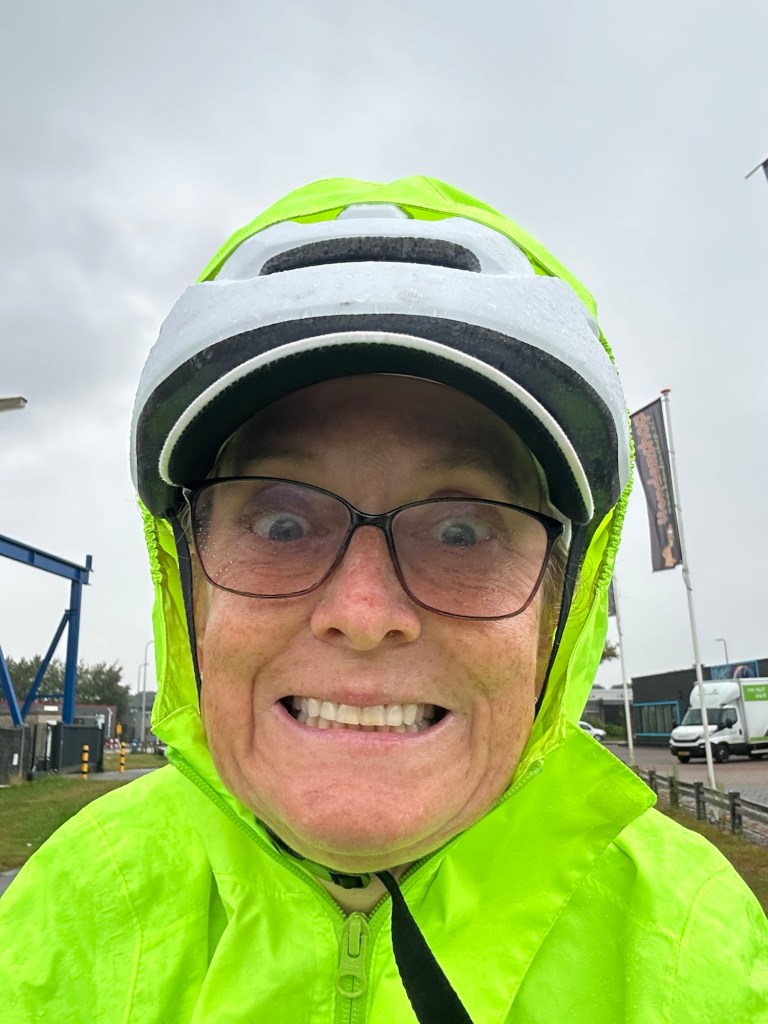
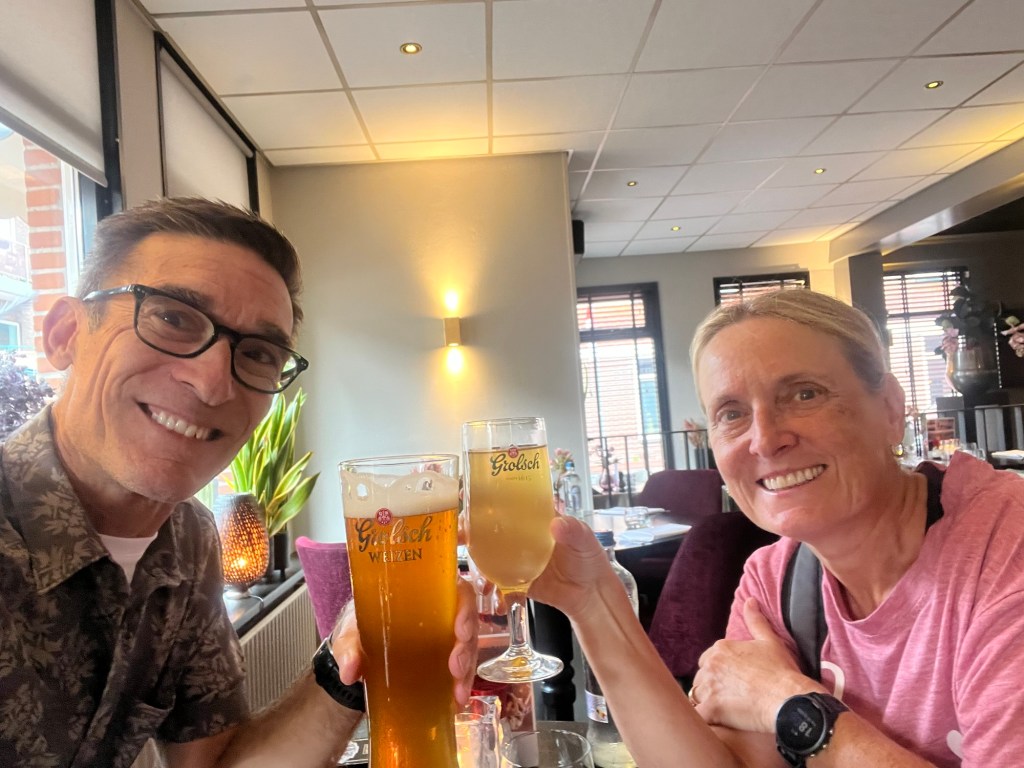
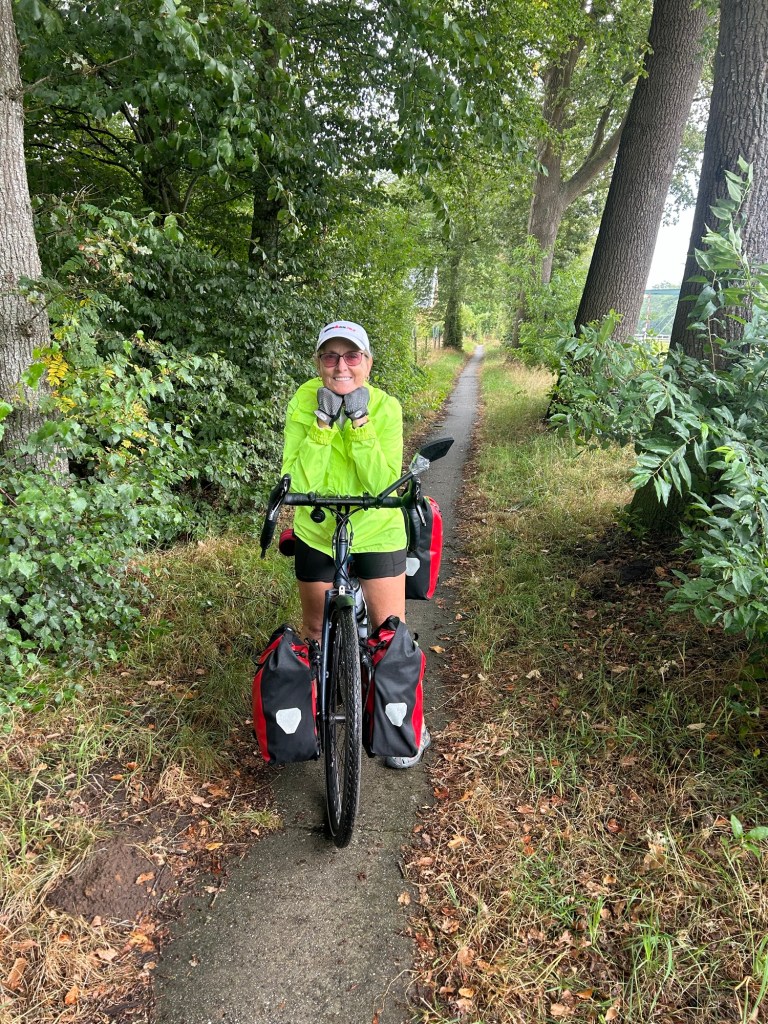
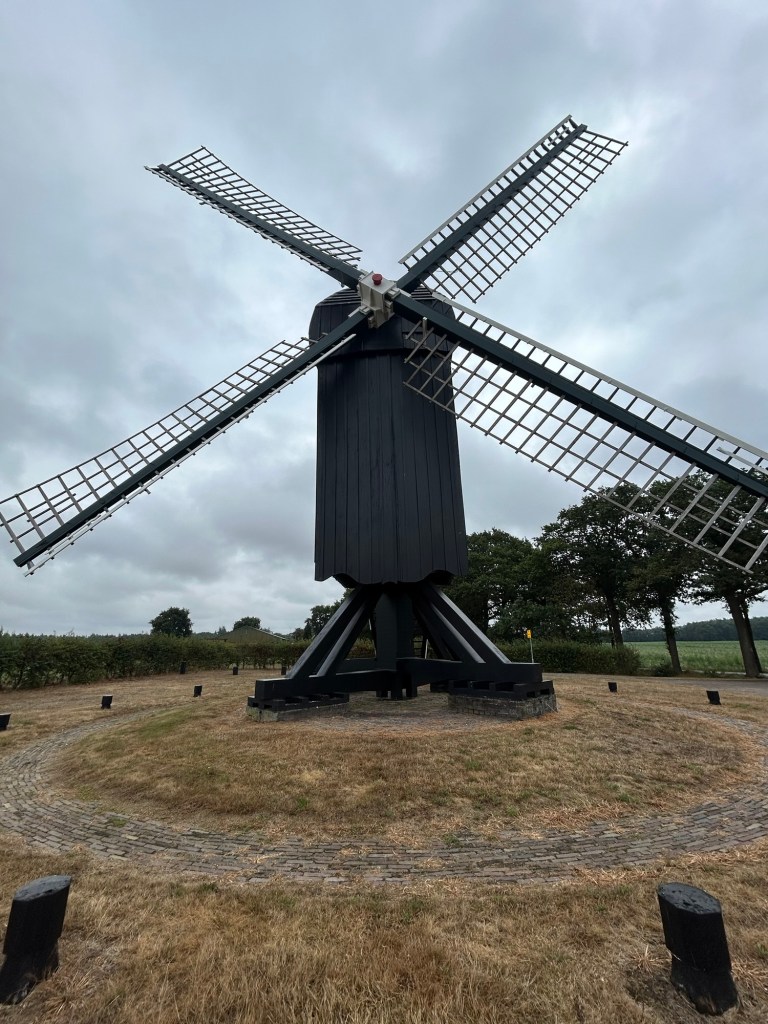
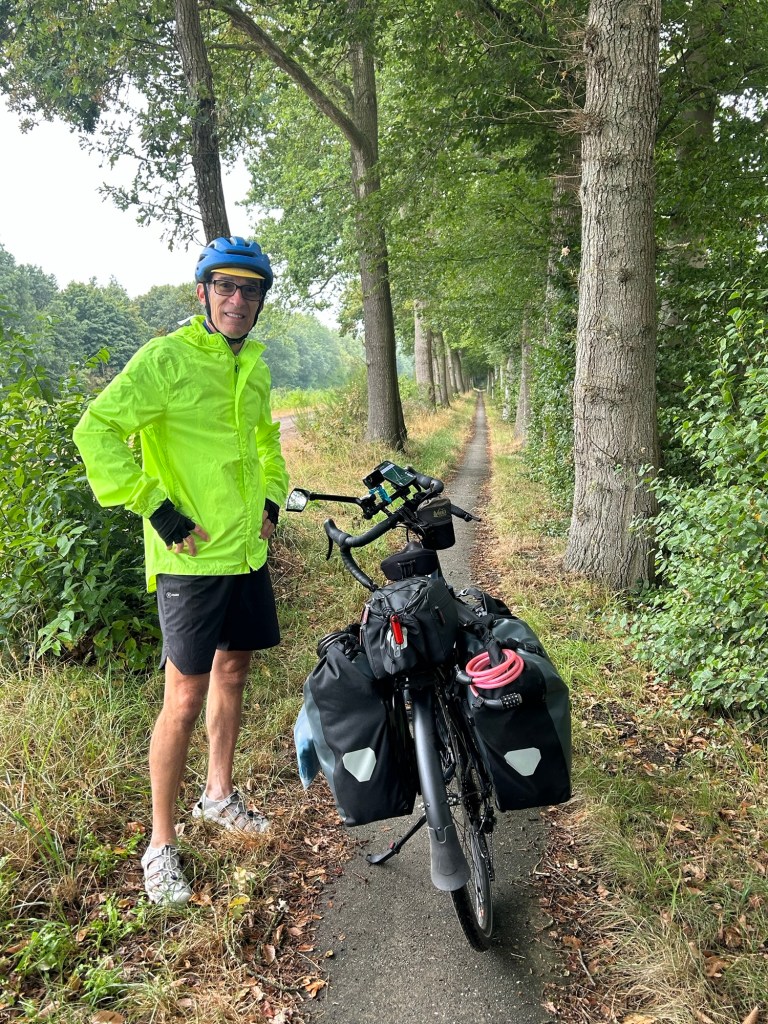
At this point in any bike trip, it’s natural to feel both happy and sad as you reflect on the memories created along the way.
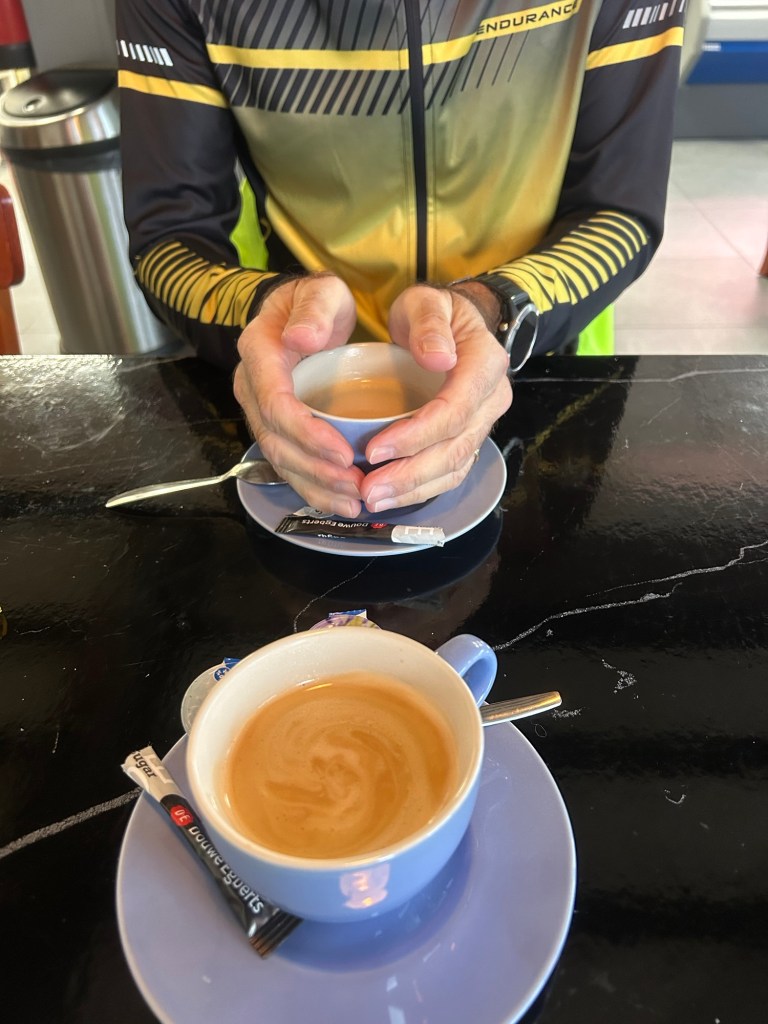
And as much as we miss our family, we hold on to the joy we find on the road by enjoying each day’s ride and midday stop, lingering in town each evening, and continuing to be amazed by how many people ride bikes in Europe.
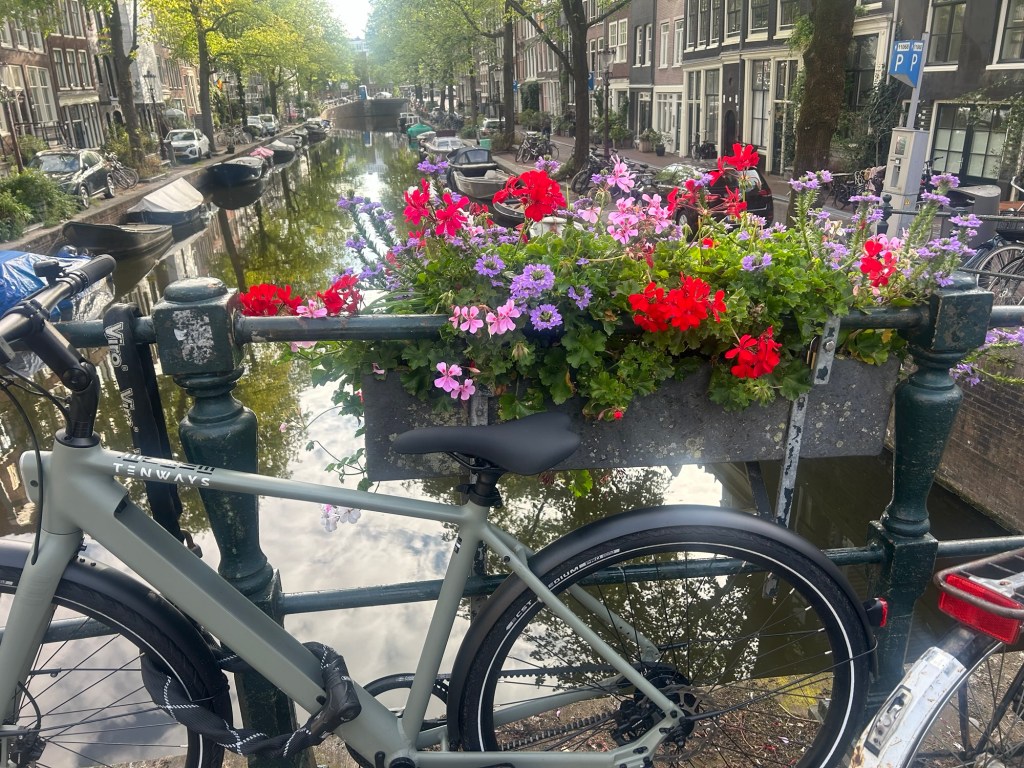
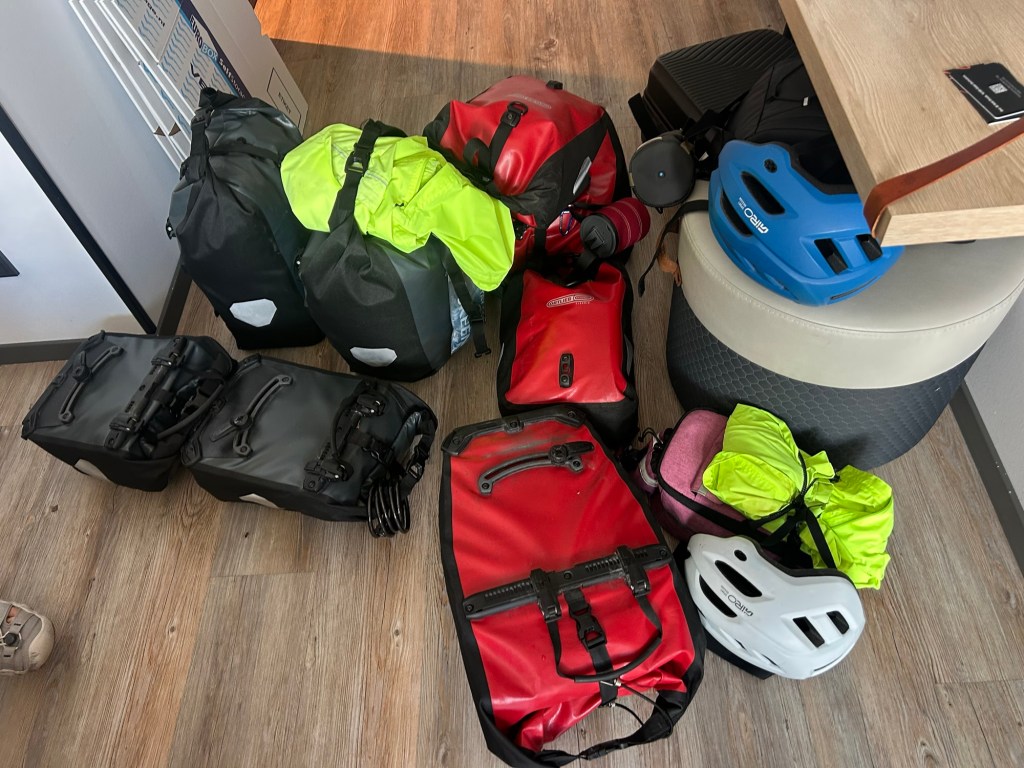
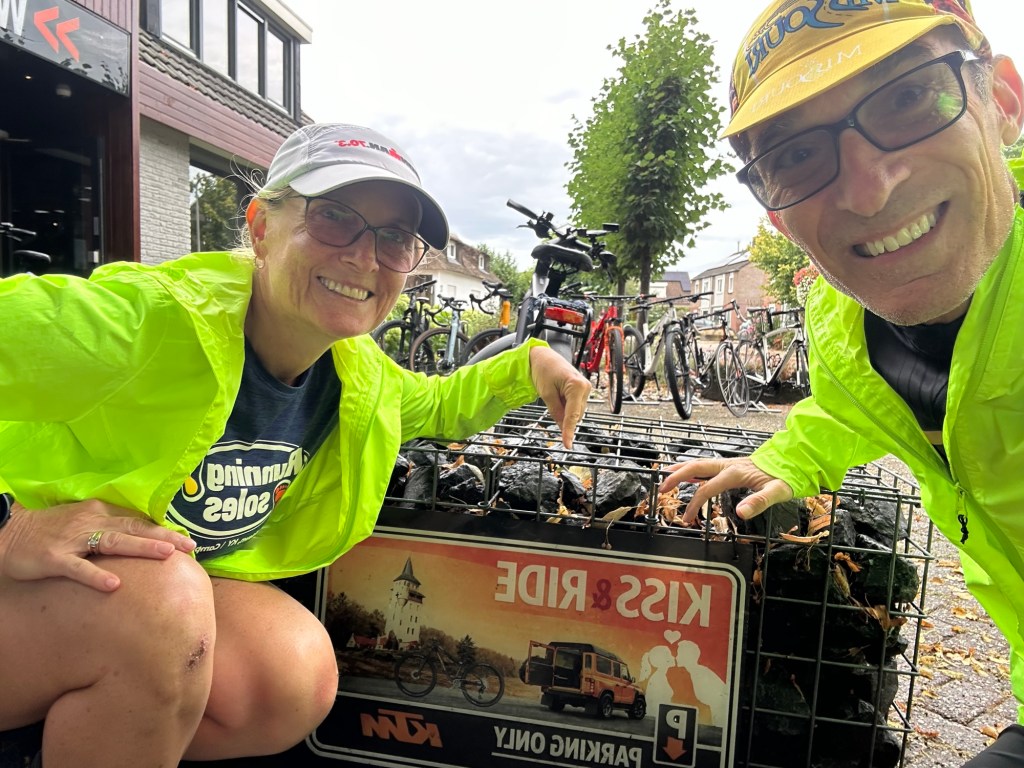
And that bikes have their own hotels.
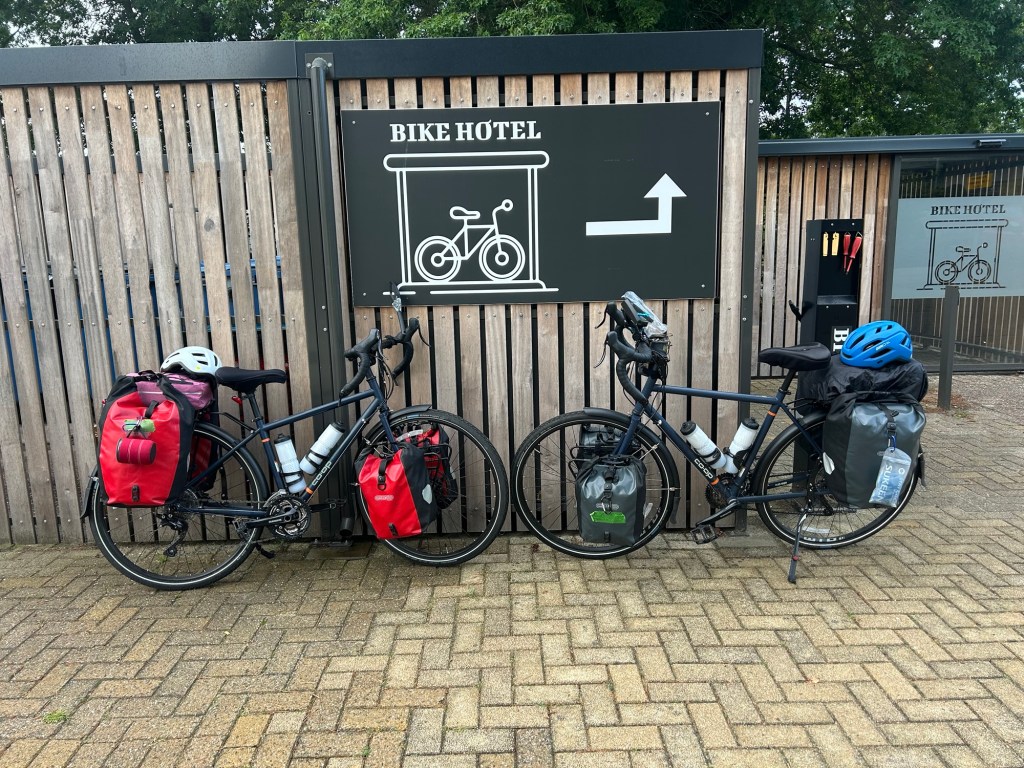
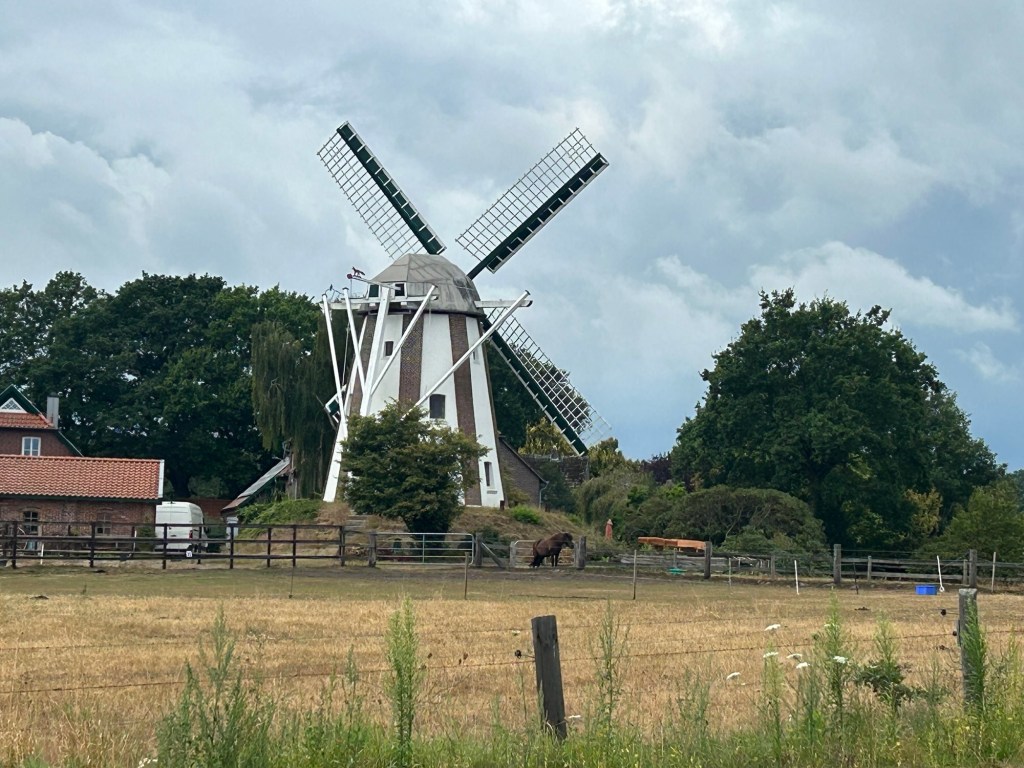
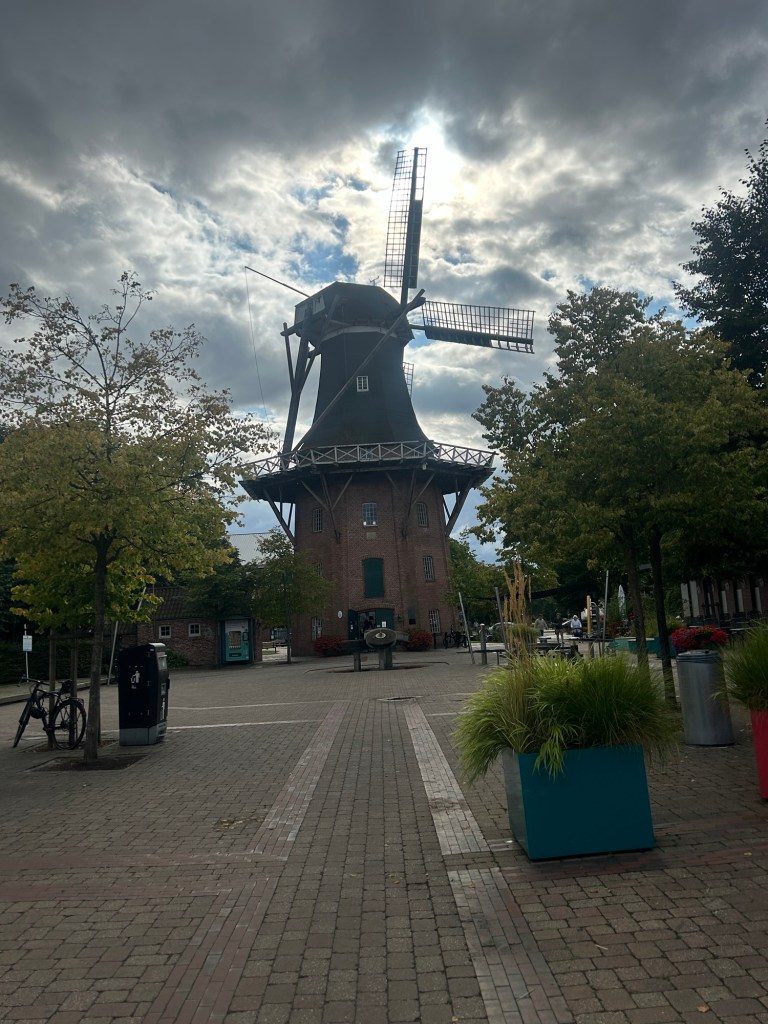
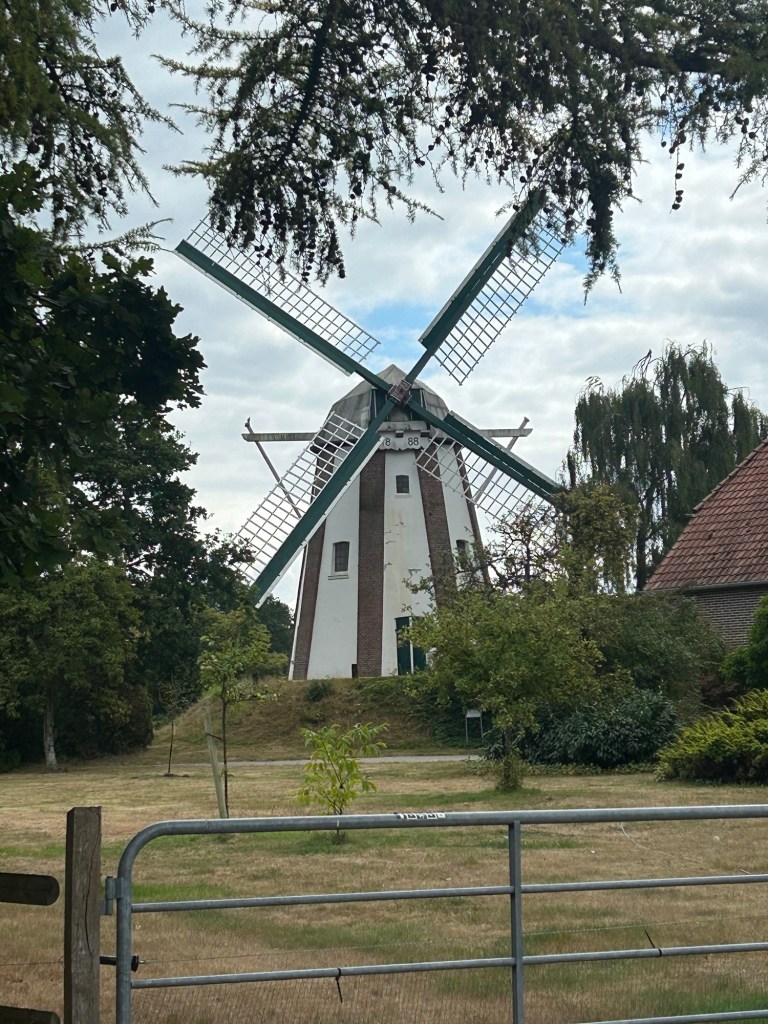
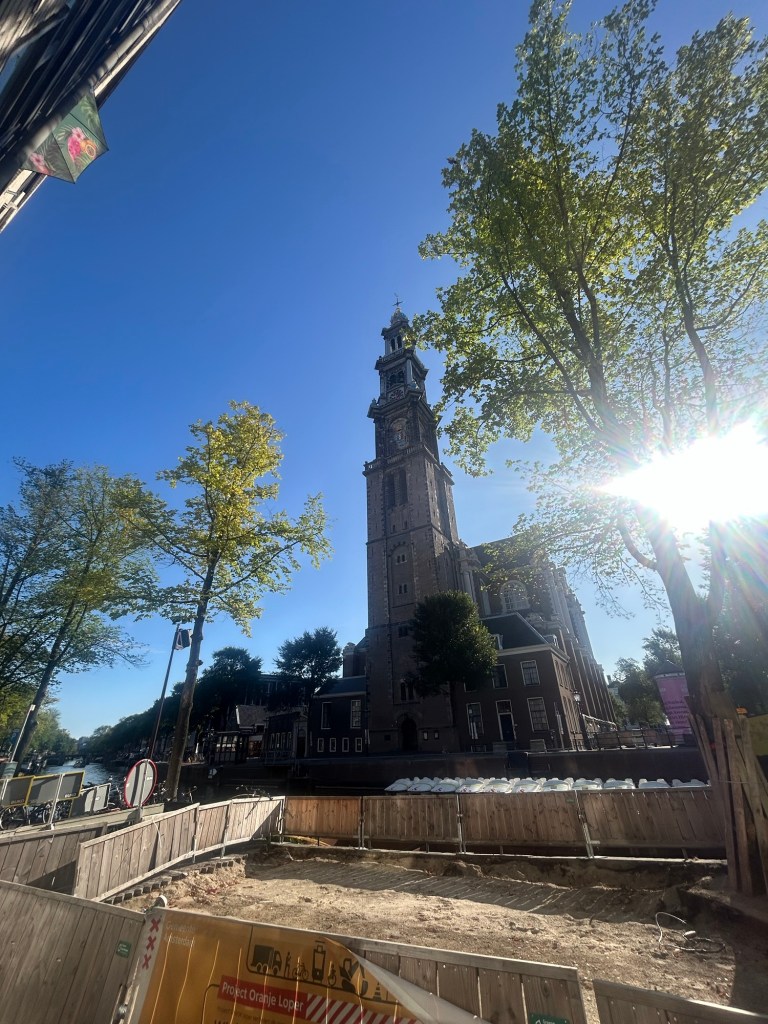
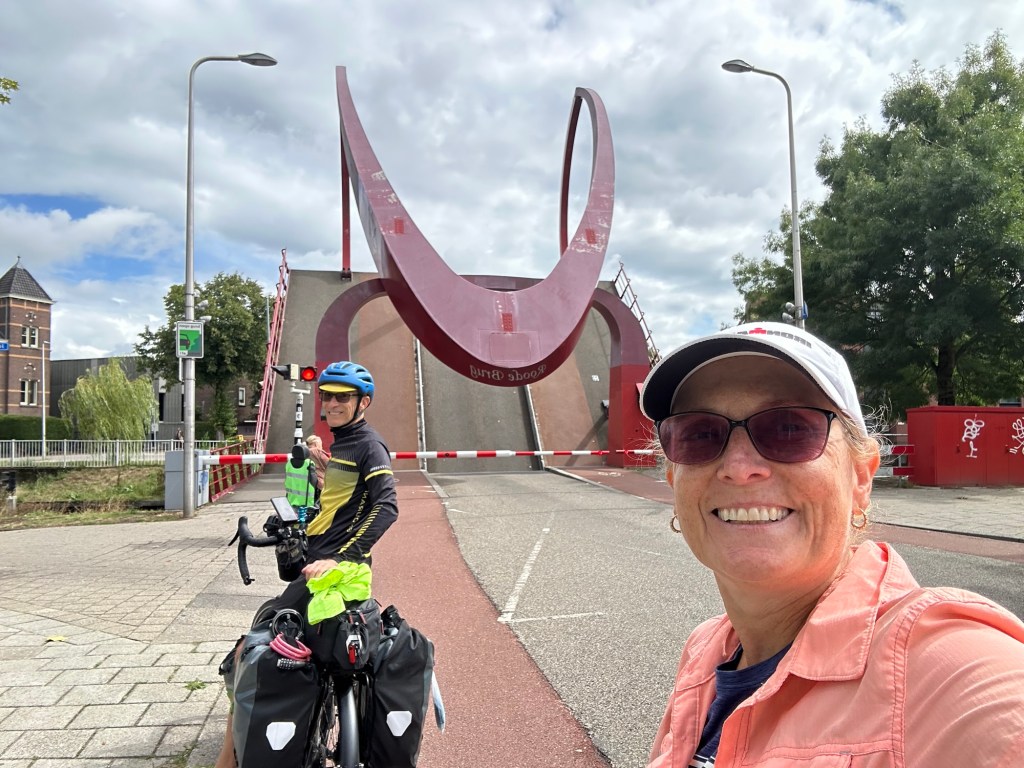
Note on the Netherlands: Bikes are said to outnumber cars 3:1. And believe me when I say it’s actually easier to ride a bike than to walk or drive a car in Amsterdam. The number of windmills, thatched-roof homes, and canals is crazy.
Pivot tour: Denmark ✅, Germany ✅ , the Netherlands ✅
That’s a wrap
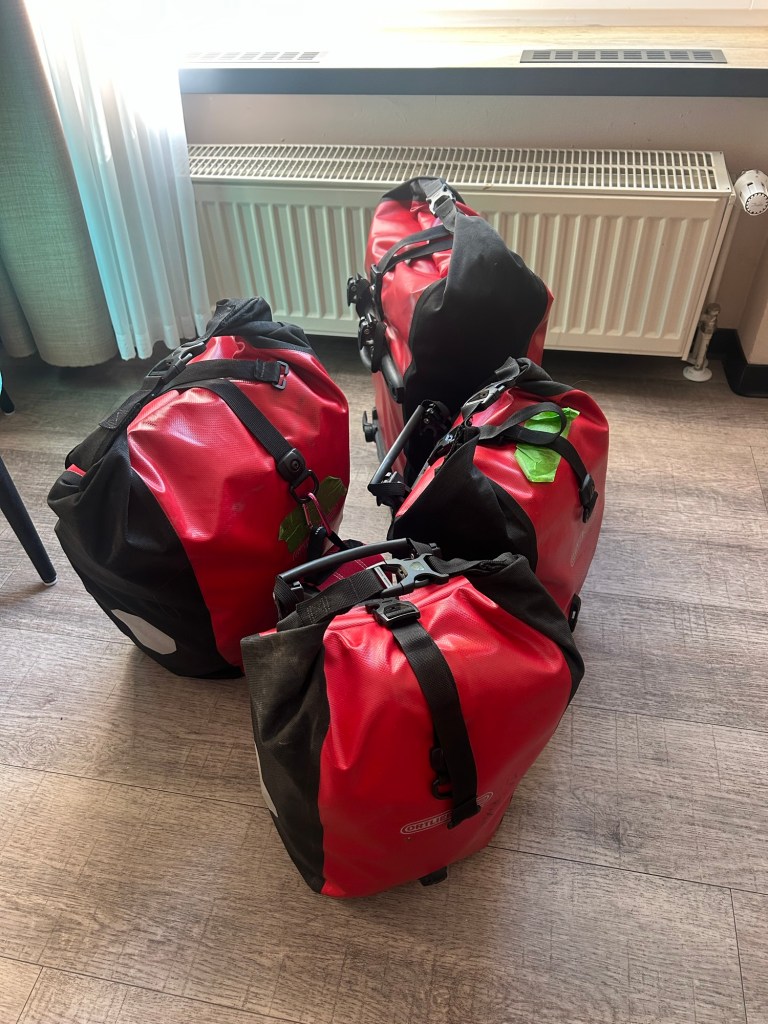
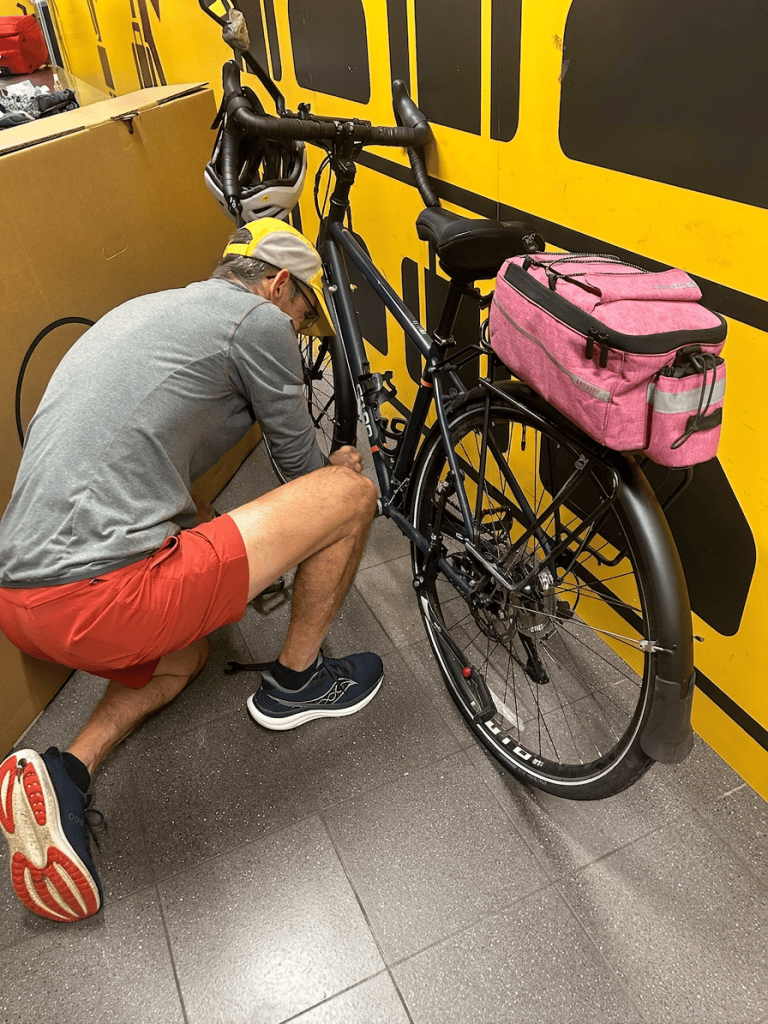
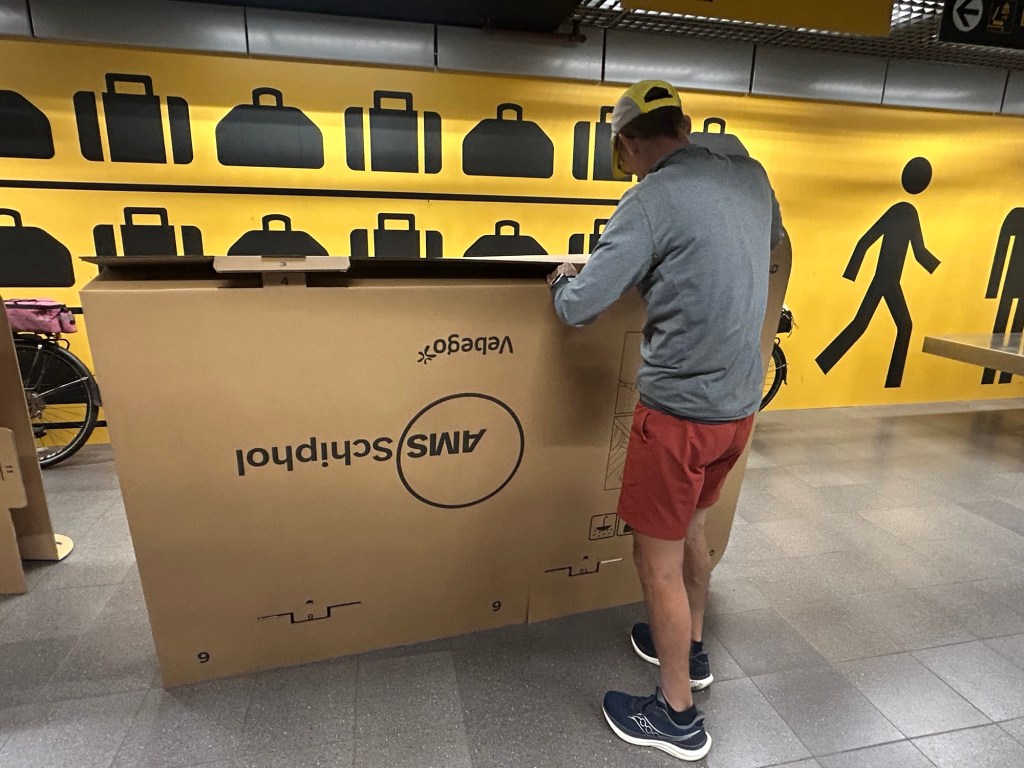
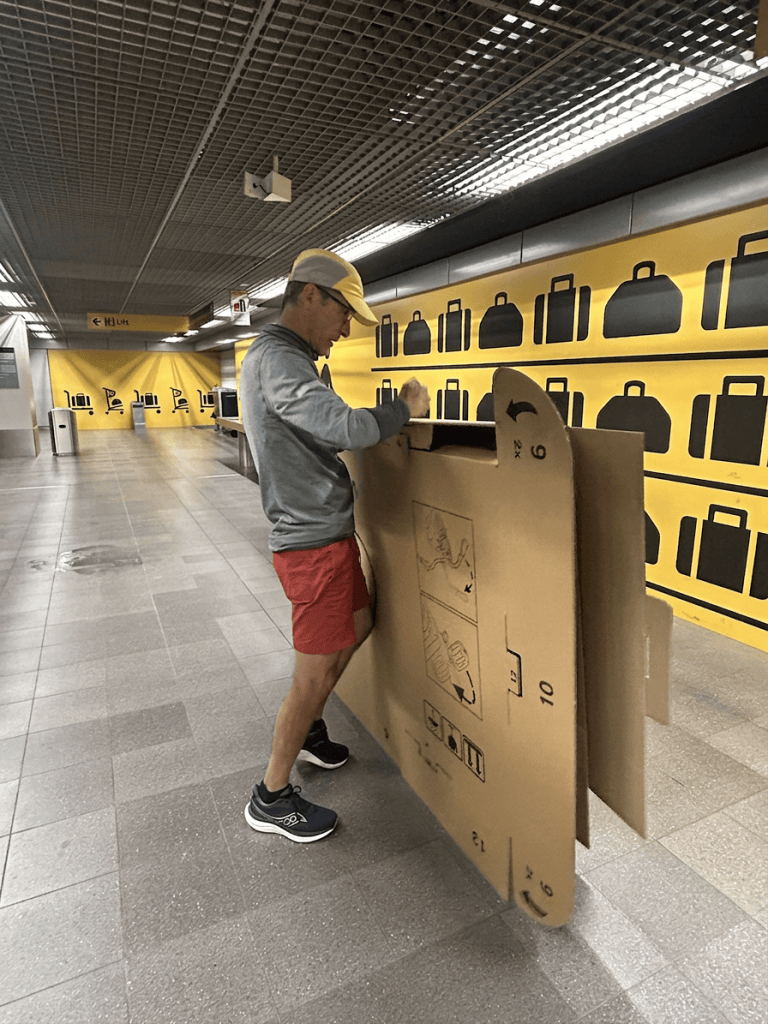
When we finished our bike tour, we simply rode our bikes to Schiphol Airport (on a dedicated bike path), where they sell bike boxes, boxed up our bikes, and handed them off for storage to be picked up the next day as we departed.
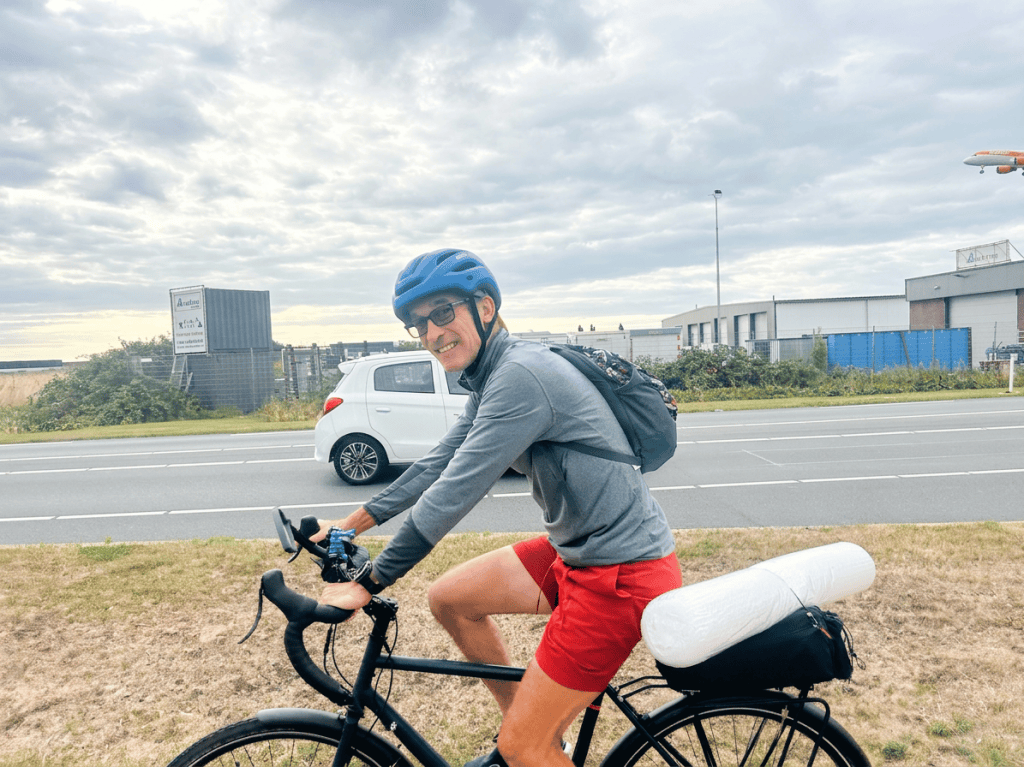
For just 30 € per bike, this is an incredible bargain compared to the bike shops we’ve used in the past, which have charged between $50 and $100 per bike.
Plus, this solution eliminates the need to worry about transporting bikes from the shop to the airport, making the whole process even more convenient!
Destination Versus Journey
We too often hear, “It’s not about the destination; it’s about the journey.”
Again, for me, it means real life behind the postcard: the feelings, the emotions, the lessons, the reality of moving slowly under the radar, observing while seeking to understand.
Little did I know when I drafted that title back in June that it would perfectly encapsulate our 2026 Summer Bike Tour.
We planned to ride from Munich to the Black Sea, and everything revolved around the destination.
Unlike any trip before, we planned each day’s mileage and accommodation in advance. We knew exactly where we would be and when. Our focus was to reach the Black Sea and hit the beach.
What actually happened was – we enjoyed the ups and downs of a totally unplanned journey and counted our blessings along the way.
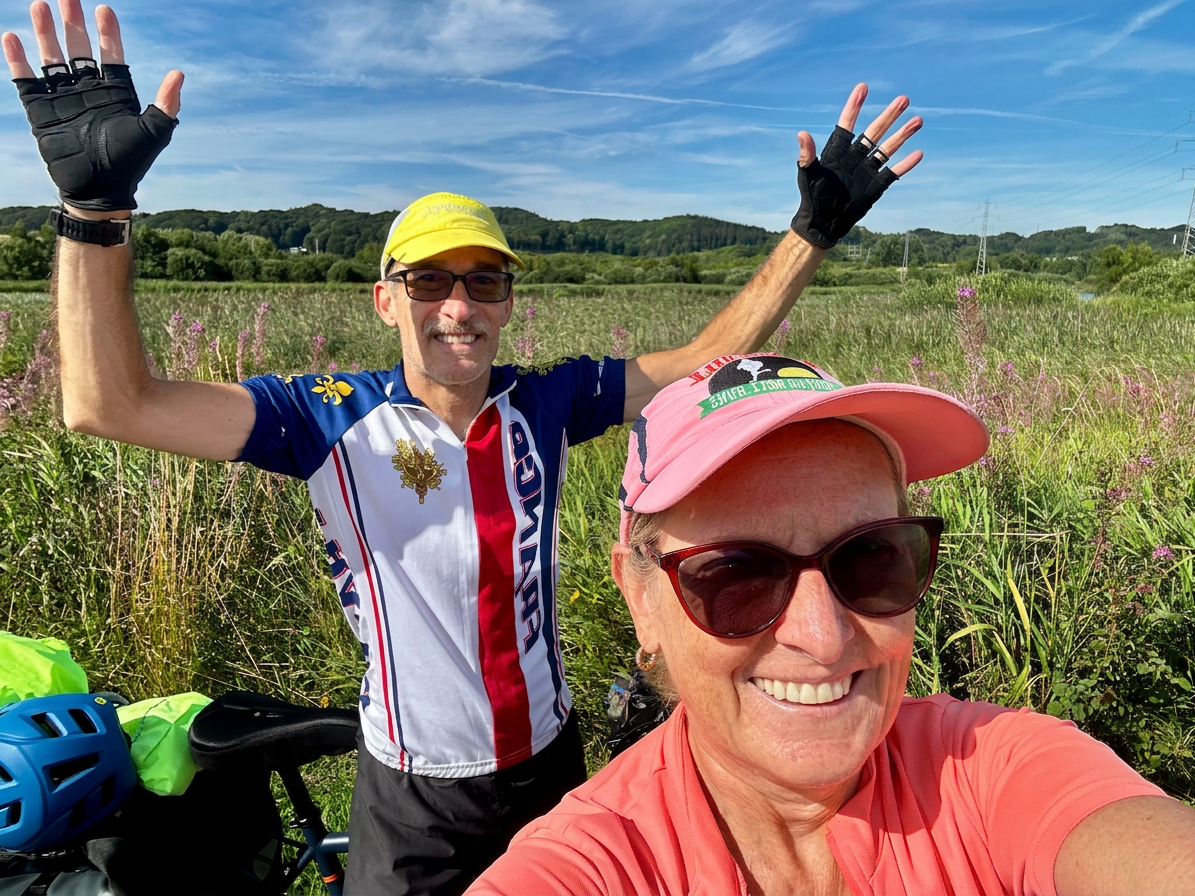
We continued to discover more and more about each other and ourselves, and together we overcame every curveball Mother Nature tossed our way, from the heat to the wind to the rain.
Each day, we fought a little and laughed a lot.
We never cried, pouted, or asked why.
We simply pedaled and went with the flow, embracing each and every obstacle, encounter, and moment.
The destinations of Serbia, Romania, and Bulgaria will have to wait. However, the journey to Denmark can now be checked off. Unplanned and uninformed, we managed to adapt and overcome.
We even used artificial intelligence in our route planning, while recognizing its limitations.
Stats for 2026: ~1,300 miles; Munich to Budapest: ~550 miles. Pivot to Denmark / Germany / the Netherlands: ~750 miles. Added Slovakia, Hungary, and Denmark. Total European countries where we have bike-toured self-supported: 13 to date.
Insights
This year, as our plans were suddenly disrupted, I reminded myself that this was JUST a bike tour, not rocket science, that I live a blessed life, and really Suz…no one cares that you ride your bike.
Were we disappointed? Well, we probably never would have planned a bike tour through Denmark. But we were incredibly surprised by the people, the countryside, and the biking infrastructure. And although Denmark’s architecture is modern and innovative, it still has many well-preserved Romanesque and Gothic-style churches and cathedrals.
As we continue to go round and round on this big blue ball. I remain grateful and thankful.
Each person I meet is a miracle; each encounter is a blessing.
And although, you’ll never get a detailed, moment-by-moment narrative of a bike tour from me – what I offer, and hope you get, is what a bike trip, trek, or tour actually is: the behind-the-postcard look at what actually happens when you let go and let God.
Riding a bike is just how I feel comfortable while living life.
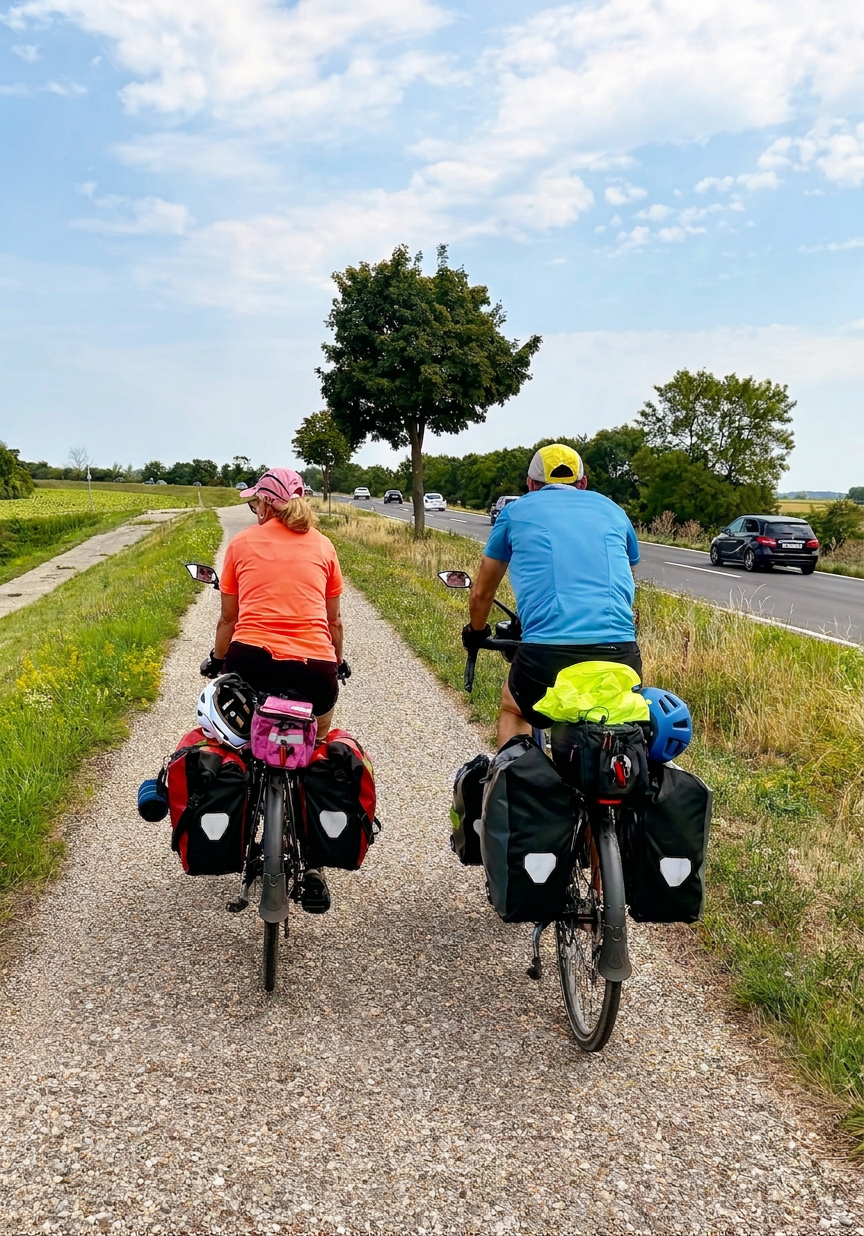
Join us again soon as we embark on the exhilarating first half of our incredible 2026 bike tour – journeying from the vibrant city of Munich to beautiful Budapest!
Suz!


